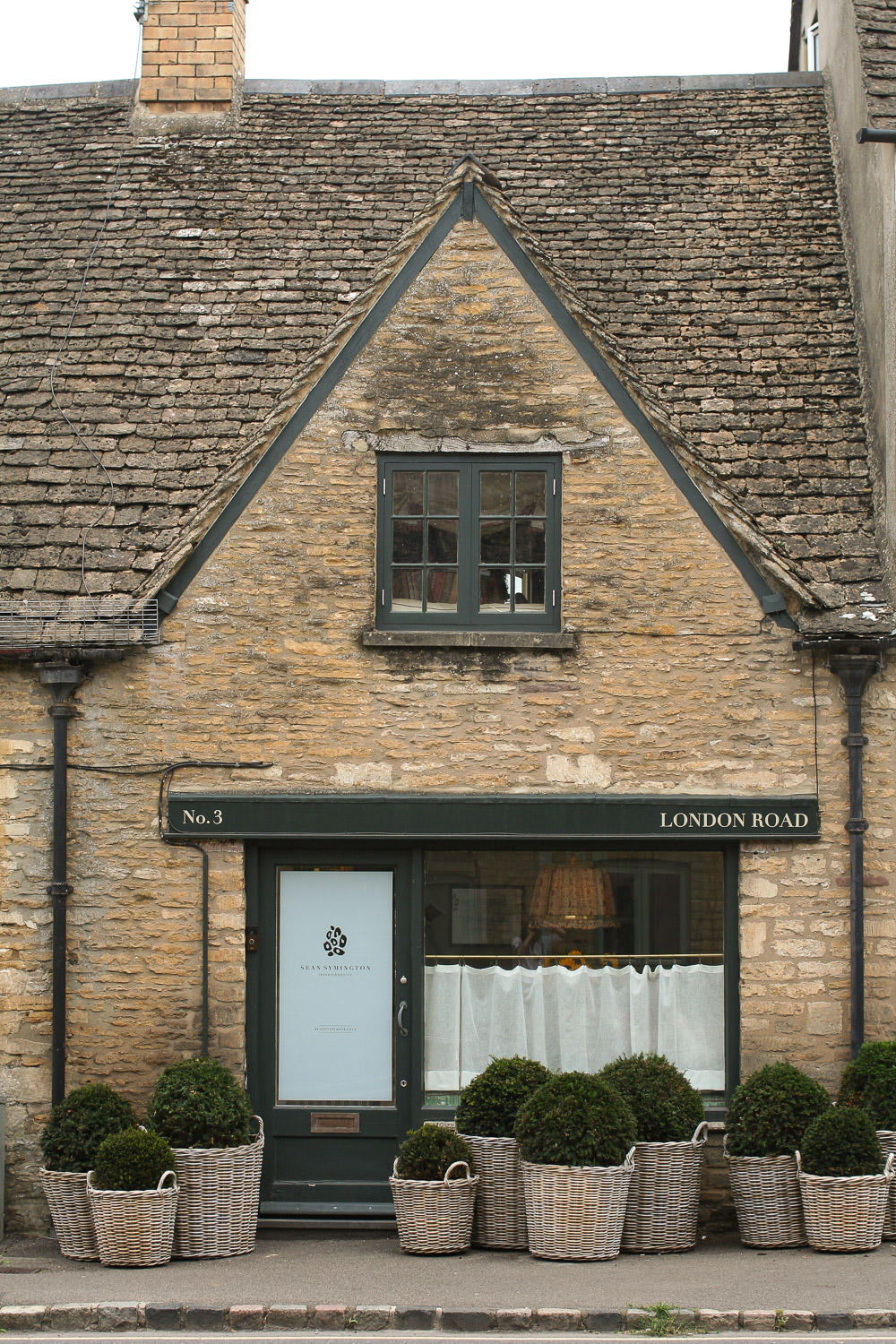
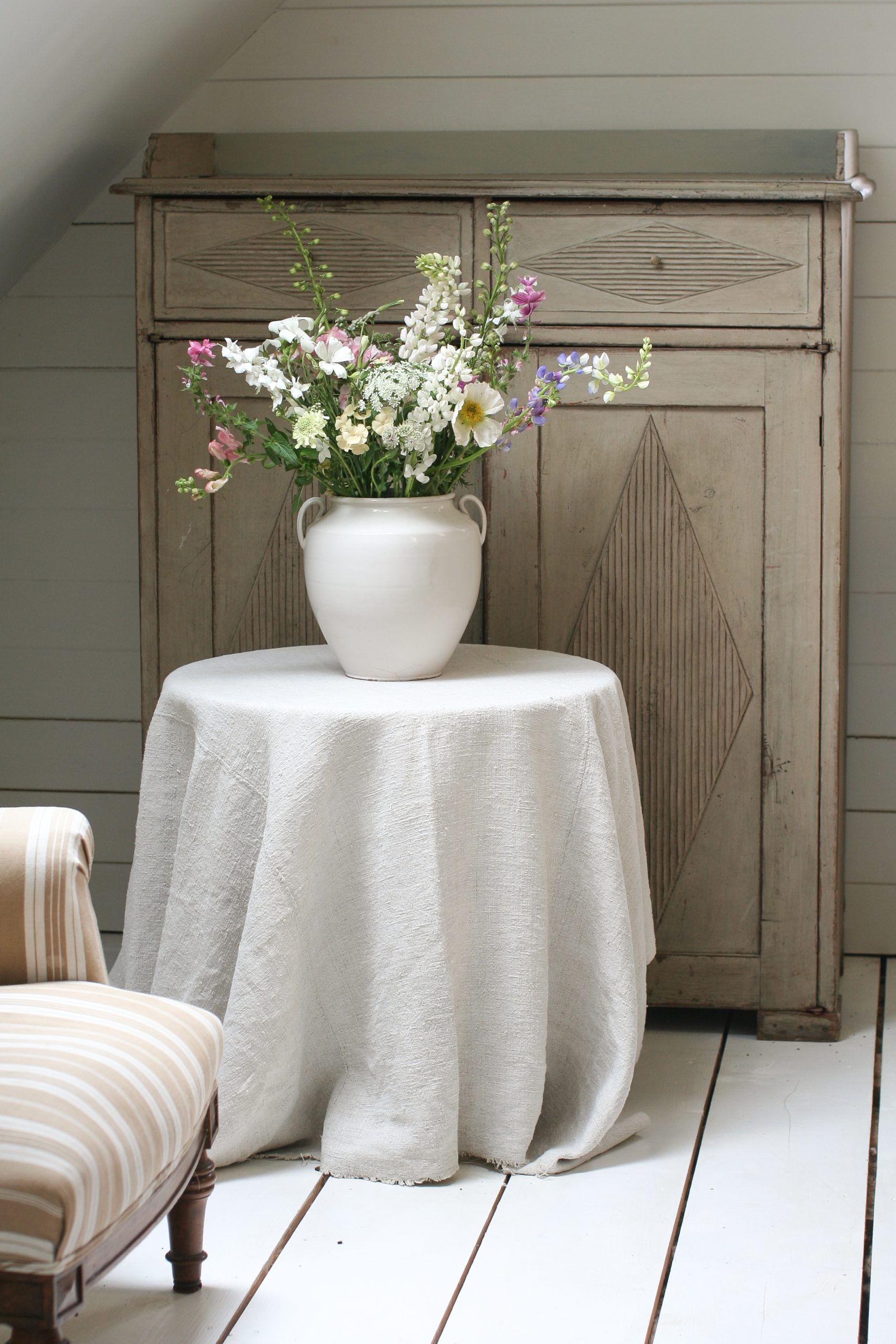
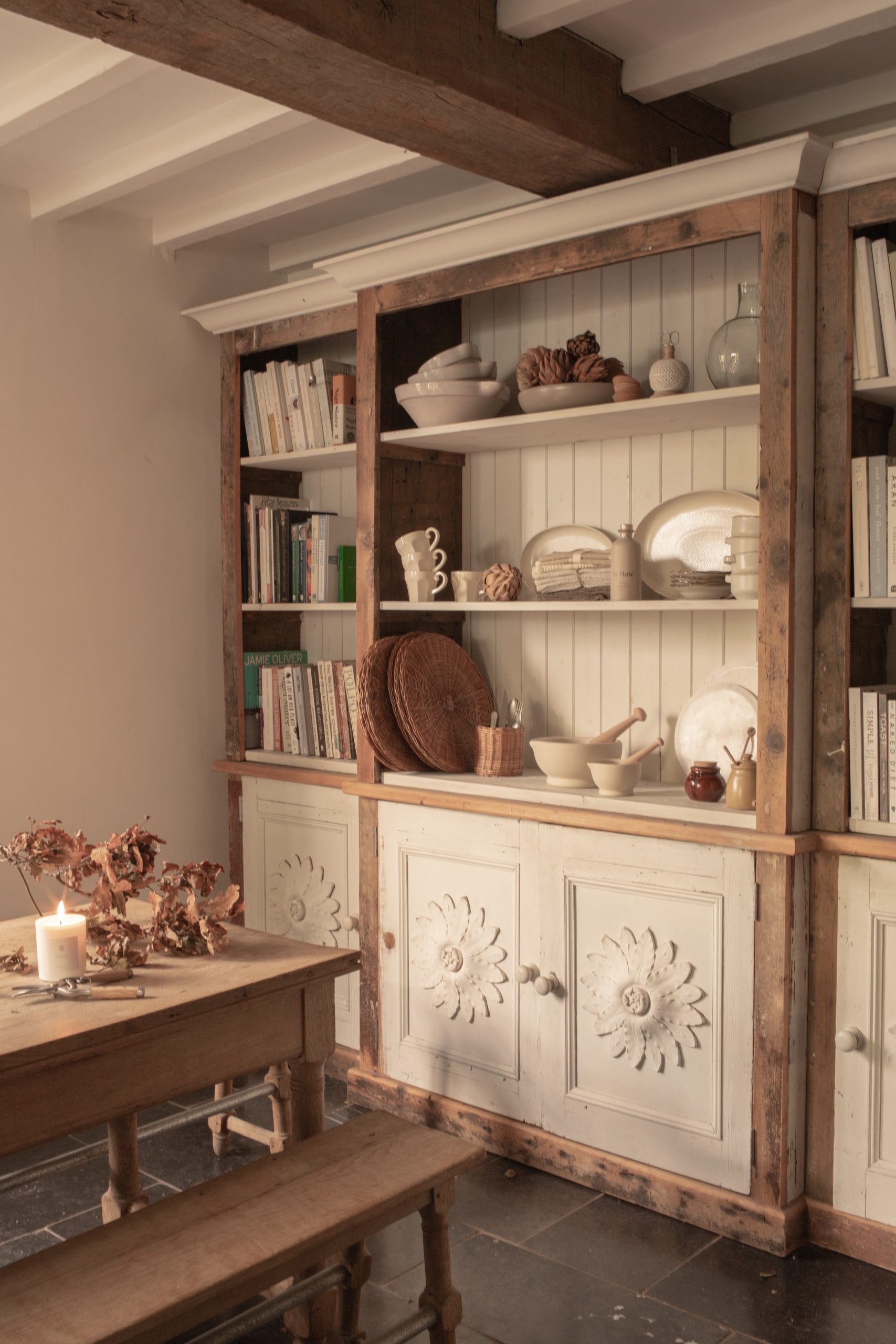
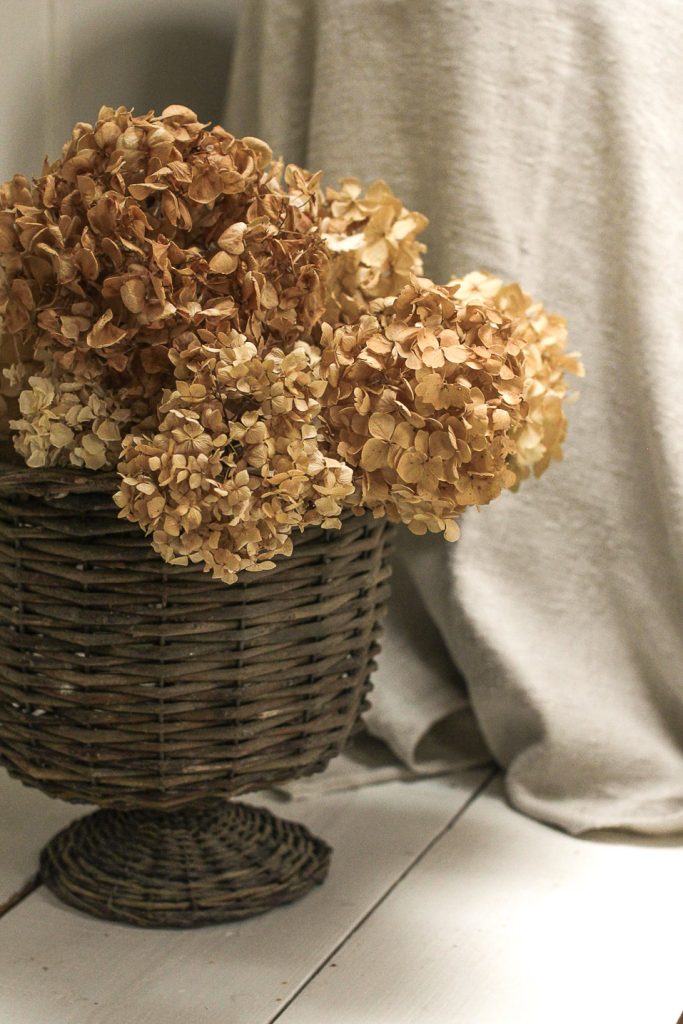
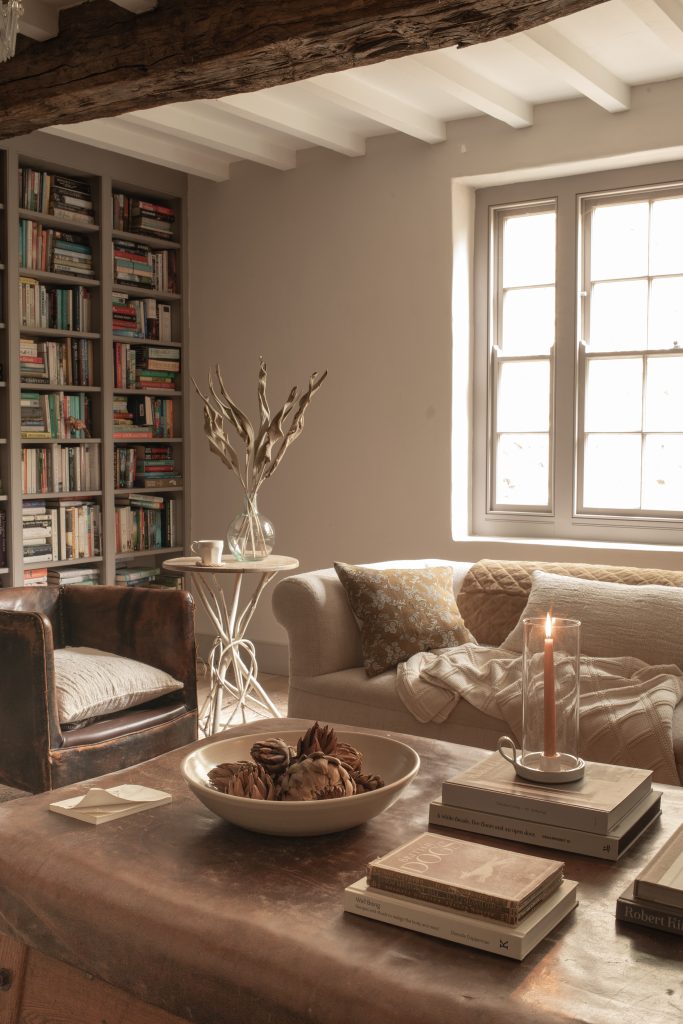
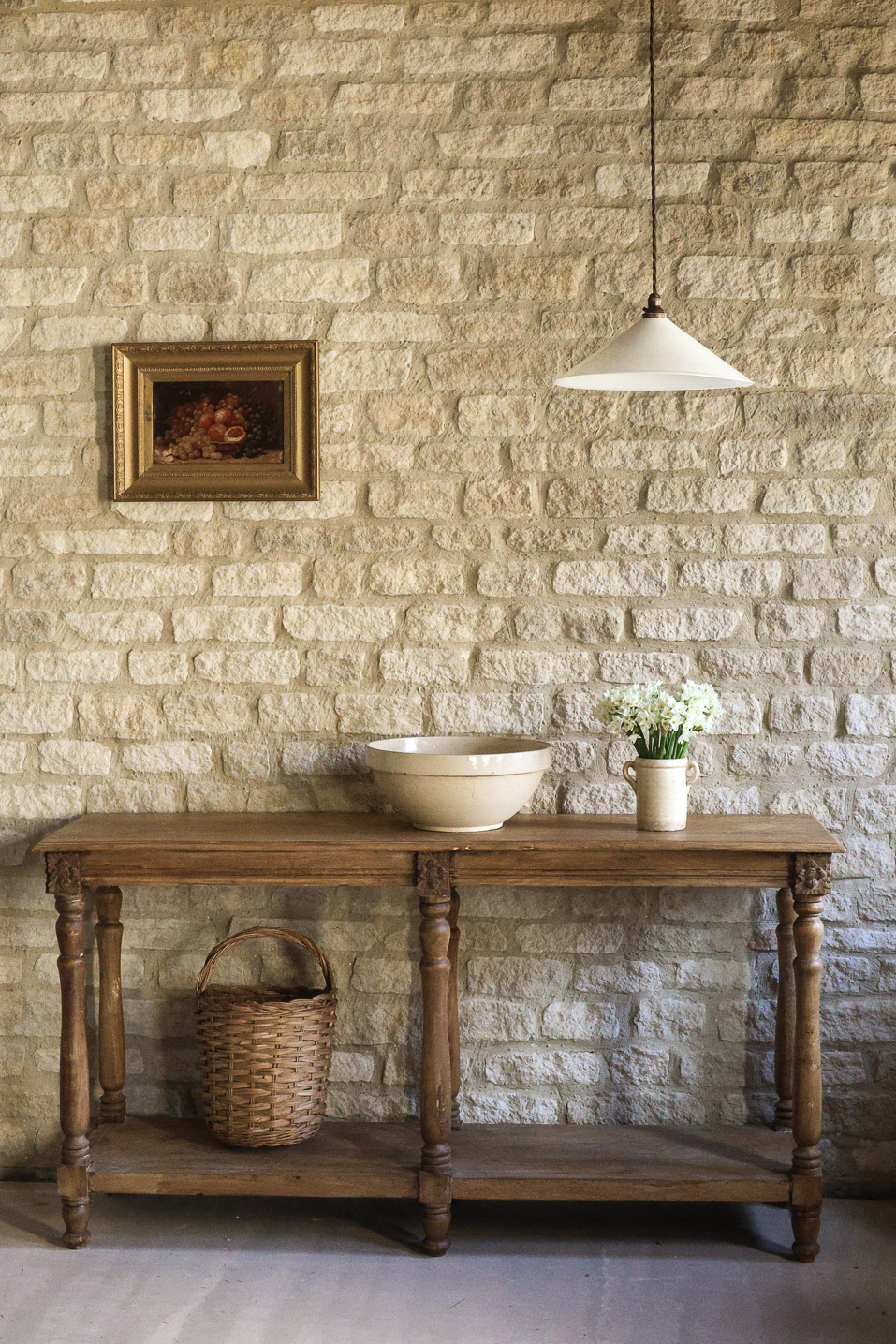
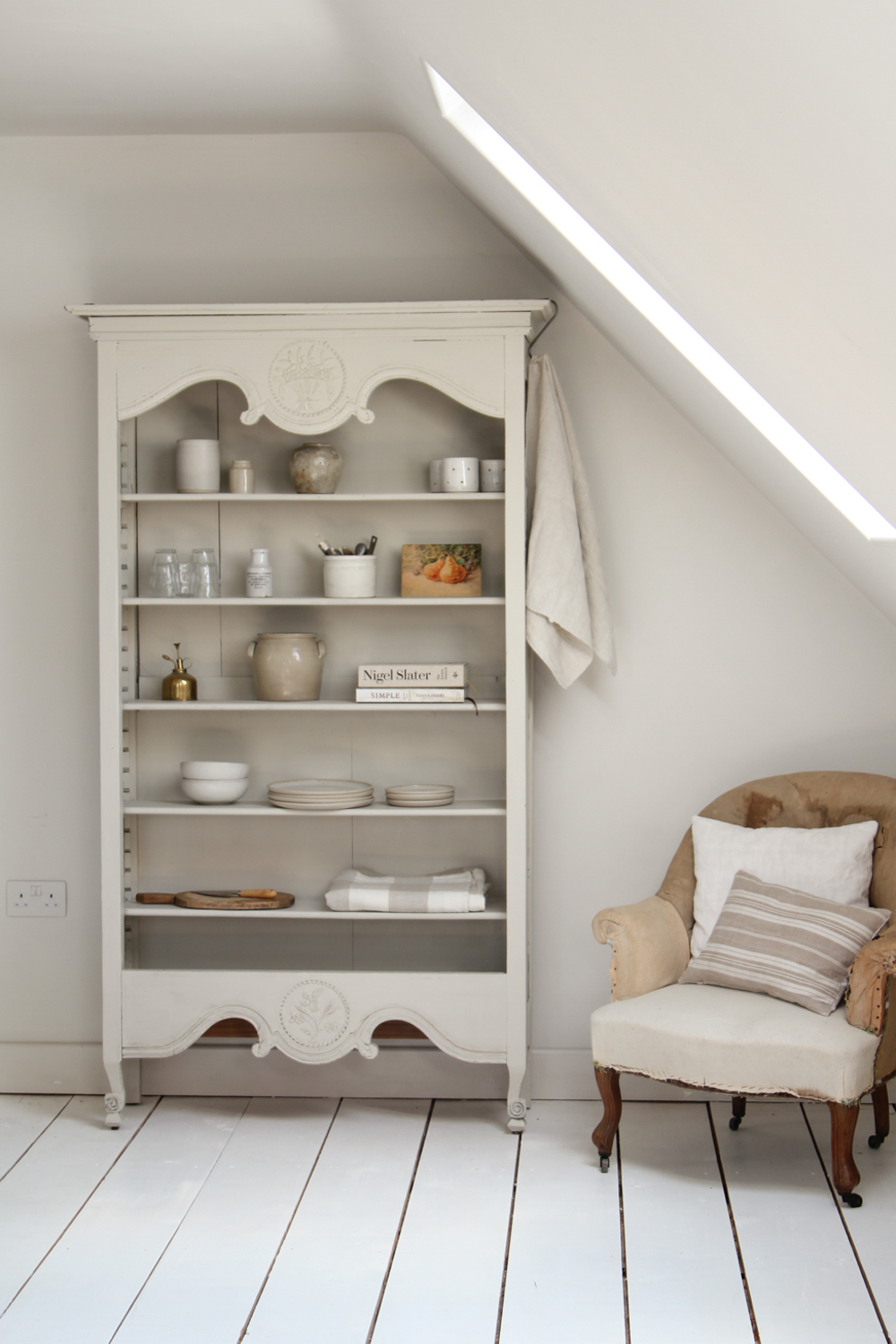
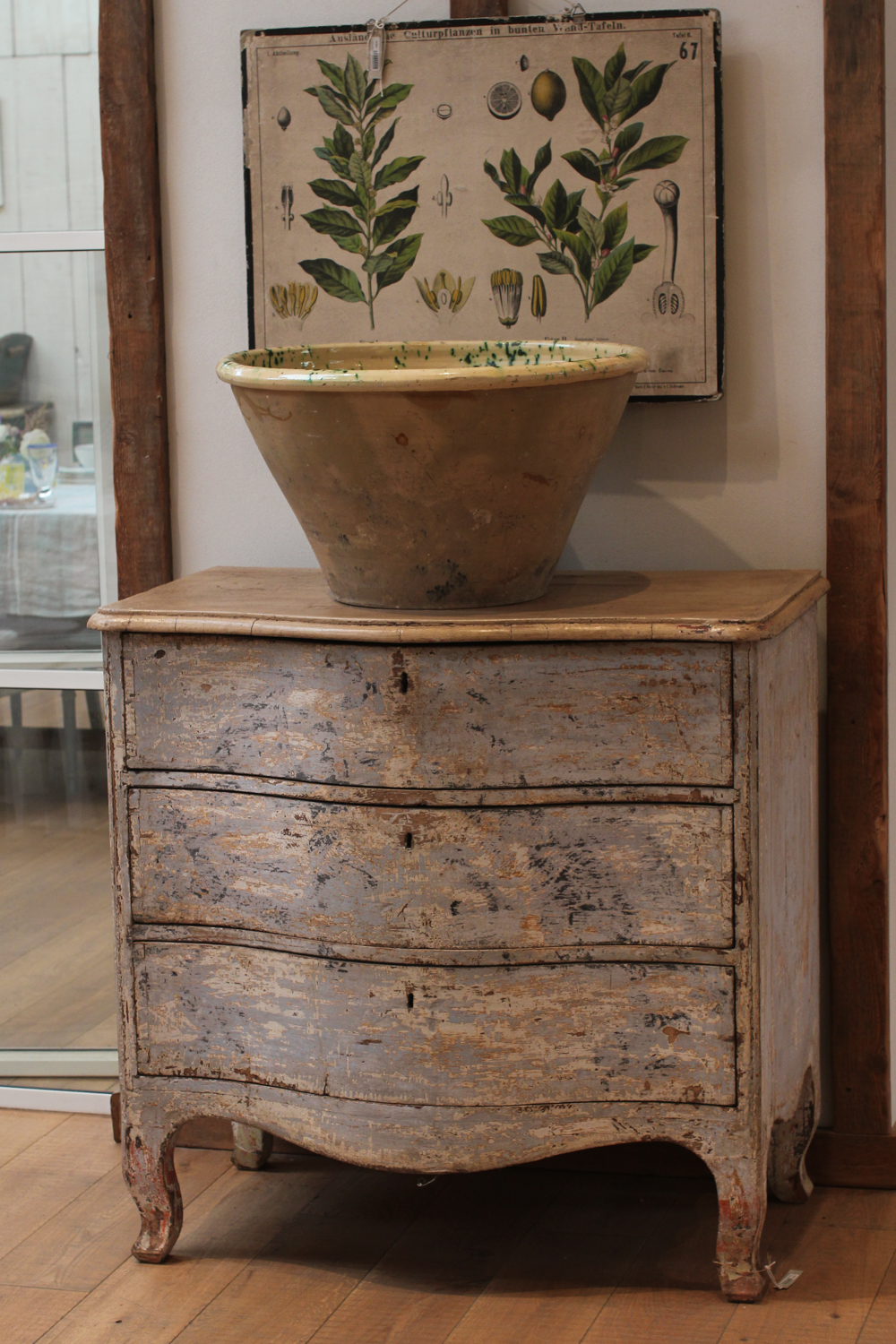
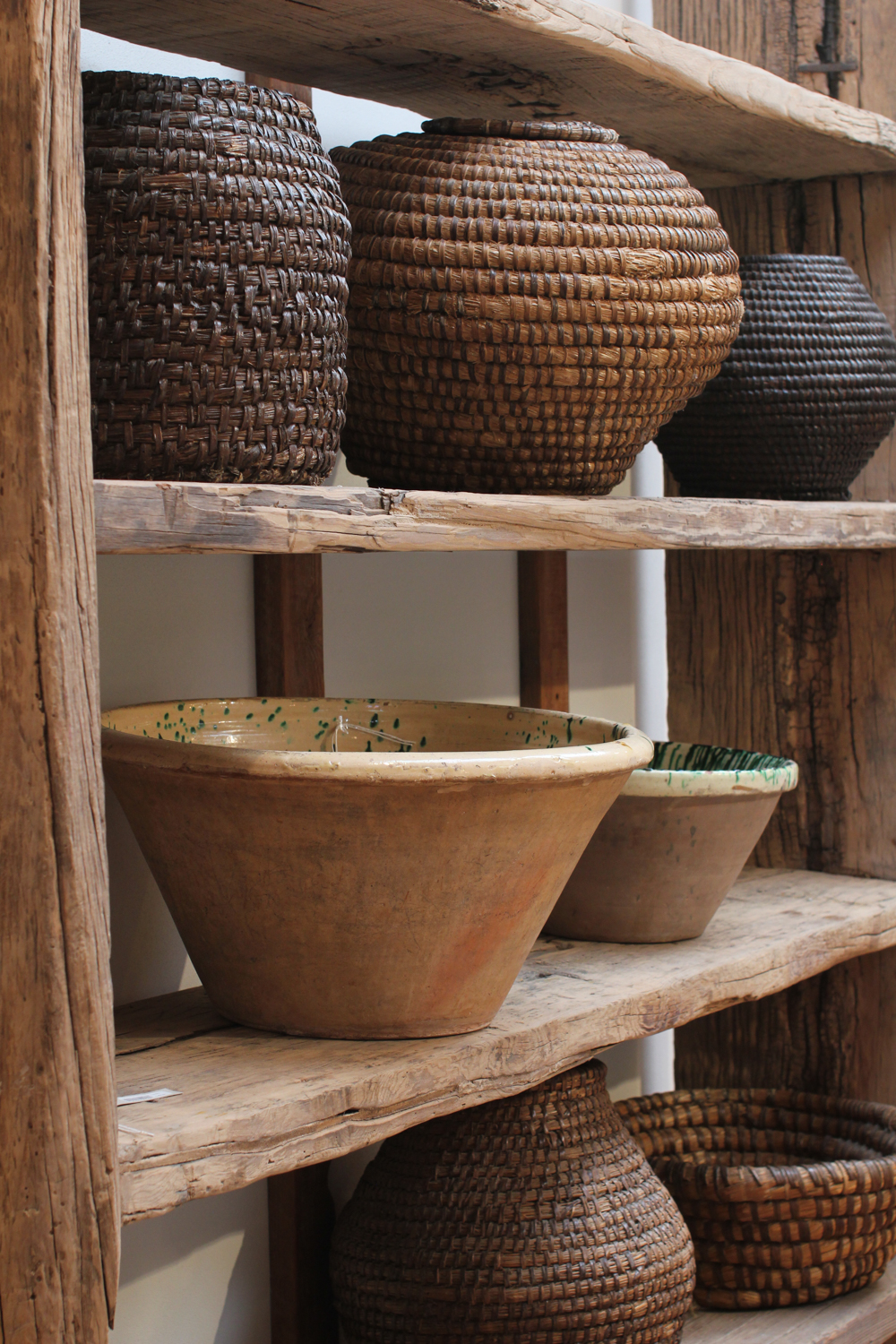
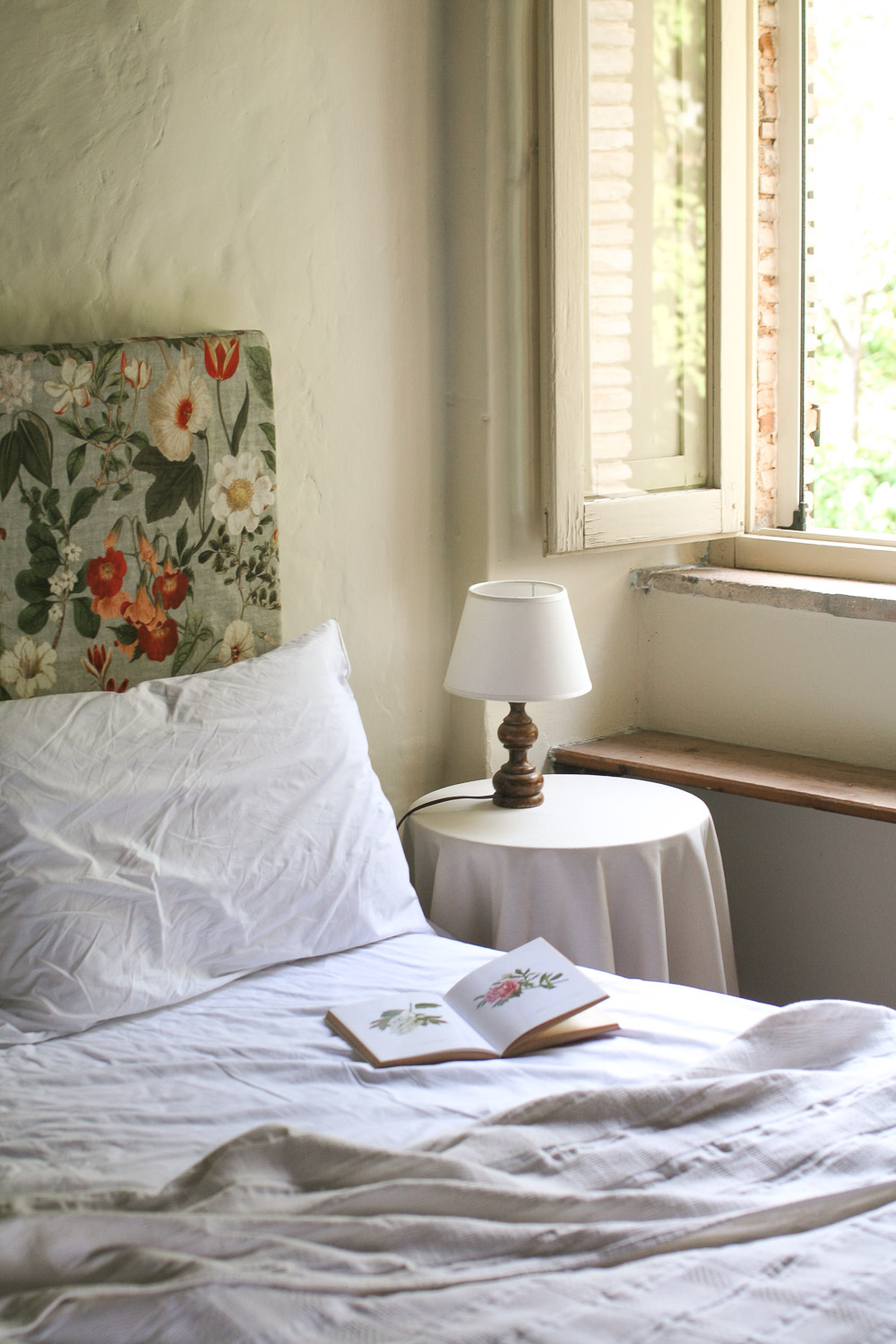
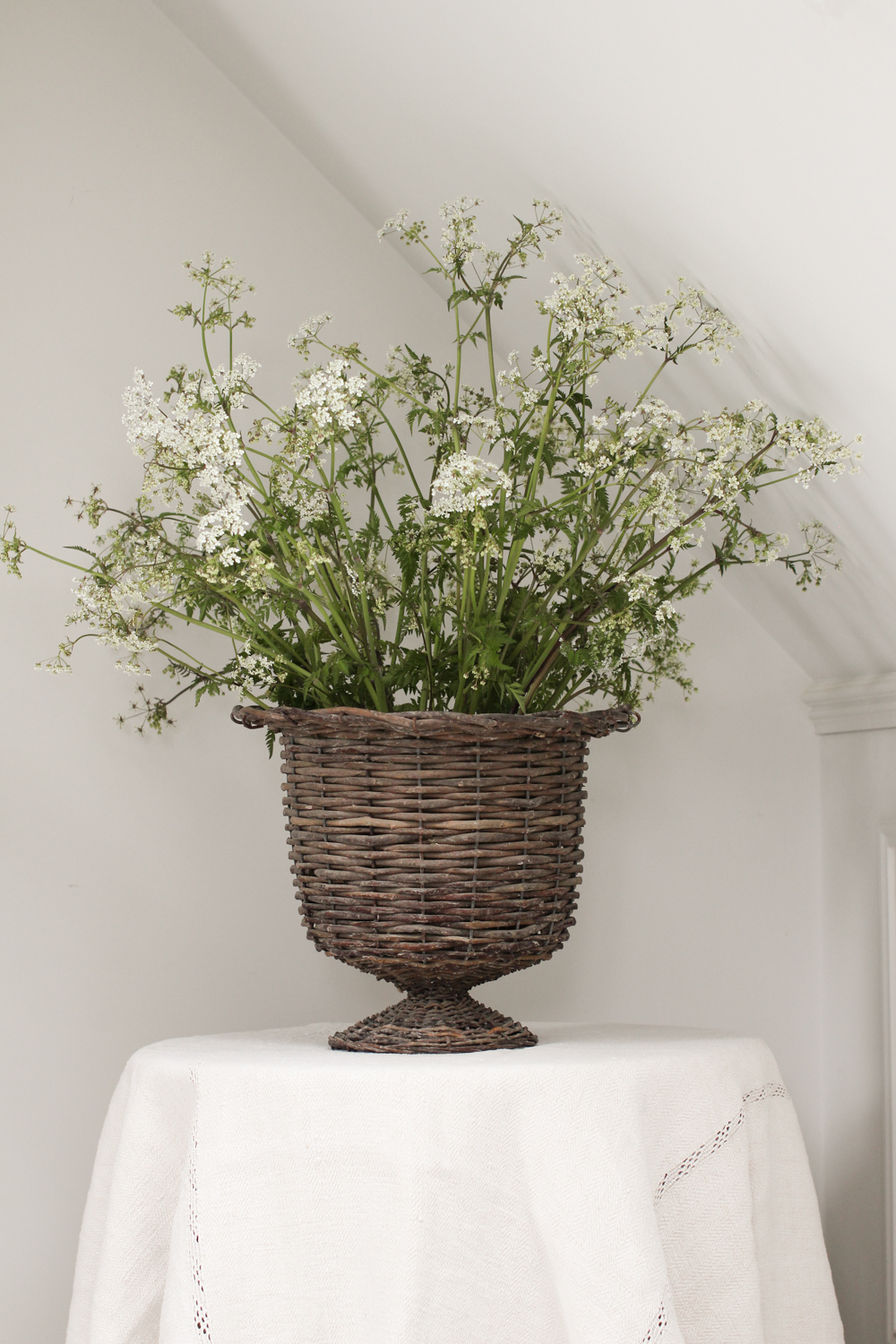
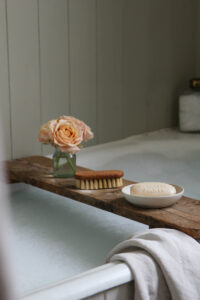
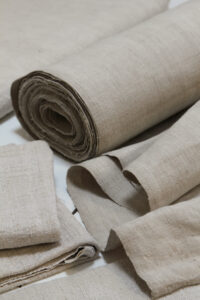
The Practice of Making a Home is an ongoing journal series exploring how to create a thoughtful and enduring home. Through a collection of seasonal chapters, I share reflections from our own home as it evolves, exploring the choices, values and quiet observations that influence the way we live. These chapters are an invitation to think more deeply about home, and the belief that the most meaningful homes are created slowly, with simplicity, character and care.
For as long as I can remember, I have been drawn to old houses. Not because they were grand, but because of how they felt. Time had softened their edges. Their walls held stories, and their rooms seemed to have grown gently around the many lives lived within them. They felt comforting, inviting and settled.
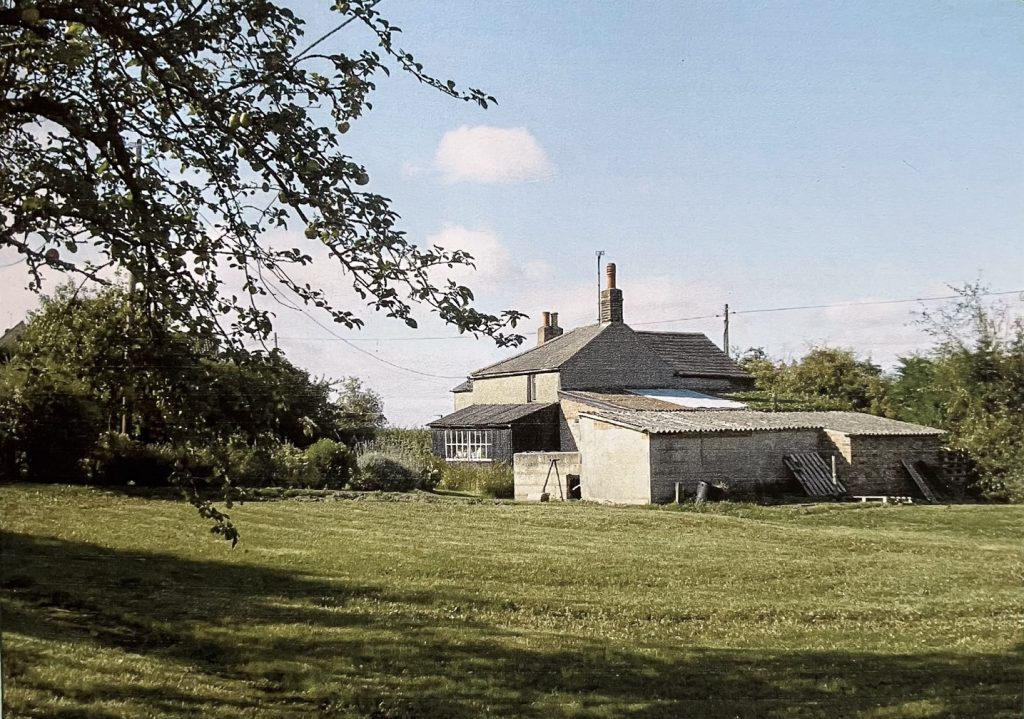
We bought a small eighteenth-century farm labourer’s cottage, surrounded by open countryside on the edge of the Cotswolds. It wasn’t the picture-perfect cottage people often imagine. It was tired and neglected, damp and cold, with no central heating, dry rot and buttresses supporting the walls.
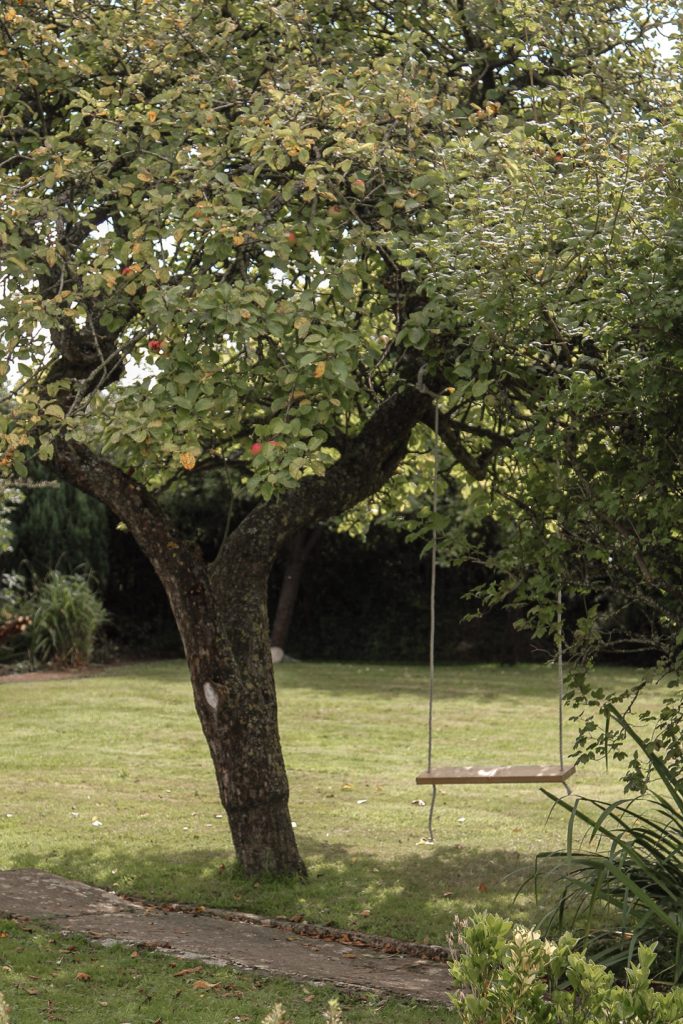
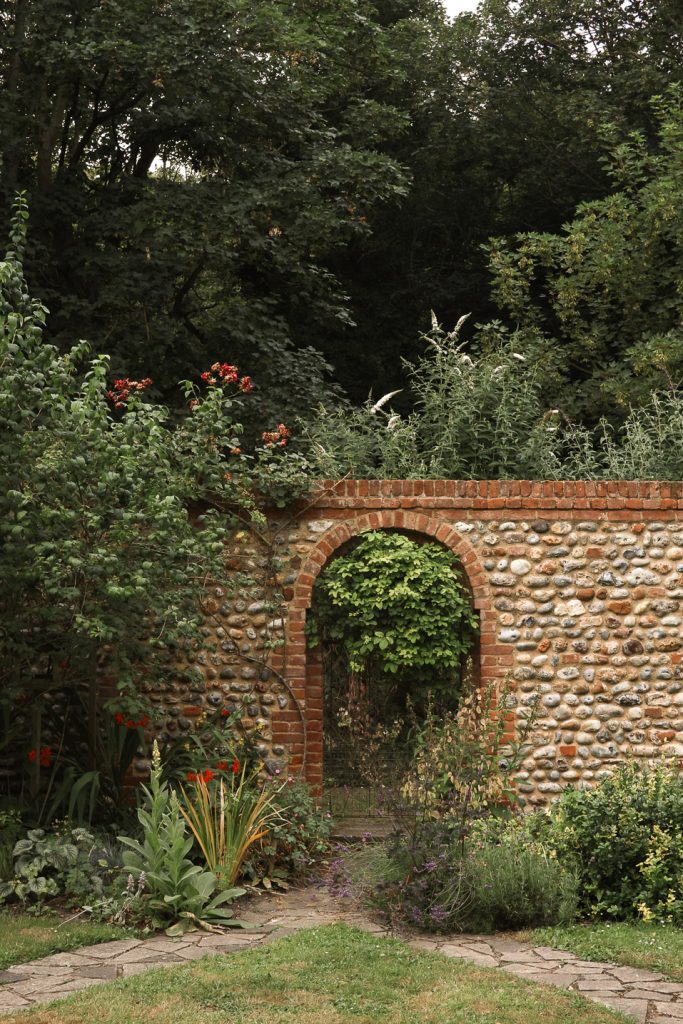
Yet the place itself felt right. Not because of the cottage, but because of everything around it. The fields stretching beyond the garden. The presence of the changing seasons. The quiet and the possibility of creating the kind of life we hoped our children would grow up in.
An old photograph from the sales particulars
Living here taught me something that has quietly shaped the way I think about home ever since. I still love old houses, and I know I always will. But I came to realise that the age of a house matters less than the way it feels and the life it makes possible.
The most beautiful homes are those that support and reflect the people who live within them. They bring us closer to nature, to one another, and to the quiet rhythms of everyday life. That belief guided our decision to remain here and slowly build a new home within the garden.
For someone who has always loved old houses, that decision felt unexpected. But building new never meant letting go of everything I admired about old homes. If anything, it made me pay even closer attention to them.
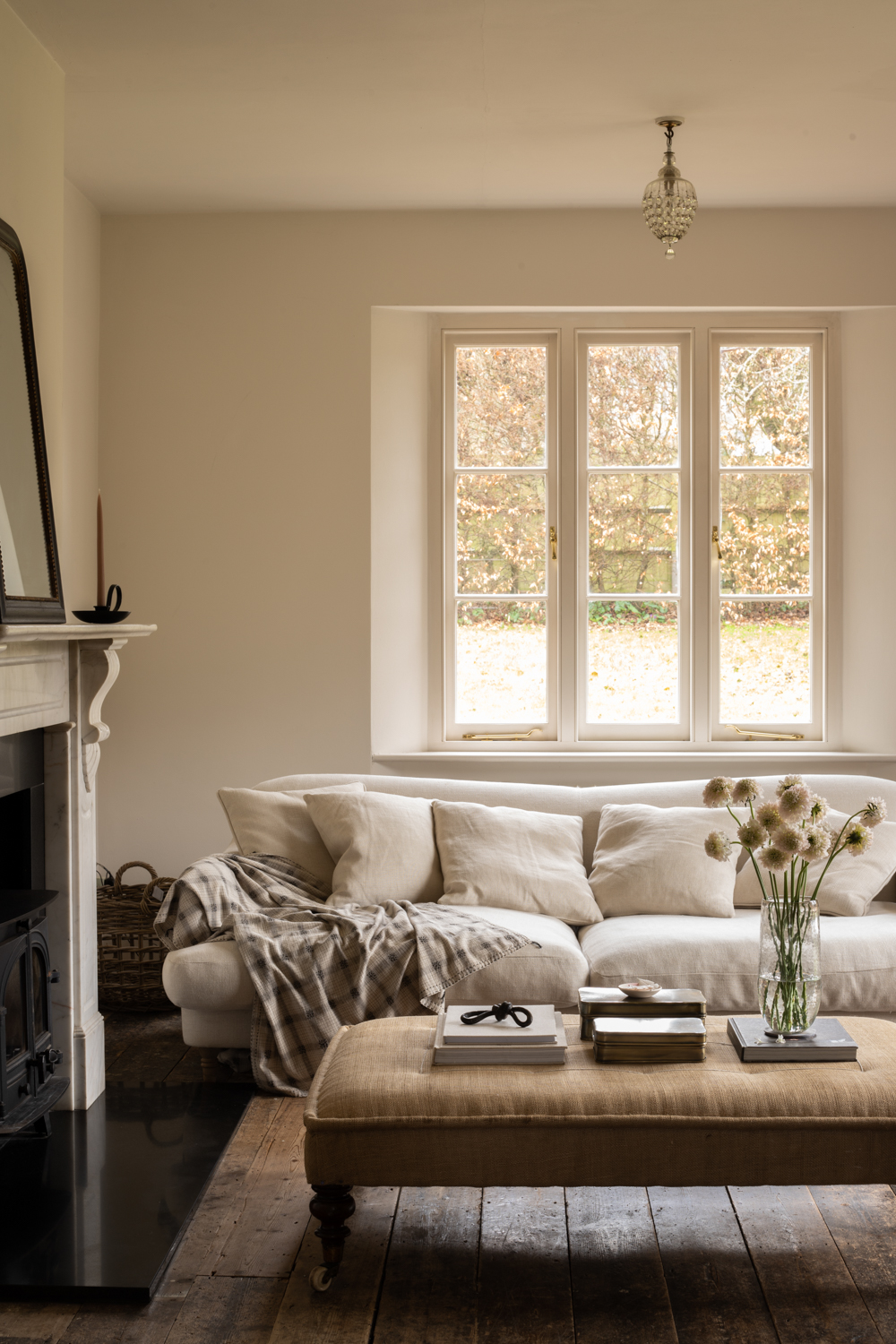
Our hope has been to create something that would function like a new house, while carrying the feeling of an old one. Not by recreating the past, but by considering the qualities that make older homes feel so settled and enduring; natural materials, simplicity, imperfection, character, warmth and a sense that a home has evolved over time.
Our home is rooted in its landscape; one that sits quietly within its surroundings, built with care, restraint and a respect for natural materials. A home that, over time, might earn its own sense of history.
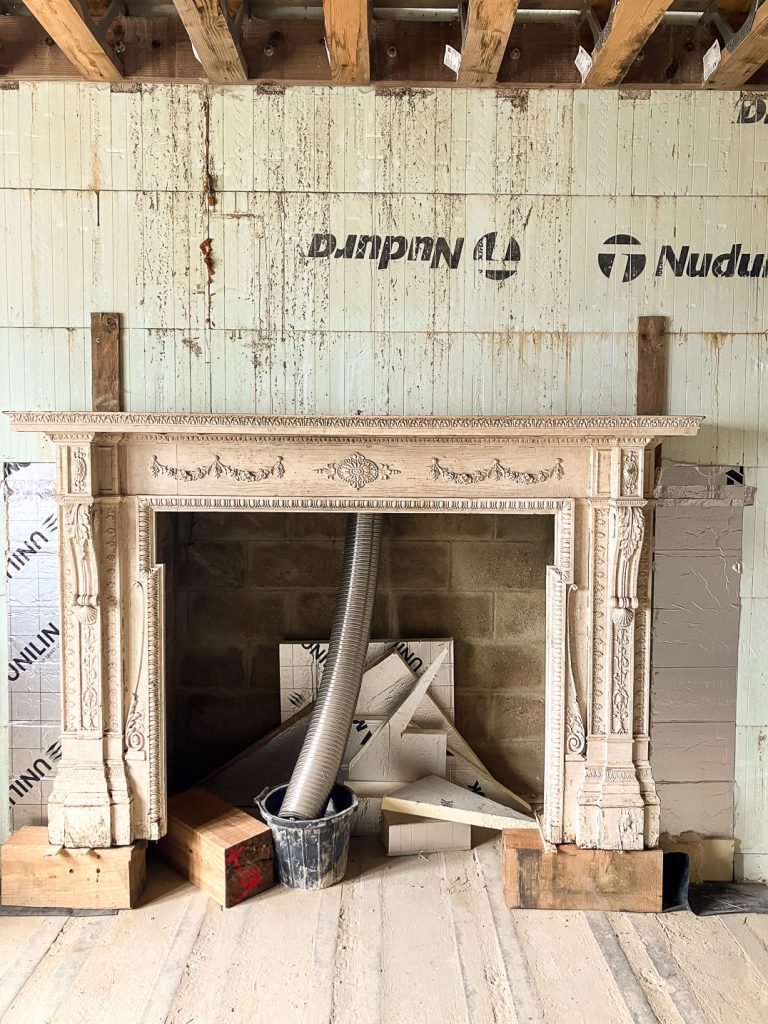
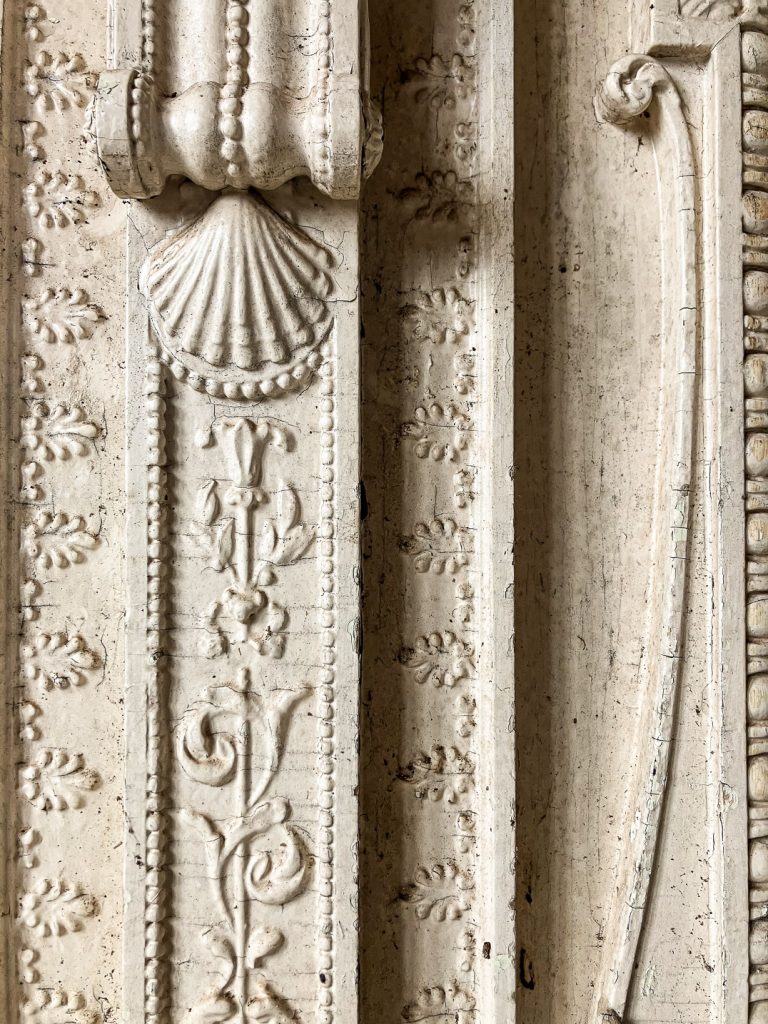
Years have passed and progress has been slow, not only because we continue to do much of the work ourselves, but because the process has continually reminded us that the best decisions are rarely the quickest ones. We have learned to wait for reclaimed pieces, to live with unanswered questions, and to trust that character is something gathered gradually rather than achieved all at once.
Our home is still unfinished, and I hope, in many ways, it always will be. Like a garden, it will continue to change with the seasons and with the lives lived within it. I no longer think of home as something to complete, but as something to shape, slowly over time. Perhaps that is the real practice of making a home.
It is also the thinking behind the Will & Bea Studio. I believe a home should begin with the people who live there, how they live, what they value and what they want their home to make possible. Through home consultations and considered sourcing, I help others think through their own spaces, making changes gradually and with intention rather than starting with a finished idea of how a home should look.
A home is one of our most personal expressions. It is where everyday life unfolds; where we gather with family and friends, mark the seasons and surround ourselves with the things that matter most.
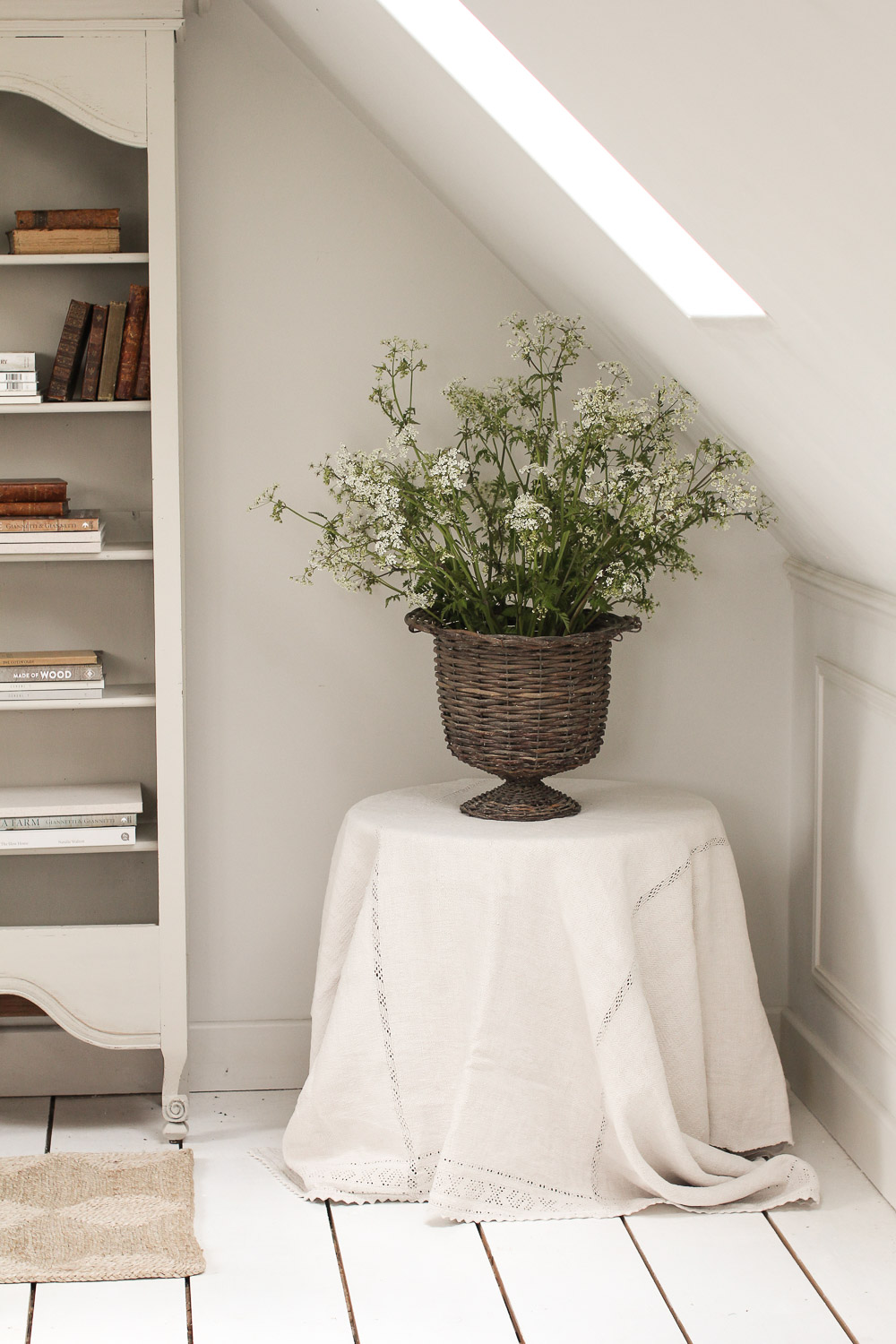
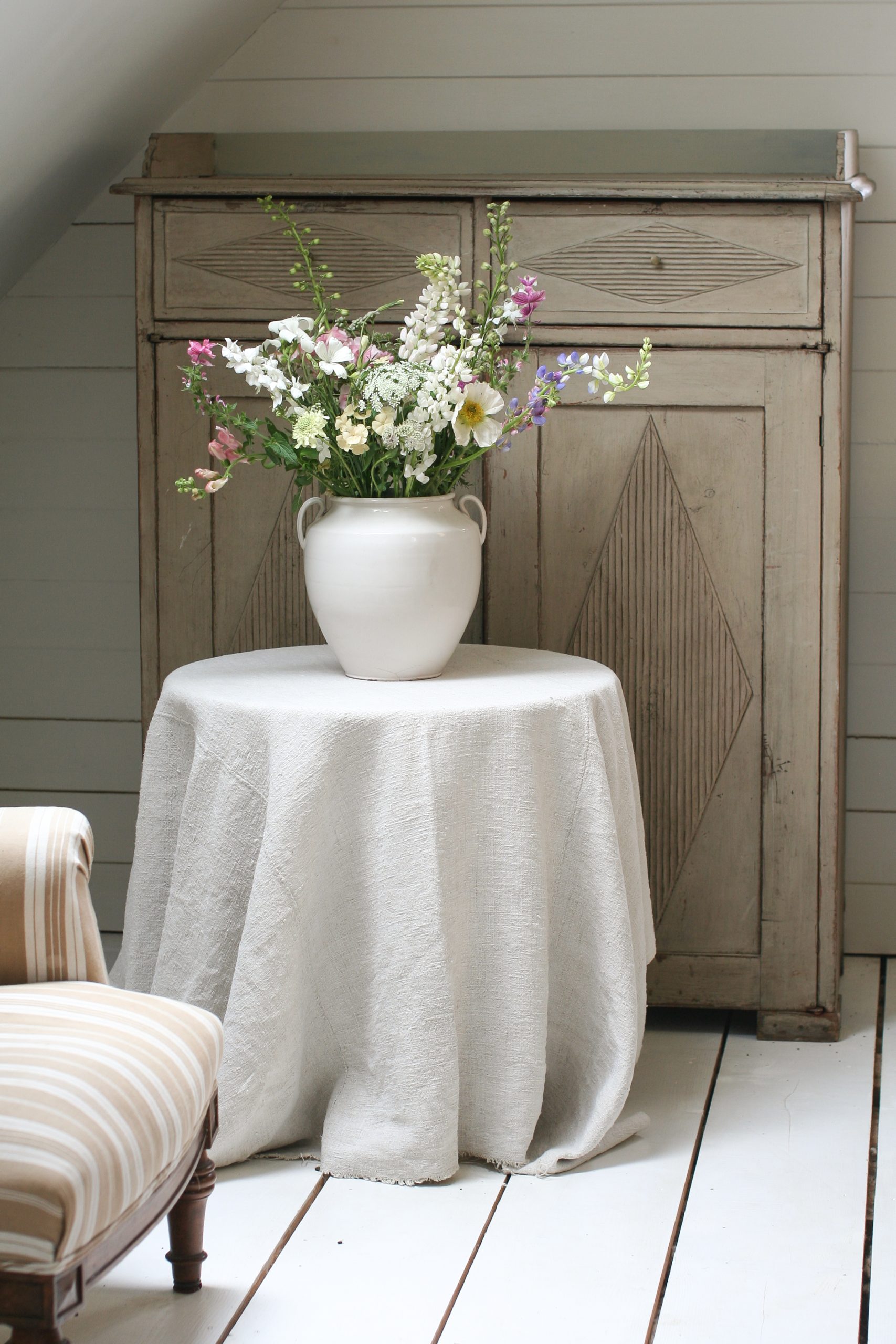
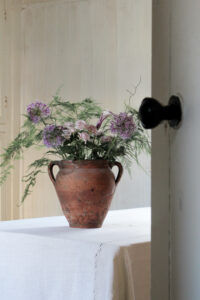
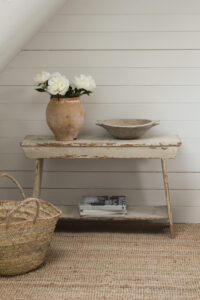
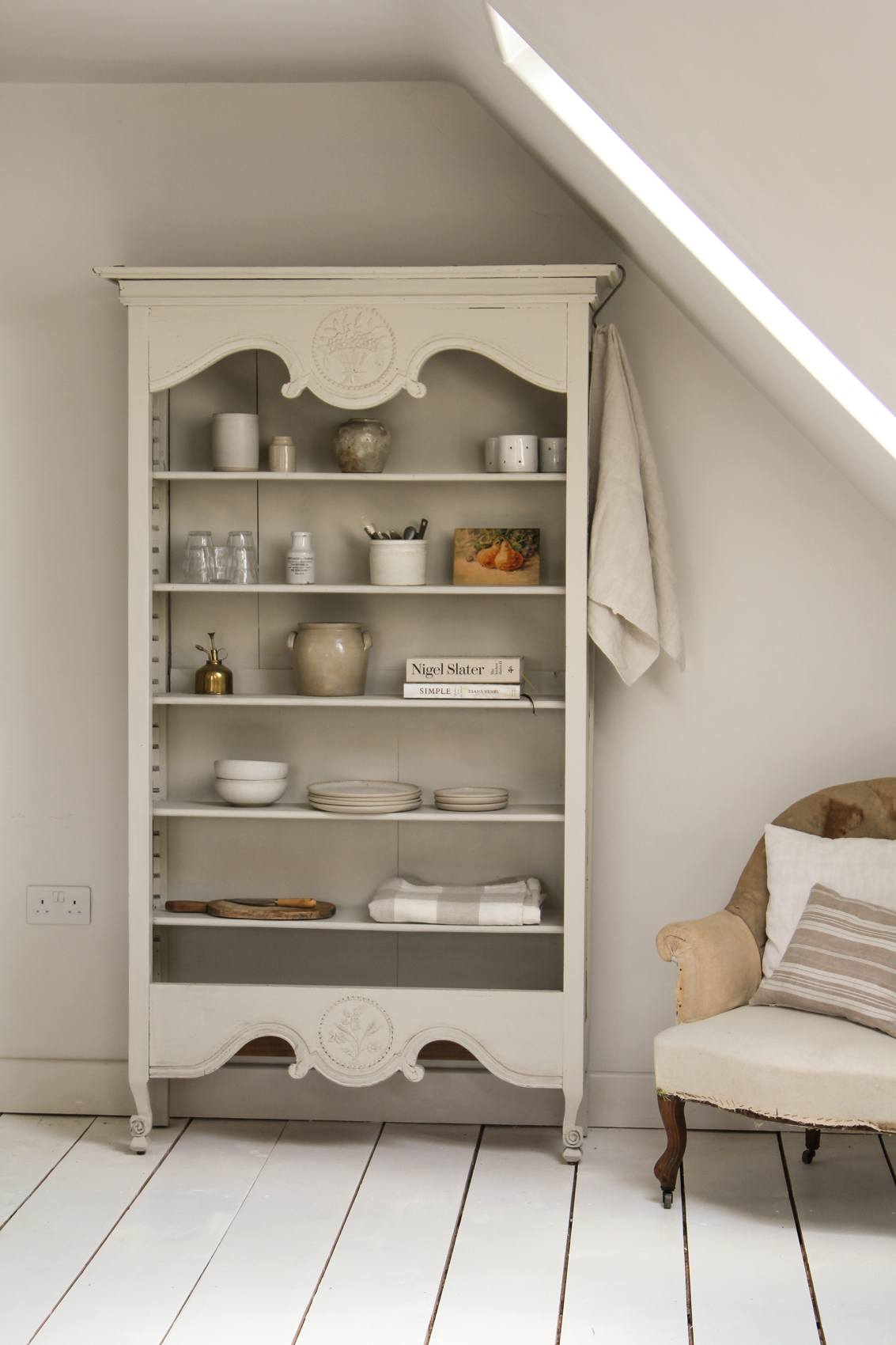
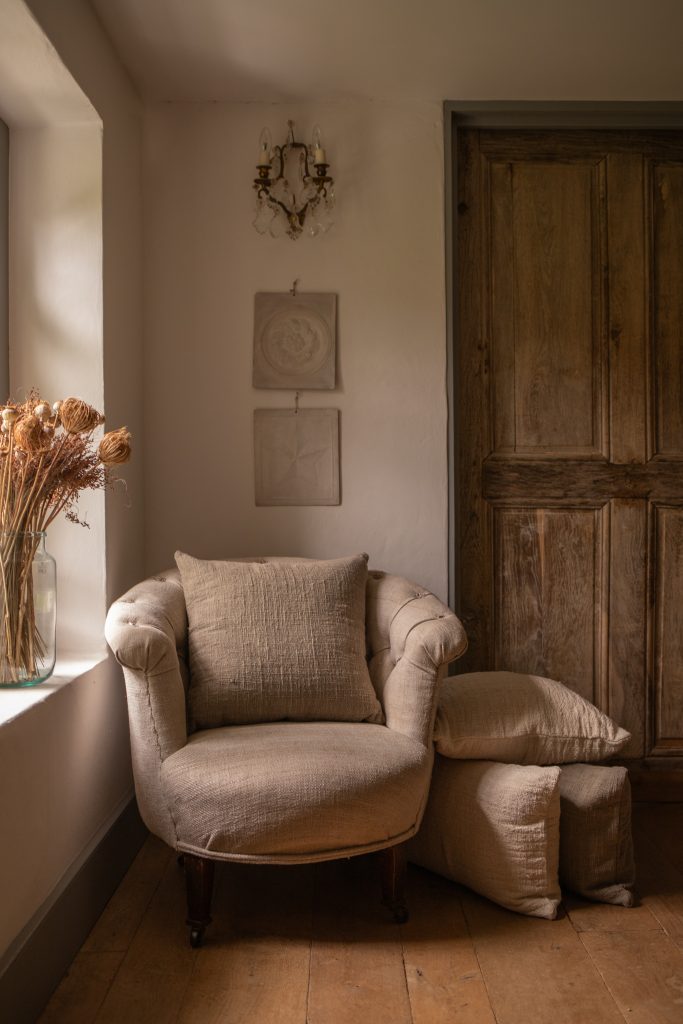
While we often think about how a home looks, it is the feeling it creates that stays with us. A comfortable chair by the window, favourite books on a shelf, or a vase of flowers gathered from the garden. These quiet details shape the feeling of home far more deeply than decoration alone.
In a world of endless inspiration and ever-changing trends, it is easy to lose sight of what we are naturally drawn to. Yet the most memorable and enduring homes rarely begin with a particular style. Instead, they start by understanding how we want to live.
How you want to live
Take time to consider what home means to you and how you want to live, reflecting on your values, the rhythms of everyday life and the atmosphere you hope to create. This becomes a quiet compass for every decision that follows, helping to shape spaces that feel personal rather than assembled.
A meaningful home is created through observation, instinct and thoughtful choices made over time. In turn, it quietly supports the life lived within it.
Discover your own story
Enduring homes are rarely shaped by emulating another. Instead, seek inspiration everywhere, allowing your taste to develop gradually through curiosity and observation. Visit museums, galleries and houses, read books, walk through gardens and travel when you can. Pay attention to the natural world and the beauty of everyday places.
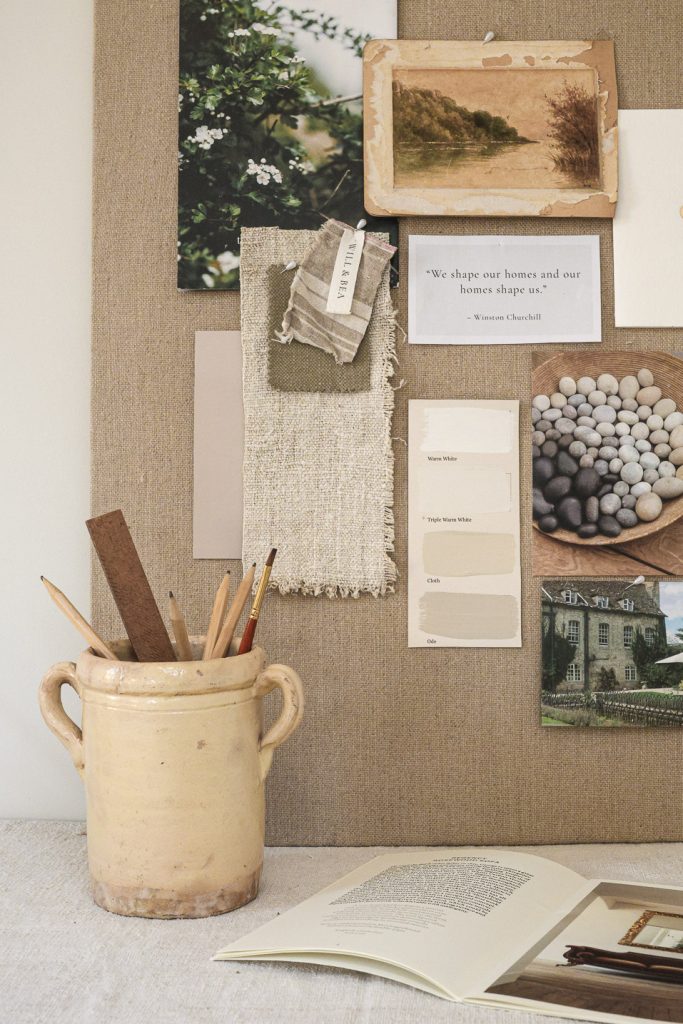
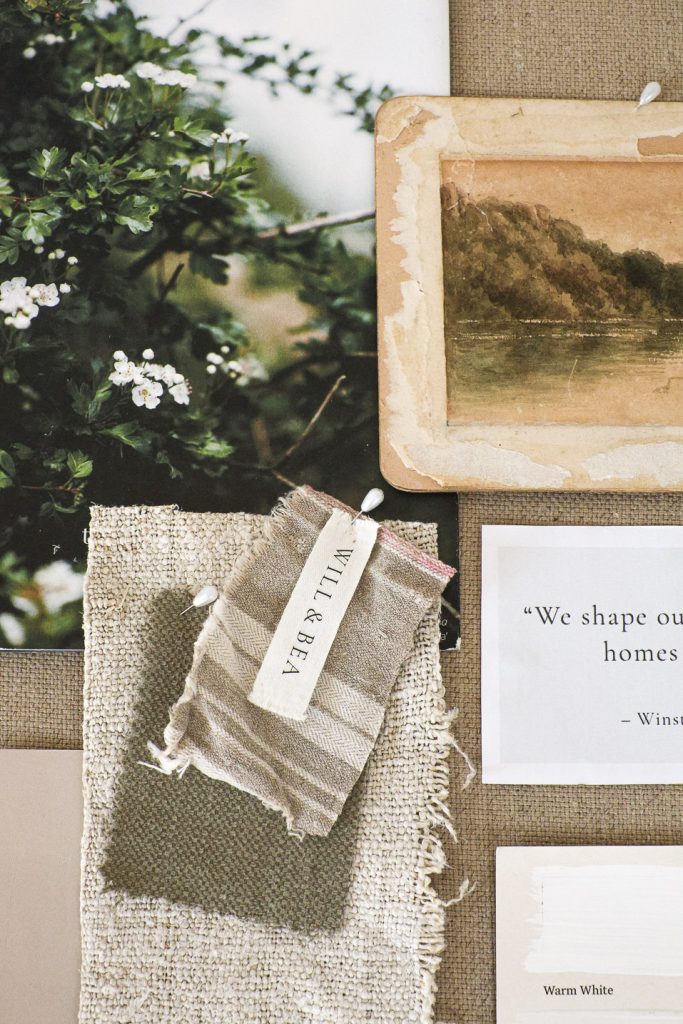
Collect photographs, postcards, paint samples, fabrics, magazine clippings, anything that quietly resonates with you. Gather them together on a physical mood board and live with it for a while. Over time, patterns begin to emerge. Certain colours, textures and landscapes appear again and again, revealing a visual language that is uniquely your own. Often, this is where the story of your home quietly begins.
Gather thoughtfully
The homes that stay with us are seldom those with the most. They are the ones shaped by things that carry meaning, chosen with thought and care. A painting discovered on holiday, favourite ceramics, well-loved books, or shells collected on coastal walks.
Pieces gathered over time bring warmth, character and a sense of continuity. Together they tell the story of a life rather than following a trend.
Leave space
One of the qualities I notice most in homes I admire is not simply what they contain, but the space around them. Light, balance, proportion, space which allow both the home and the objects within it to breathe.
Restraint often creates more atmosphere than abundance. When every object has room to breathe, we notice and appreciate it more. Choose fewer things, but choose them well.
Allow your home to evolve slowly
A meaningful home is never truly finished, it changes as we do. Pieces are moved around and collections grow slowly. Favourite objects gather their own patina through daily life.
Rather than rushing towards a finished result, allow your home to evolve naturally, one thoughtful decision at a time. Like a garden, it becomes richer with every passing season. The most enduring homes are those that have been allowed to unfold, reflecting not a single moment, but a life being lived.
A quieter way of creating a home
When our homes reflect our values, support the way we live and are filled with things we genuinely love, they become far more than beautiful spaces. They become places that comfort, restore and quietly enrich everyday life.
Ultimately, the most meaningful homes are not those that follow trends or perfectly recreate someone else’s vision. They are the homes that tell our personal story through thoughtful decisions made with care over time.
Home Consultations
Home Consultations are a natural extension of the studio, bringing together experience of sourcing antiques, shaping collections and helping people create homes with simplicity and character.
Whether you are rethinking a single room, planning a whole house or simply feeling unsure where to begin, together we explore how your home can better reflect the way you want to live.
If you would like to learn more about working together, you can explore our Studio practice here.
Share this entry:
Decorating with Antique Textiles
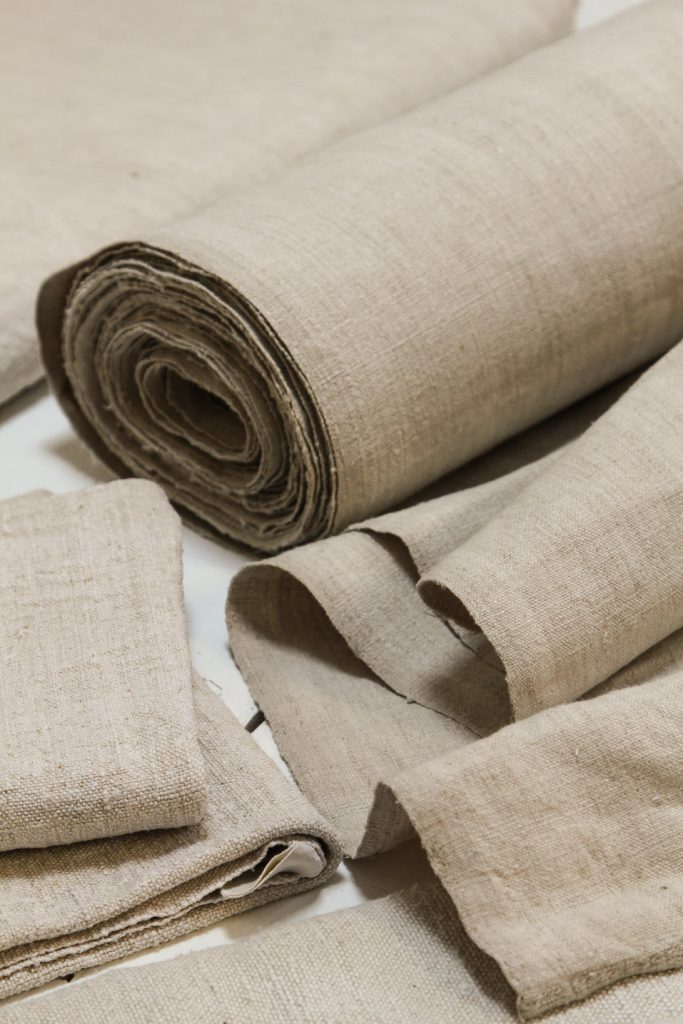
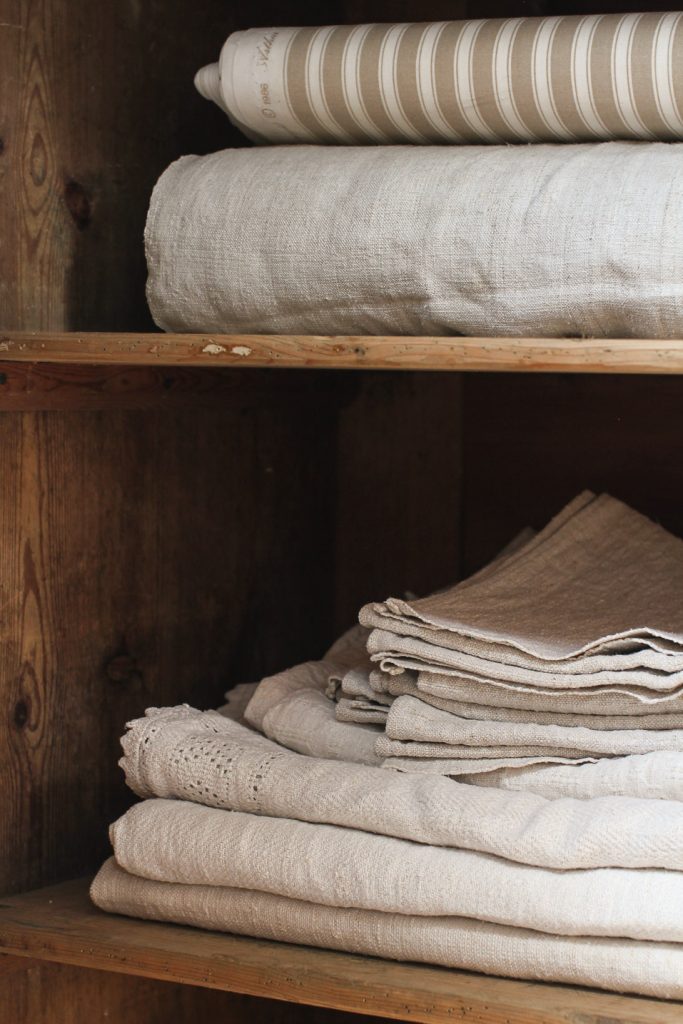
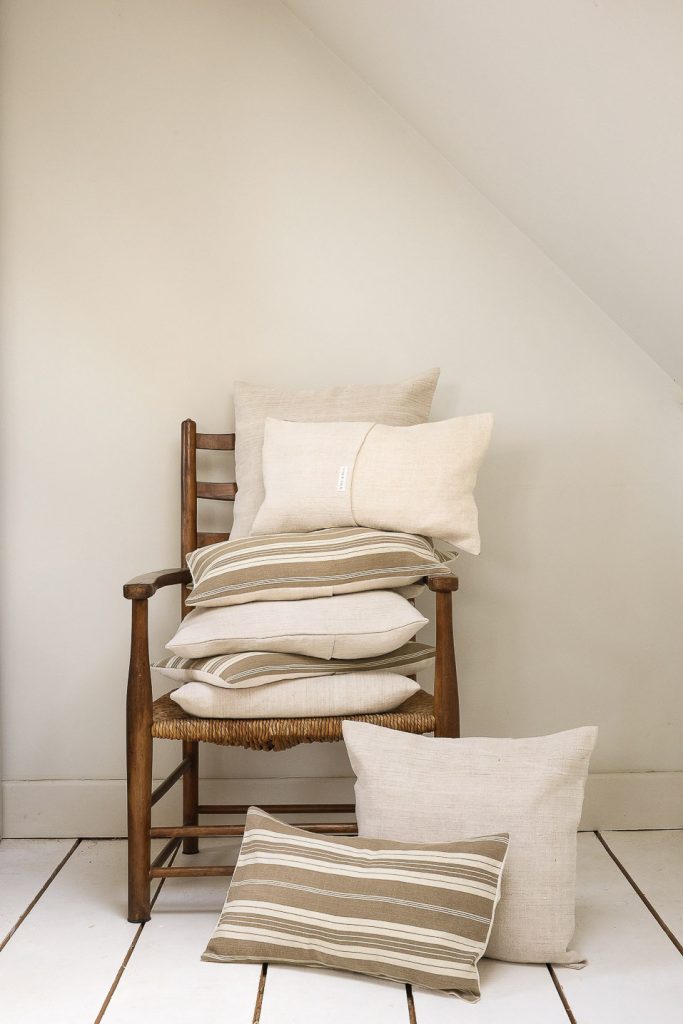
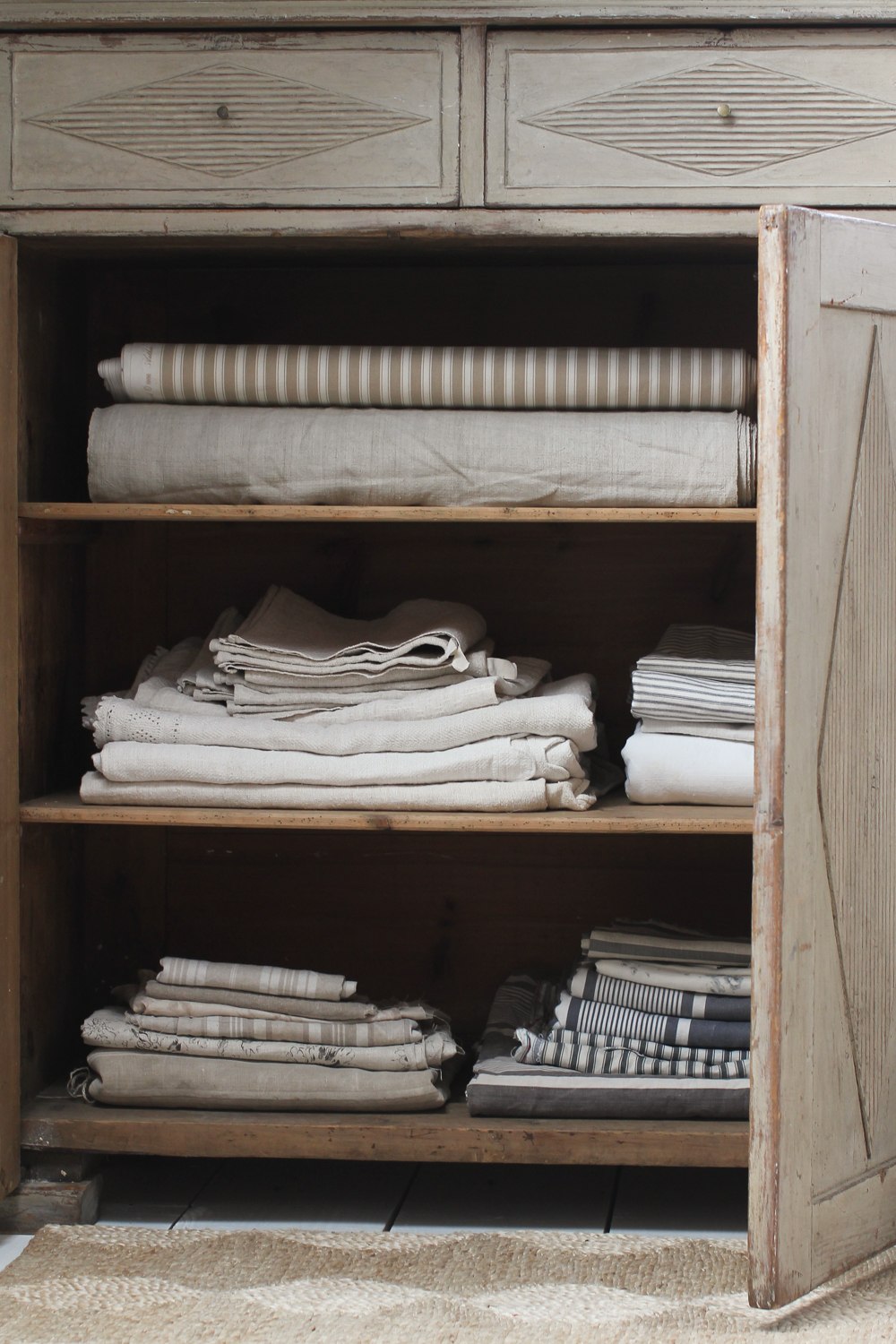
Antique textiles are one of the simplest ways to bring character into a home. Whether handwoven linens, traditional ticking or printed cottons, each piece adds atmosphere and a sense of history that is difficult to replicate.
Originally woven for everyday use, these fabrics were made from natural fibres and crafted to endure. Years of use have softened their colours, enriched their texture and revealed a depth of character that only time can create.
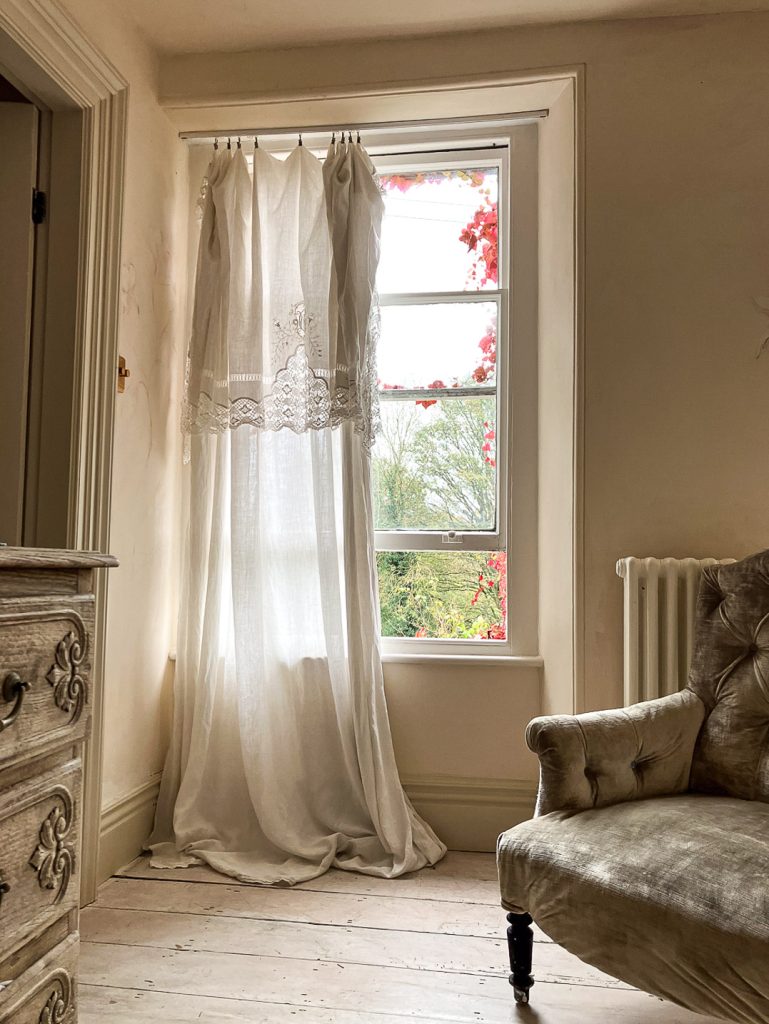
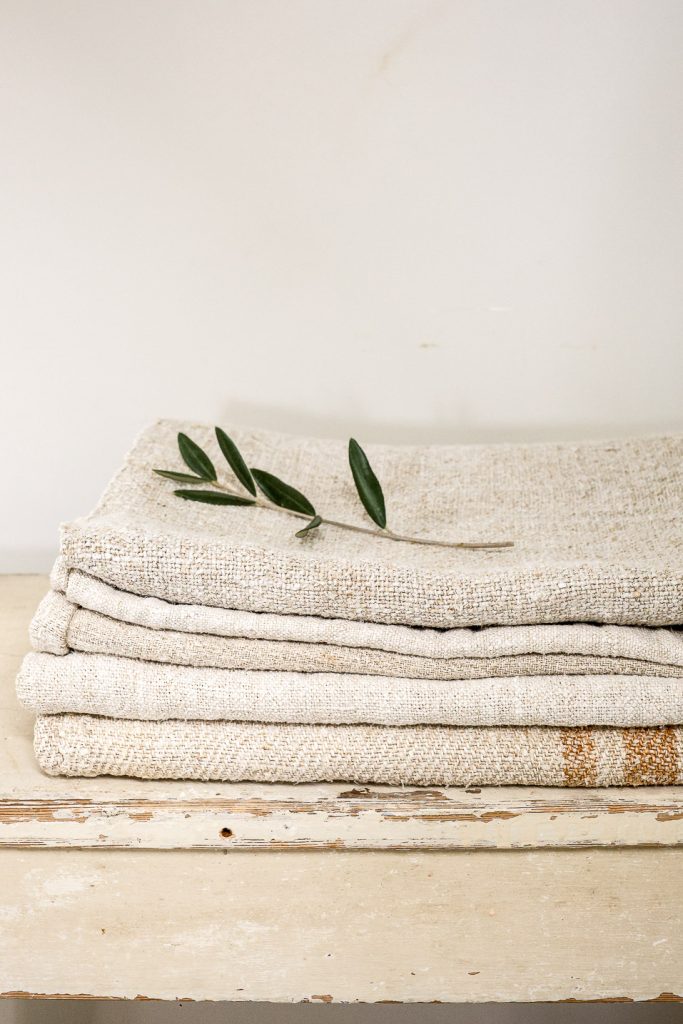
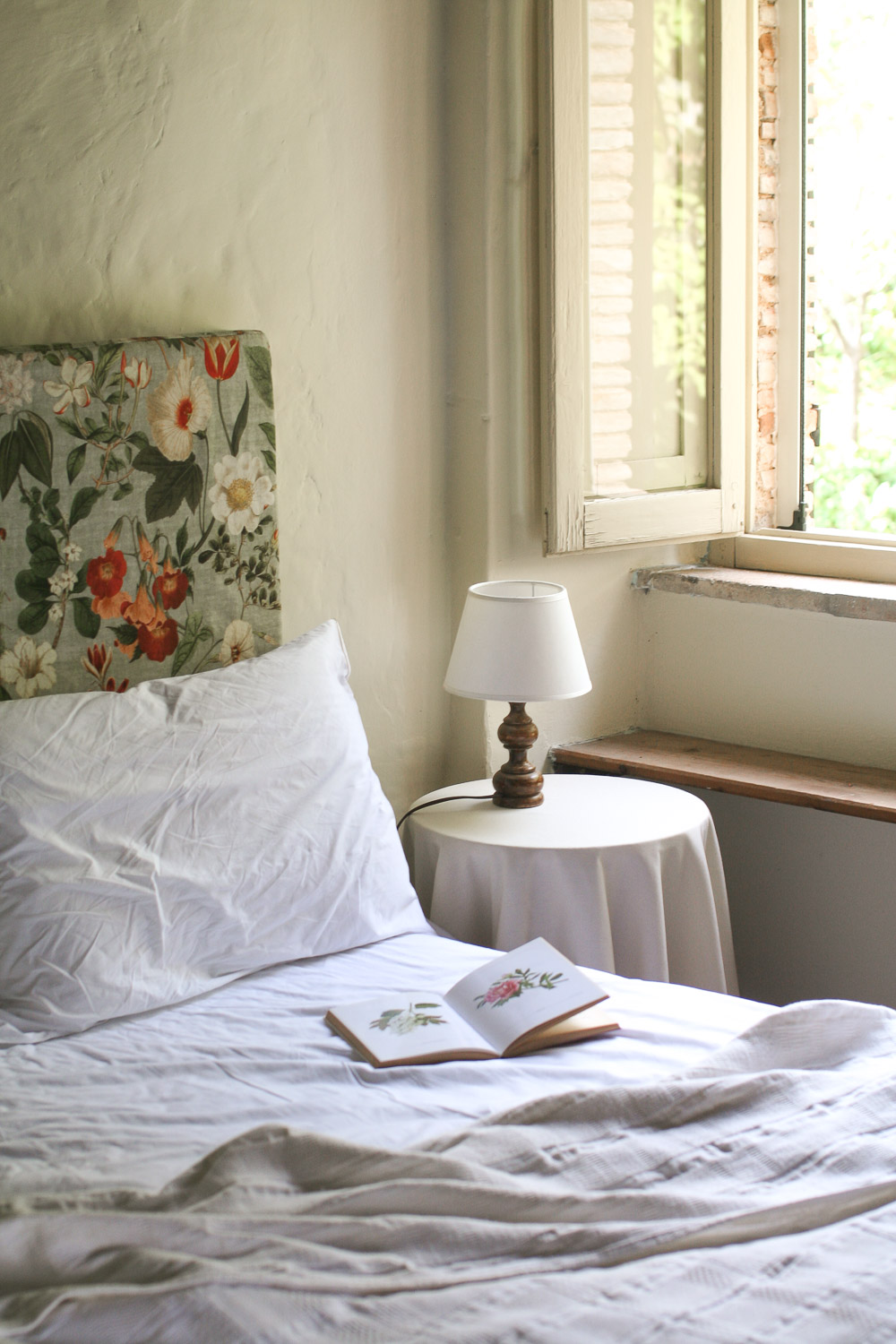
One of the reasons we love antique textiles is their versatility. They can be reinterpreted as cushions, lampshades, headboards and upholstery, used as curtains or table linens, or simply draped over furniture.
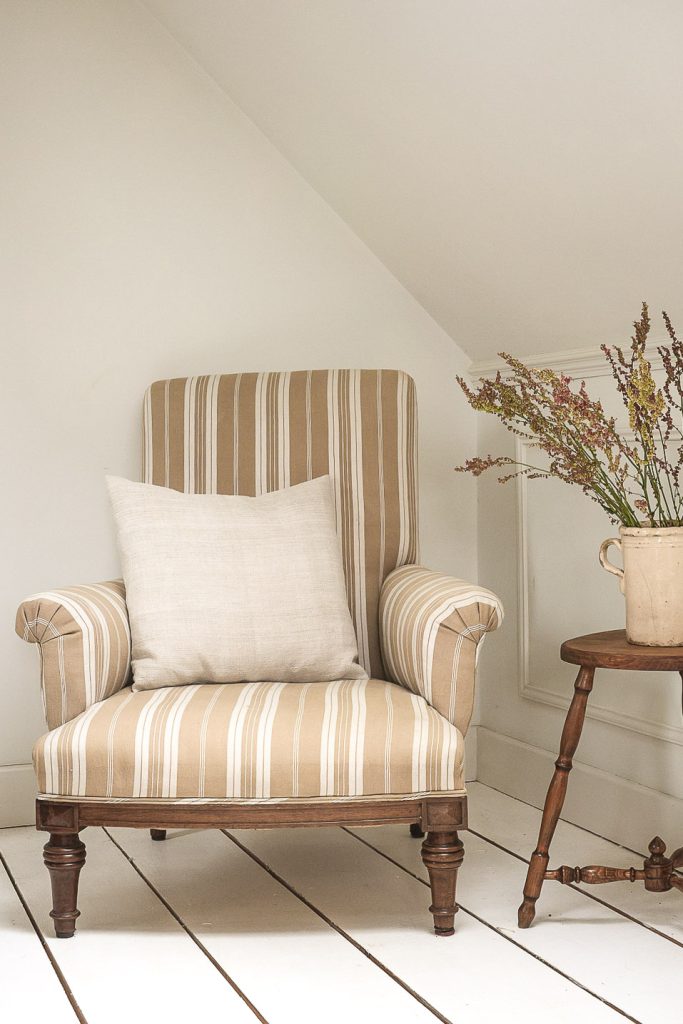
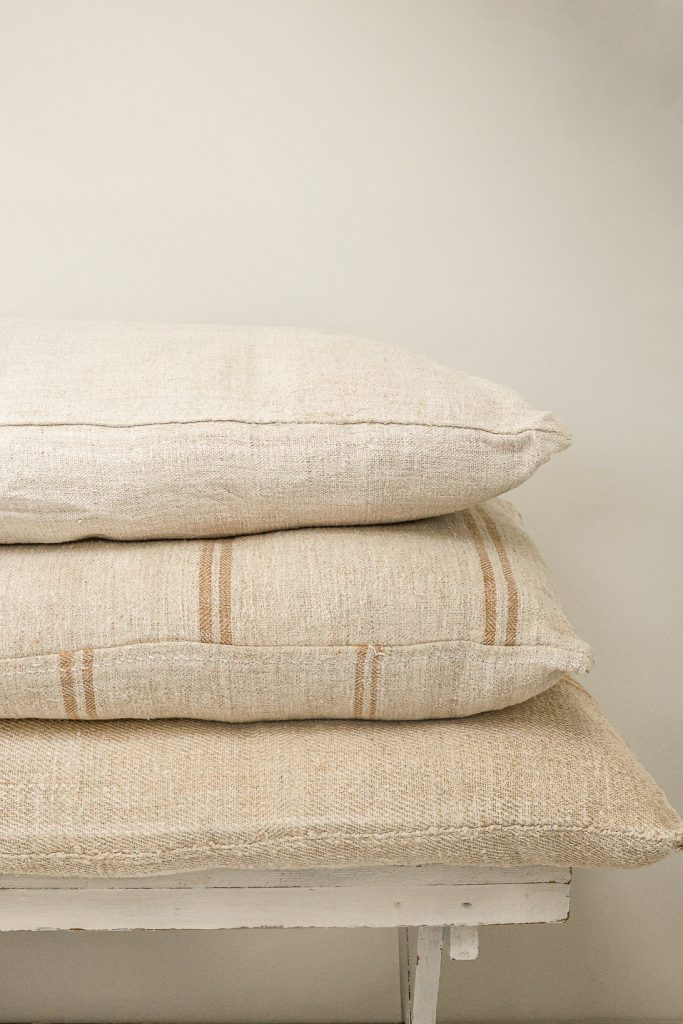
Even the smallest detail, such as a simple cushion can completely change the look and feel of a room, softening the edges of a chair, sofa, window seat or bed and adding comfort and warmth.
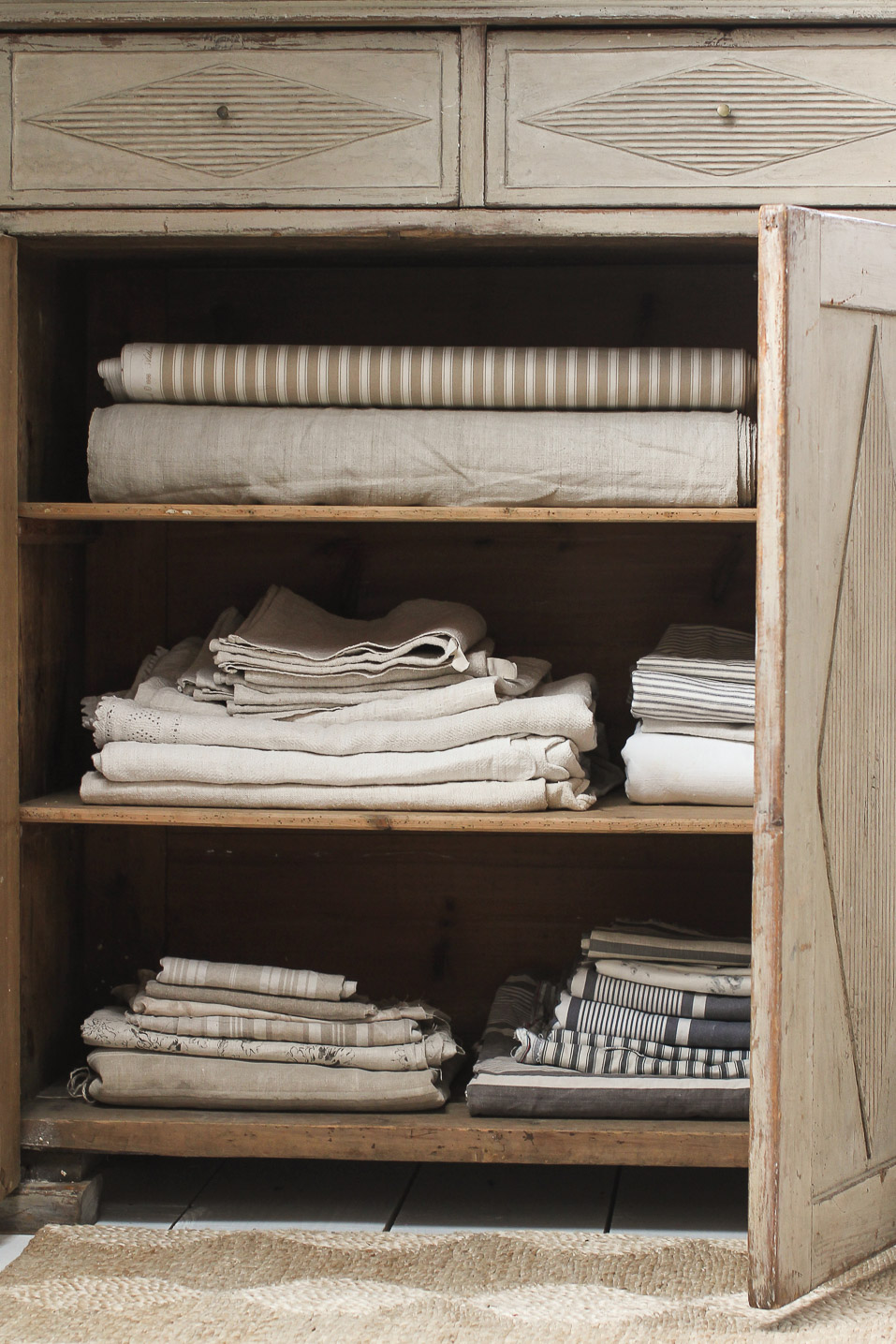
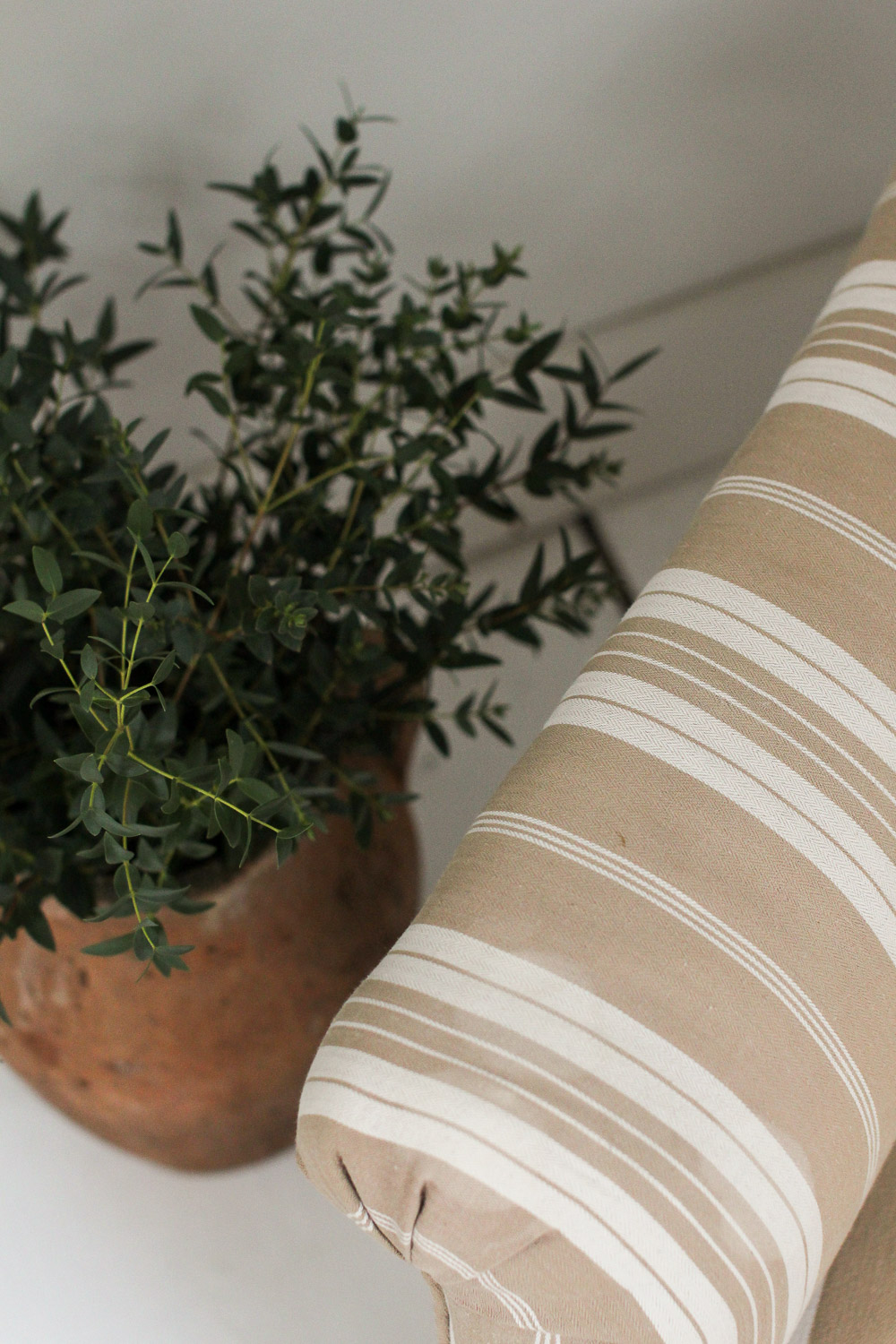
Many textiles lend themselves well to repurposing. Grain sacks make beautiful cushions and upholstery, while antique linens can become curtains, bed coverings or tablecloths. Ticking fabrics, originally designed for mattresses and bolsters, remain a timeless choice for upholstery and soft furnishings.
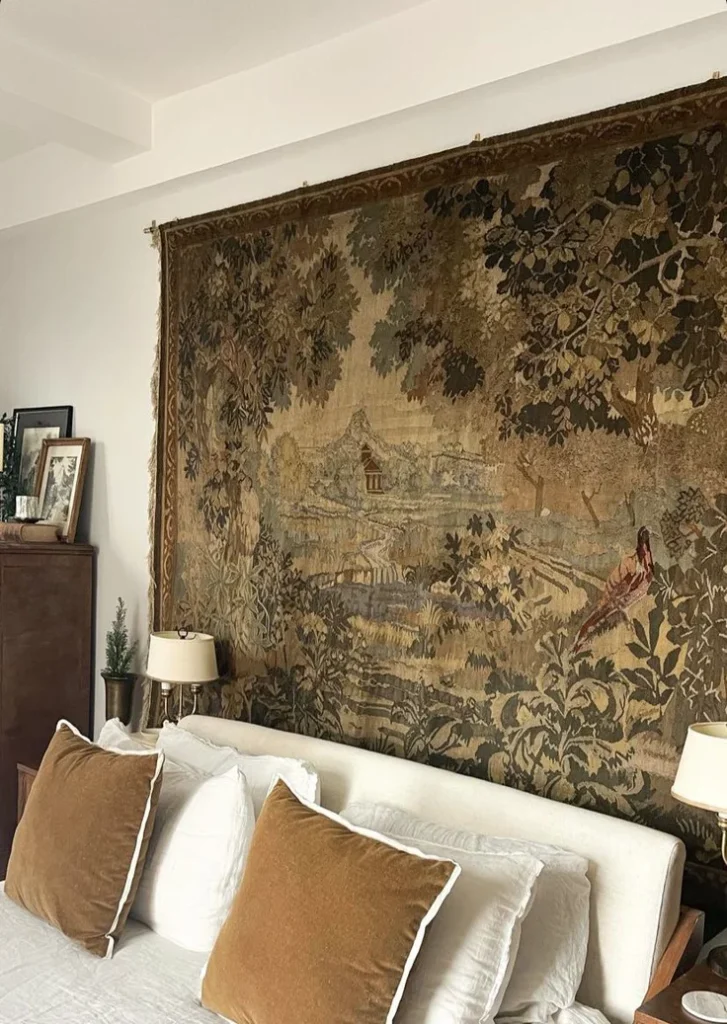
Larger antique textiles such as rugs or tapestries, can be framed or hung as artwork, allowing their weaves, patterns and history to take centre stage. Displayed in this way, they become striking focal points that add texture and depth to a room.
Antique textiles are defined by variation. No two pieces are exactly alike and each carries its own story, preserving the craftsmanship of the maker and the traces of those who used it before. There is something deeply satisfying about reimagining these fabrics.
Repurposing antique textiles allows them to continue their story rather than being forgotten or discarded. Whether transformed into a practical piece for the home or appreciated in their original form, they remain objects to be used, enjoyed and lived with.
Perhaps that is why we continue to seek them out. Antique textiles have a unique ability to make a home feel layered, personal and collected over time. They connect us to the past while finding a place in modern interiors, speaking to the enduring quality of good design, craftsmanship and natural materials.
Our handmade cushions are crafted from carefully sourced vintage and antique fabrics, allowing these materials to continue their story in new homes. Discover the evolving collection in our store.
Decorating with antique textiles is about recognising the beauty in what already exists and finding new ways for these pieces to remain part of everyday life.
We hope this journal offers inspiration for bringing antique fabrics into your own home.
Share this entry:
A Love of Books at Home
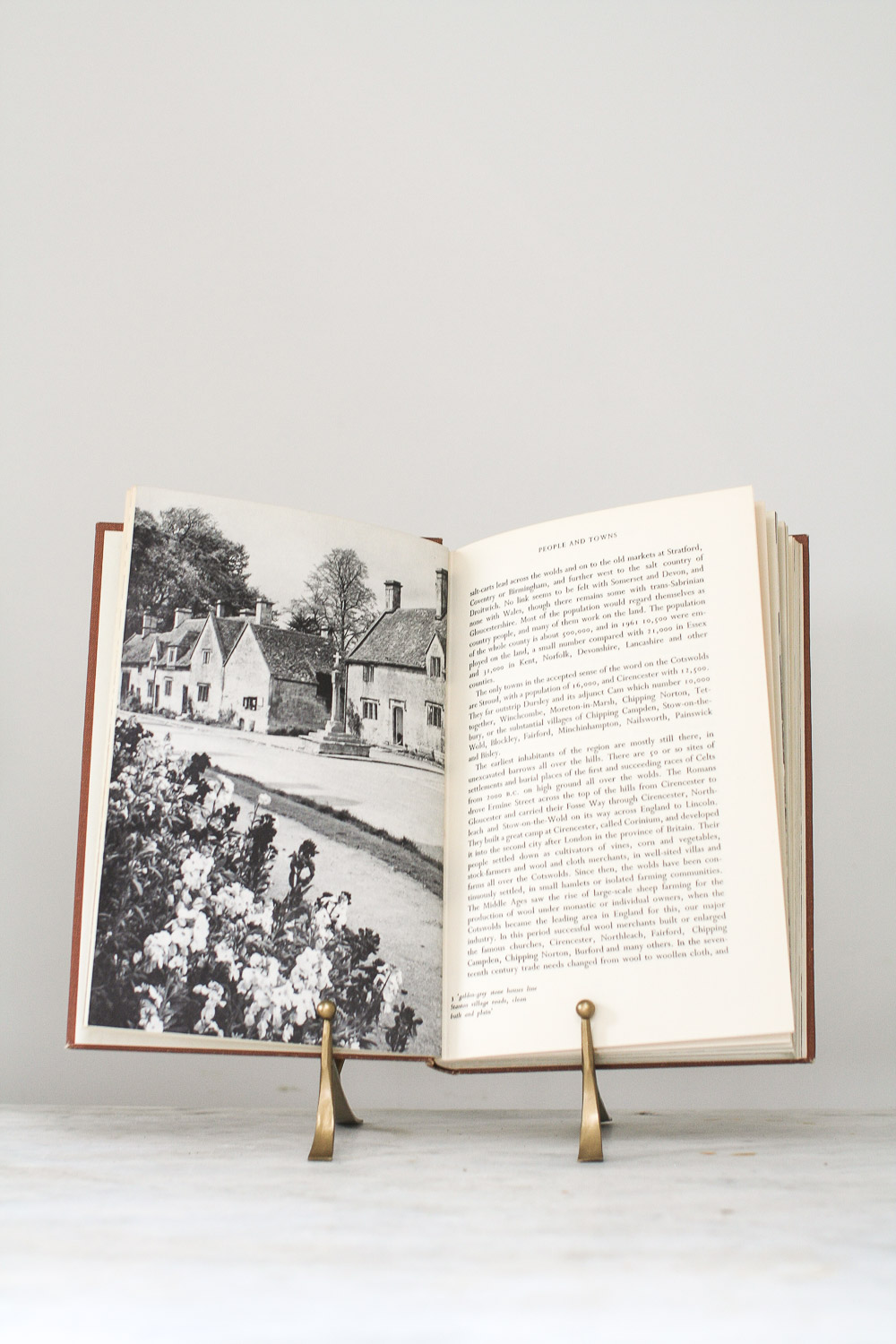
In an era dominated by digital media, the physicality of books adds a tangible element to our homes and helps to create warm and personal spaces. While they impart colour and form to a home, the appeal of books goes far beyond the aesthetic. Books serve as a window into our lives, reflecting interests, values and personality. They touch us on an emotional level, evoking memories and transporting us to a different time and place. Reading is both withdrawing from the world and entering it differently. Books are bridges between times and people, they provide opportunities to expand our horizons, let our imaginations roam, and encourage new ideas to flourish.
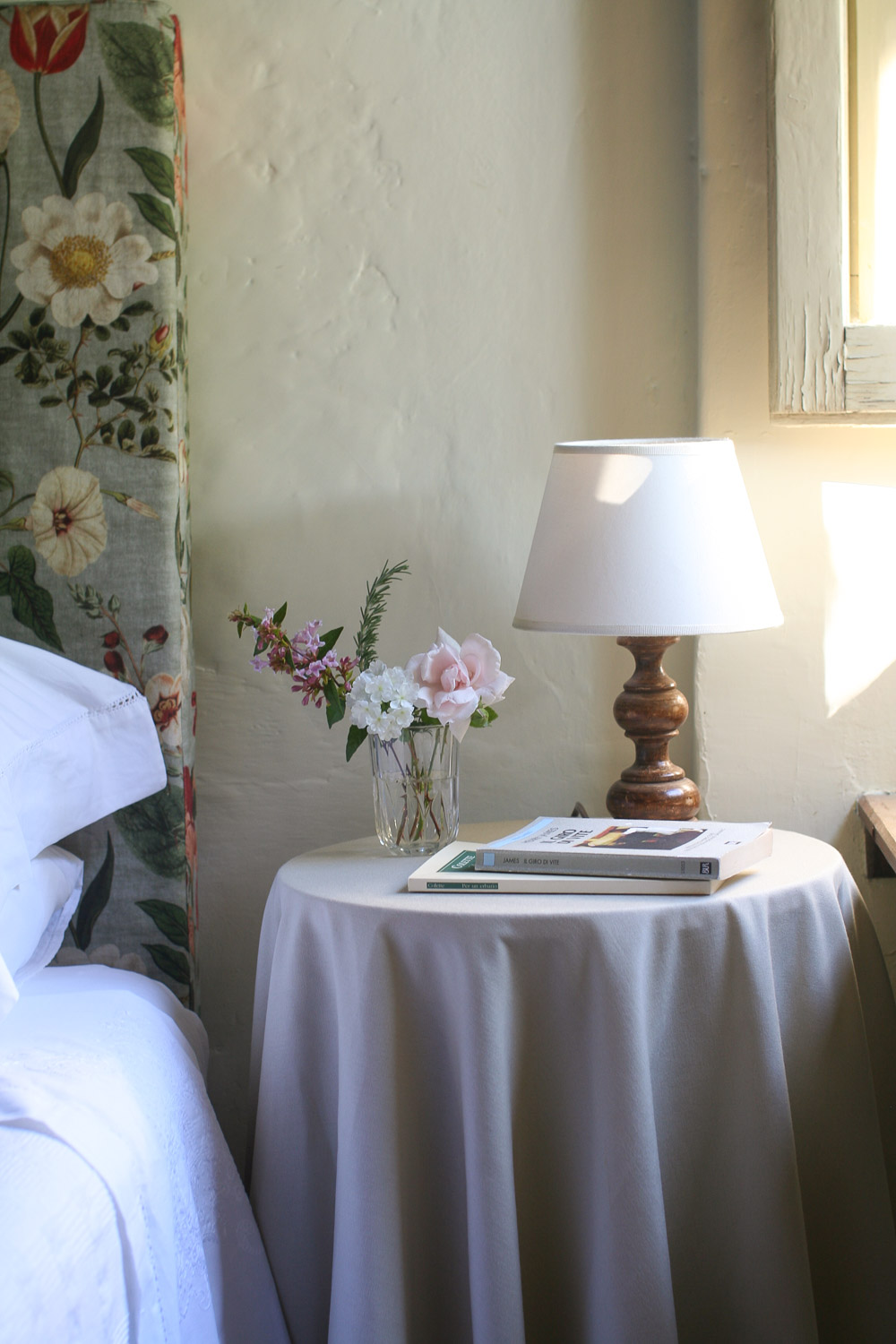
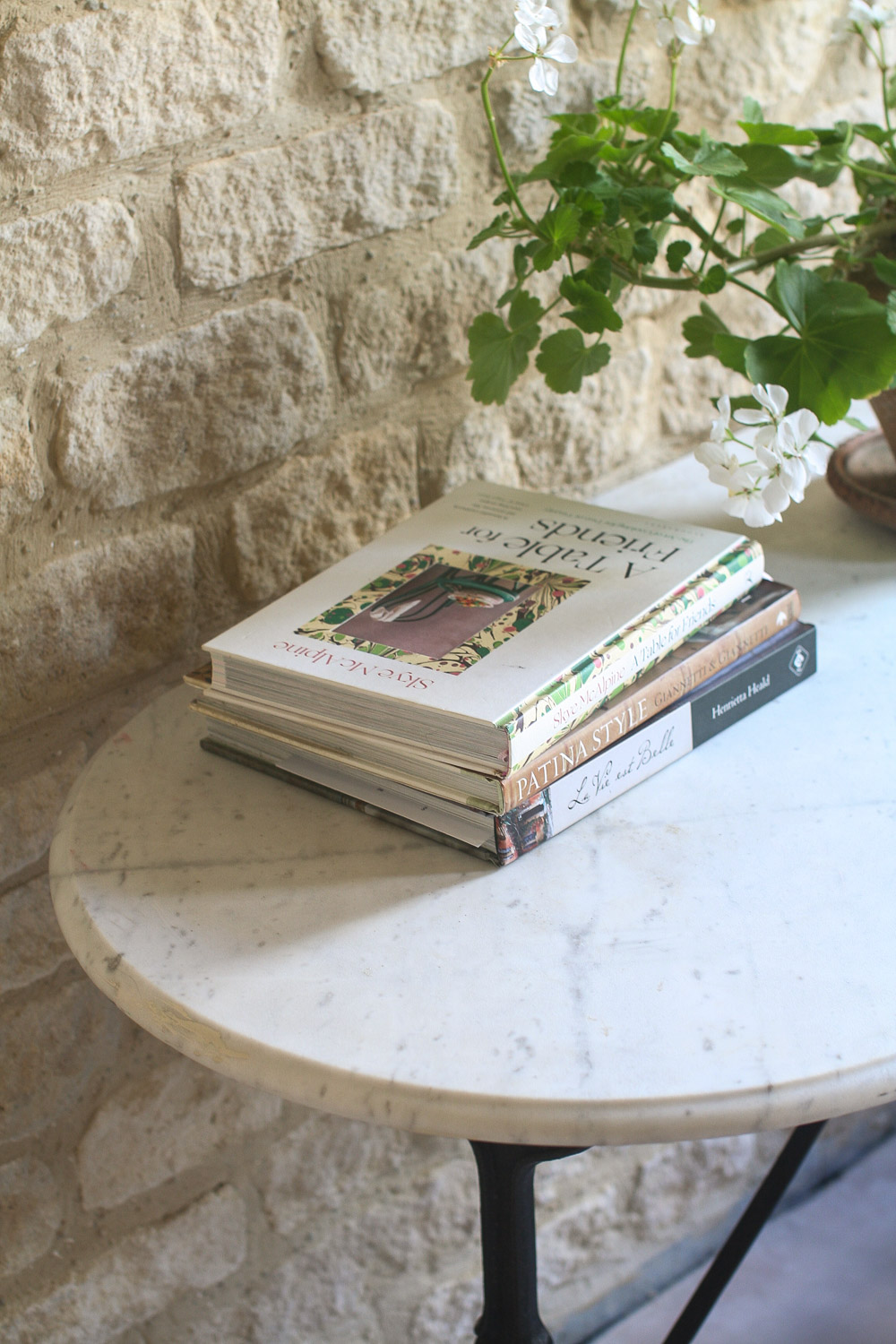
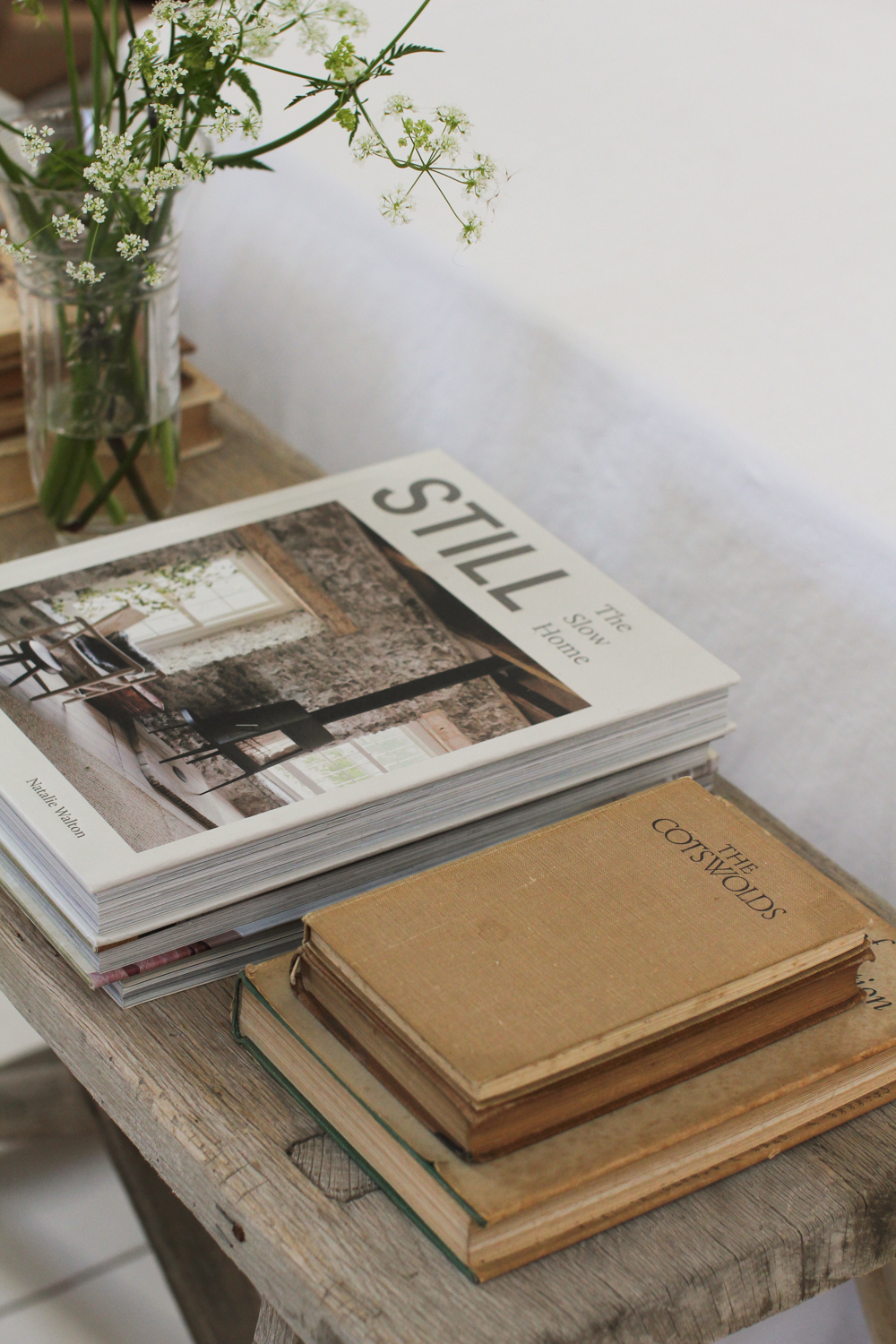
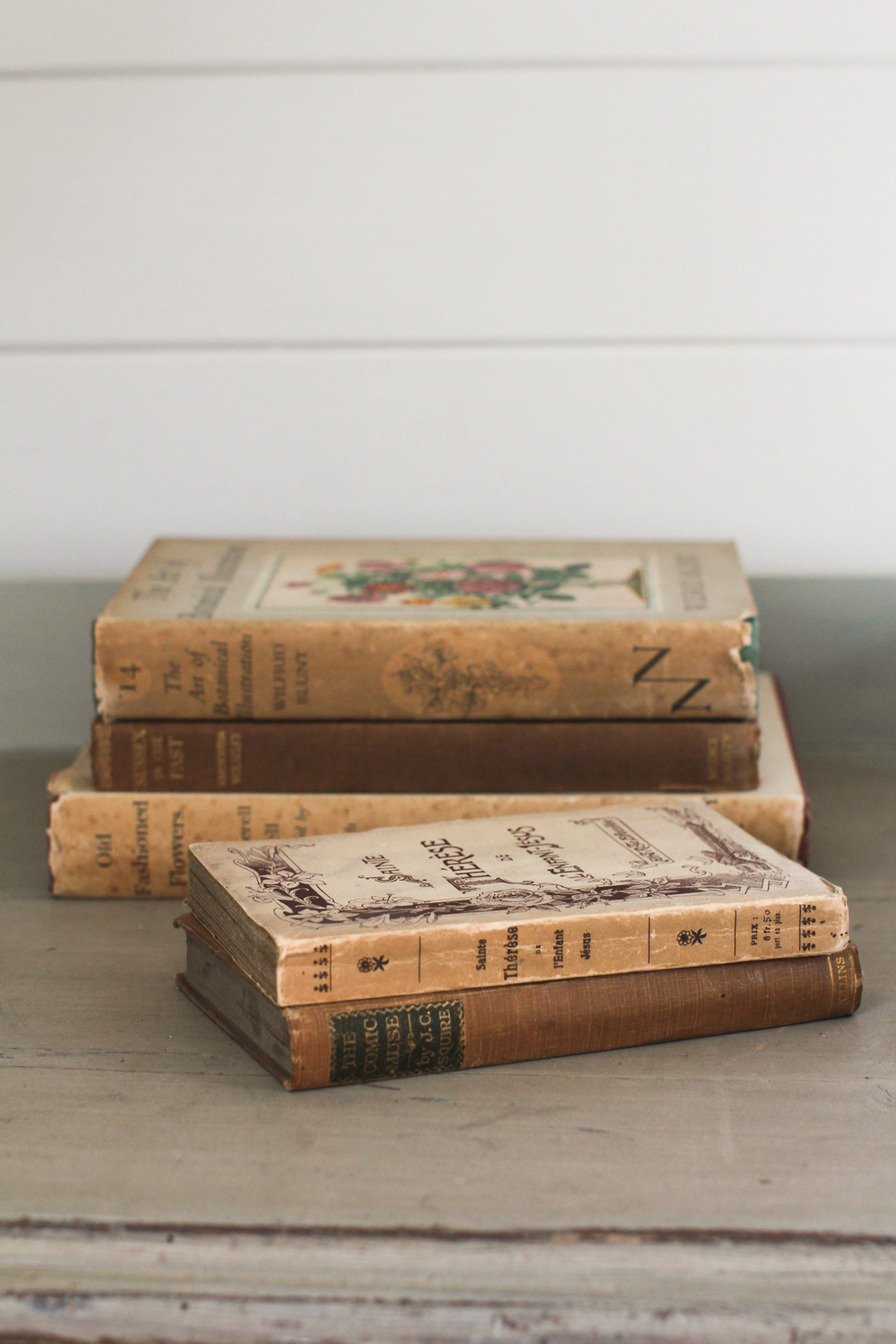
Whether arranged on shelves and tables, stacked in piles, or placed individually, books convey a sense of lived-in comfort to a space. Paired with other decorative objects such as a lamp, candle or vase of flowers, they instantly make spaces feel more balanced and inviting. Books also invite us to pause and take a moment for ourself, to get lost in tactile pages, words and imagery, helping us to relax and reset.
Preserve a love of books and the timeless practice of reading in your home by surrounding yourself with an abundance of books that inspire, inform and resonate. Even a small reading nook, with a cosy armchair and soft blanket, can become a sanctuary for quiet reflection, a haven where time slowly unfolds.
For centuries, people have curated and displayed meaningful collections of books that inspire, inform and bring joy. Whether chosen for their literary value, visual appeal, or simply the comfort they bring, books deserve a place in any well-loved home.
A house without books is like a room without windows.
– Heinrich Mann –
Share this entry:
The Art of the Table
A Shared Table
The table is far more than a piece of furniture. It is a place of nourishment, ritual, and connection, an anchor within the home and a reason to come together. Around it, conversations unfold and ideas are shared. It shapes our daily rhythms and the relationships we build around it. There is a quiet power in the table, and in our ability to create one that brings us joy.
Crafting atmosphere through details
The beauty of a table lies in its details,whether you are celebrating a special occasion, or simply embracing the everyday. Taking pride in setting a table that feels warm and inviting helps to foster a joyful and memorable experience. With just a few carefully chosen elements — linens, tableware, natural details and candlelight, the look and feel of a table can be completely transformed. These thoughtful details ignite the senses, create ambience, and invite people to slow down and savour the moment.
Linens
The addition of a table cloth and napkins immediately elevates a table and creates a sense of occasion, reminding us that time spent with others deserves special attention. Choose linens that are versatile and timeless, rather than trend-led, pieces that can move easily through seasons and occasions.
White linens offer a calm, elegant foundation and a perfect blank canvas for layering. Character can be added through colour, pattern, and texture, as well as through the way napkins are folded or styled. Draped loosely, tied with ribbon or twine, or finished with a sprig from the garden, these small gestures allow the table to feel considered yet relaxed.
Tableware
Ceramics, glassware and cutlery play a powerful role in how a table feels, making even the humblest meals look and feel special. Whether plain or patterned, old or new, matching or mixed, pieces chosen with intention tend to find harmony when brought together.
White plates remain endlessly versatile, offering uniformity while showing food to its best advantage. For a more colourful table, selecting pieces within a limited palette helps create balance and cohesion — often just two core colours are enough. Vintage and antique tableware adds depth and individuality through patina, charm, and a sense of history. Whatever your style, collect pieces with longevity that reflect your aesthetic and invite daily use.
Natural Details
Nature offers endless inspiration for the table. Flowers, foliage, and seasonal produce bring colour, texture, and scent, transforming even the simplest setting. Arrangements should feel gathered rather than formal — loose, natural compositions that sit low on the table and allow conversation to flow.
Small vases filled with garden flowers or greenery are just as pleasing as larger arrangements. Bowls of seasonal fruit or vegetables can also be woven into the table, creating a sense of abundance and ease. Clementines, lemons, grapes, or figs introduce rich colour and texture, while cake stands or pedestals add gentle height and visual interest.
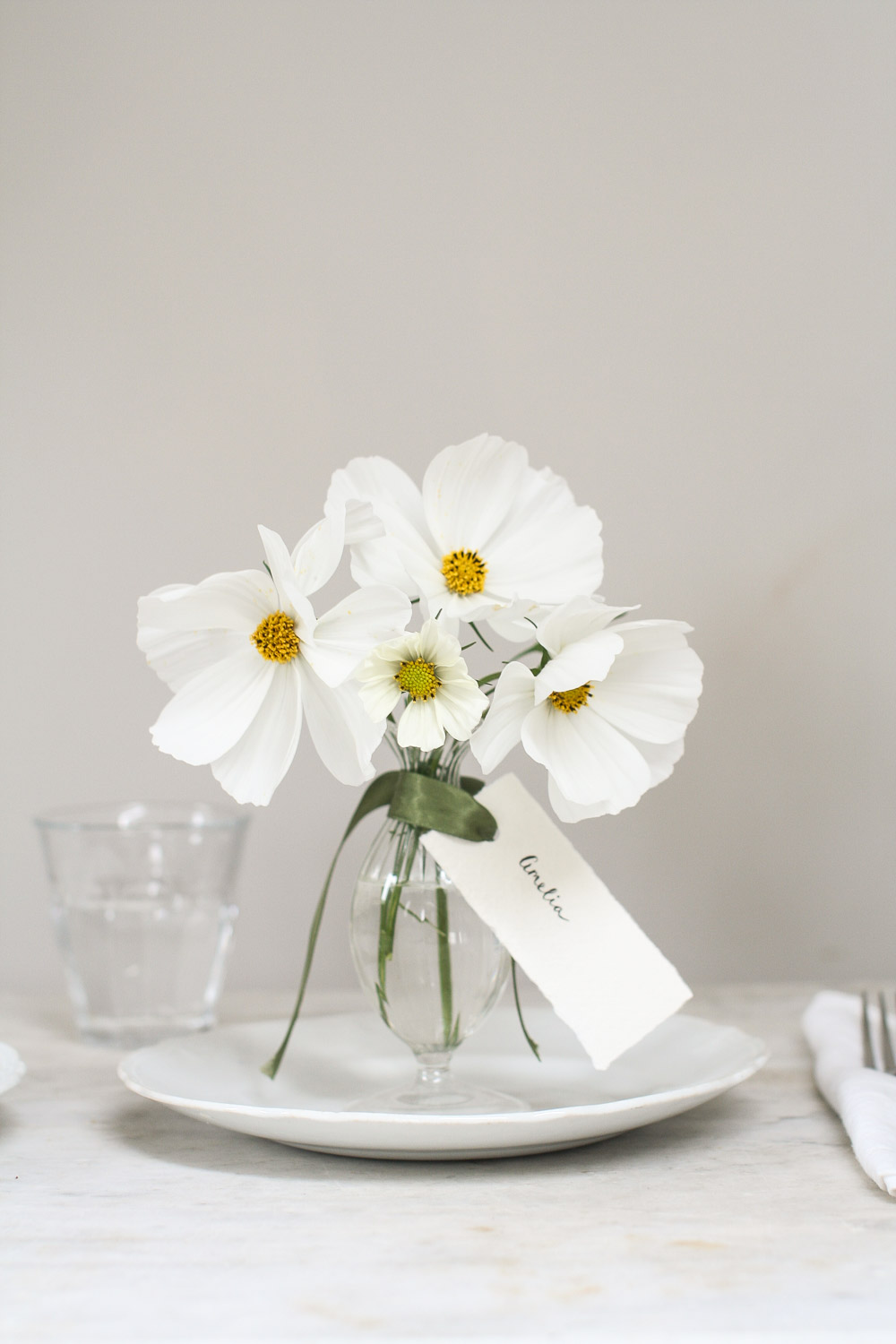
For a thoughtful finishing touch, consider personalising each place setting with natural details or hand-written name cards, a small expressions of care that make guests feel truly welcome.
Candlelight & Ambience
Ambience is perhaps the most important element of a beautiful table. Lighting and sound set the tone for the entire experience, shaping how guests feel as much as how the table looks.
Candlelight has a unique ability to soften a space. Tea lights scattered along the table add warmth and sparkle, while slender dinner candles bring a sense of elegance. Soft ivory candles are timeless and versatile, while coloured candles can subtly echo tones in linens, tableware, or flowers.
When dining indoors, consider the wider room lighting too. Dimming overhead lights, or switching them off entirely, and introducing lamps around the space creates a more intimate glow. Gentle background music completes the atmosphere, engaging the senses while leaving room for easy conversation.
Food & Drink
Thoughtful preparation allows gatherings to feel relaxed and generous. Planning ahead means less time in the kitchen and more time at the table. Simple, well-made dishes prepared in advance often create the most ease, especially when served beautifully.
Sharing food is at the heart of welcoming hospitality. Encourage guests to help themselves with bowls of olives or nuts, a self-service drinks tray, or a table laid with platters to share. Bread, generous dishes, and food served family-style feel abundant and inviting, allowing everyone to eat as they please and helping the host stay present and connected.
In a world that moves quickly, small, thoughtful details have the power to slow time and deepen connection. Few pleasures are greater than gathering around a table with the people we care about, sharing food, conversation, and memories.
The way we set a table goes beyond aesthetics. It is an expression of care for others, for craftsmanship, and for the beauty of everyday life. Embrace the space you have, whatever its size, and choose pieces that bring you joy.
We hope this journal post inspires you to create beautiful, welcoming tables in your home, whether for daily suppers or special celebrations. Discover our collection of tableware to enhance your table and explore further inspiration in our Pinterest galleries.
Share this entry:
A Slow Approach to Decorating
Slow decorating is an approach of taking time to let a home evolve gradually and thoughtfully, in accordance with needs, values and personal style. It is about creating a home that feels authentic and enduring. When we allow ourselves the time to decorate and layer our homes slowly and mindfully, and consider what we truly need, we can create spaces that reflect us and the life we want to unfold within them.
Principles of slow decorating:
(1.) Invest time
Take time to consider how you use your home, as well as how you want it to look and feel. Plan and gather inspiration intentionally to help hone your personal style and vision before rushing in. Having clarity, helps to increase your focus and simplifies decision making. You can then iterate and refine your spaces slowly over time as your home and life evolve. Accept that the essence of ‘slow’ means homes are never quite finished, and eliminate pressure to rush the process. Valuable things take time to unfold and if you allow your home to emerge slowly, you are more likely to end up with spaces that have greater resonance and longevity.
(2.) Repurpose & reuse
Find ways to use what you already have, taking time to repurpose things or move them around to refresh your home and create different arrangements and layouts. Slow decorating encourages incorporating antiques and buying used but quality items. These pieces add warmth and character and help to create spaces that instantly feel unique, lived in and comfortable. There is something special about creating a home with vintage and antique pieces, each object has a past, and by choosing it you can weave it into your own story.
(3.) Prioritise quality over quantity
Purchase items for your home with care and intention, opting for things that are considered, well made and beautiful, rather than being driven by trends. Purchasing mindfully and adopting the ethos of buying less but better, reduces rash decisions and purchasing mistakes. As a result, this is more cost efficient over time and treads more softly on the earth. Don’t feel the need to fill every room, sometimes the space you leave is just as important as the things you put in .
(4.) Cultivate patience
Be willing to have patience and wait for key pieces that resonate and are right for your home. When you take time to source, you can build an environment that feels cohesive and purposeful, that truly reflects you. Be prepared to look everywhere from online marketplaces to flea markets and antique shops and remember that small details make a real difference. The best interiors are those that gently gain their layers and continue to evolve naturally and slowly.
(5.) Create emotional connections
Take time to collect meaningful and personal objects such as travel mementos, art or family heirlooms which resonate, reflect your values and foster an authentic connection to your home. By weaving these items thoughtfully into your spaces, you are not just decorating, but crafting a home that holds emotional value and tells your unique story.
(6.) Make space for change
A home is not static. It needs to be flexible in how it is used, able to accommodate the changing needs, activities and stages of our lives. Rather than being designed around a fixed idea of how a home should look or be used, it can make space for life to happen, giving us room to live and breathe, move things around, gather people, work and rest. Spaces can take on different purposes over time, and objects can find new places and uses as life evolves.
The most meaningful homes never feel entirely finished. They remain open to change, growth and new experiences. A home is alive with the people who inhabit it, and its story continues to unfold through the everyday moments that take place within it.
Slow decorating is ultimately about giving a home the time and space to become your own. It is about making thoughtful choices, living with what you have, allowing things to evolve and resisting pressure to have everything figured out at once. The result is not a home that is perfectly finished, but one that feels considered, personal and lived in. A home that reflects the people within it and has room for the life that happens there.
Like a garden, a home is never truly finished. It grows and changes with us, gathering memories, meaning and stories along the way.
The feature below from the April 2025 issue of Homes & Antiques magazine includes our thoughts about slow decorating.
Share this entry:
Thoughts on Home Lighting
Adding layers slowly to a home to reflect individual style and personality is what transforms a house into a unique space. Lighting is one of the key elements in the fabric of our interiors, both in terms of form and function. It has a huge impact on the overall look and feel of our spaces and can have a profound effect on how we live in our homes. Illuminating spaces thoughtfully and strategically can bring each room to life, add comfort and atmosphere, and enable us to perform our daily tasks efficiently.
Whether you have a new build, renovation or are refreshing areas of your home, taking time to consider the functionality of your spaces, and planning how you want your home to look and feel is a good place to start. Consider how natural light can be harnessed throughout your home whether through decorating, simplifying window dressings or using mirrors to amplify light. Natural light is a beautiful and important resource in any home, and how you use, shape and optimise it can make or break an interior.
Home lighting should enhance the best assets of a home both functionally and aesthetically, serving a purpose appropriate to the room’s functionality, as well as having decorative appeal. Planning carefully what additional lighting is needed in each room is key to maximising the lighting in your home and anchoring and elevating the whole space. The ever-changing nature of light in houses through times of day and seasons, can benefit from the flexibility of dimmable lighting. Different occasions call for different moods, and dimmers allow for scenes to be set in an instant.
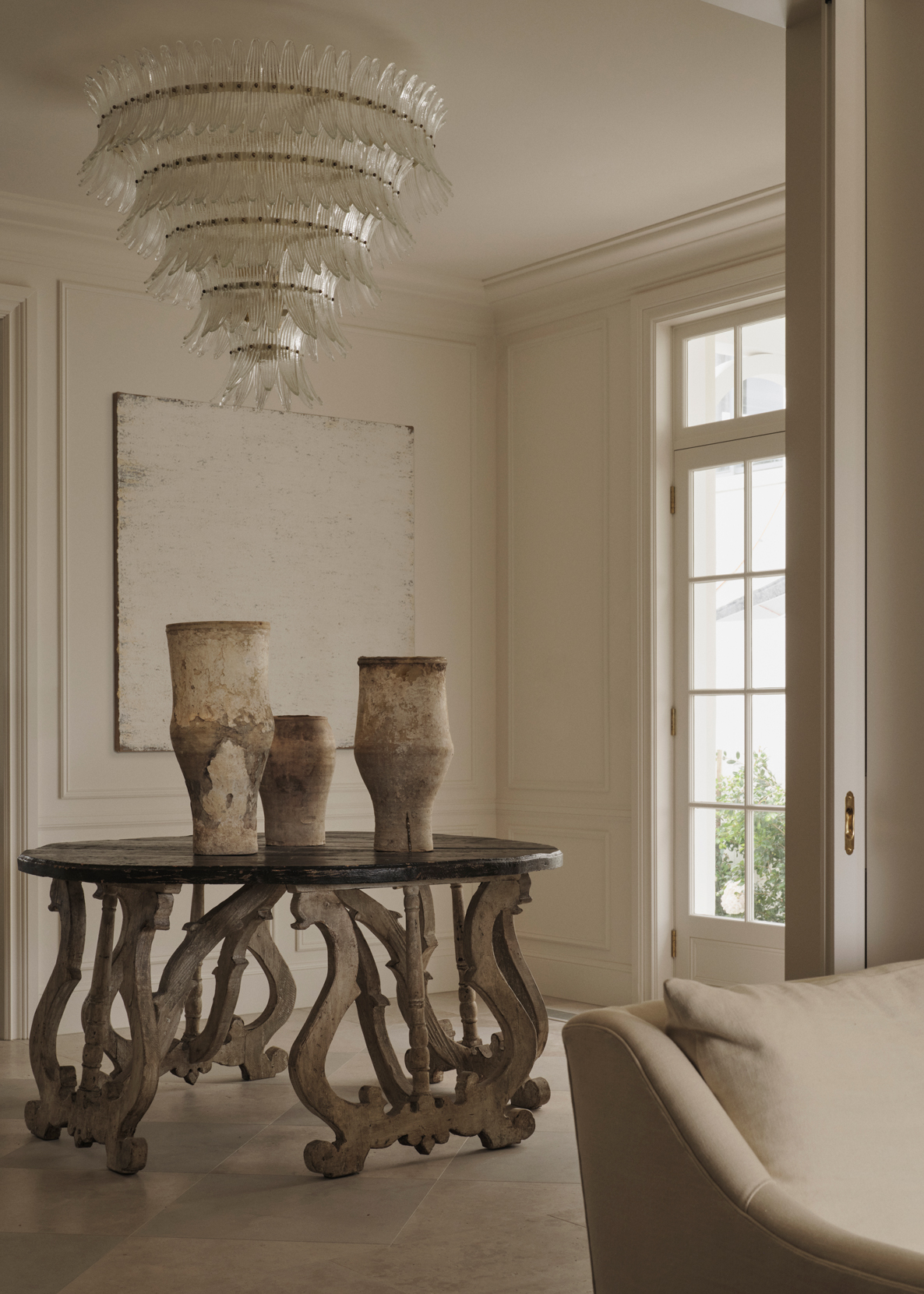
While we often start with overhead lighting, the merits of other sources for task and mood lighting in our homes should not be overlooked. To optimise light and atmosphere, layering different light sources and levels adds depth and visual interest, while offering versatility and flexibility. Consider floors, ceilings, walls and surfaces and aim to create moments with your lighting to illuminate different areas and work with the purpose of the room. Layering lighting across the home with floor lamps, table lamps and wall lights, as well as pendants (ideally with dimmers), helps to create mood and bring spaces to life. Lighting can be subtle and low key, softly illuminating a room, or be used to amplify spaces and act as a visual statement or focal point. Integrating different lighting types brings an instant feeling of thoughtfulness and dimension, so cultivating this layered scheme is vital.
When selecting lighting for a home, looking for a unifying element—whether style, shape, colour, or material can tie each room together. This creates a visual thread and a sense of continuity, making interiors feel more balanced and harmonious.
The importance of light quality should also be considered. Choosing the right light bulbs, consistent in colour temperature and appropriate in brightness can have a big impact on mood and functionality. Warmer tones bring cosiness, while cooler tones offer clarity for tasks. Matching these across spaces helps maintain a cohesive atmosphere.
With thoughtful choices, lighting becomes more than illumination, it becomes a design element that ties your whole home together. Invest in pieces you love that bring personality, texture, and character to a home and always consider scale and proportion to ensure lighting is balanced and complements the space.
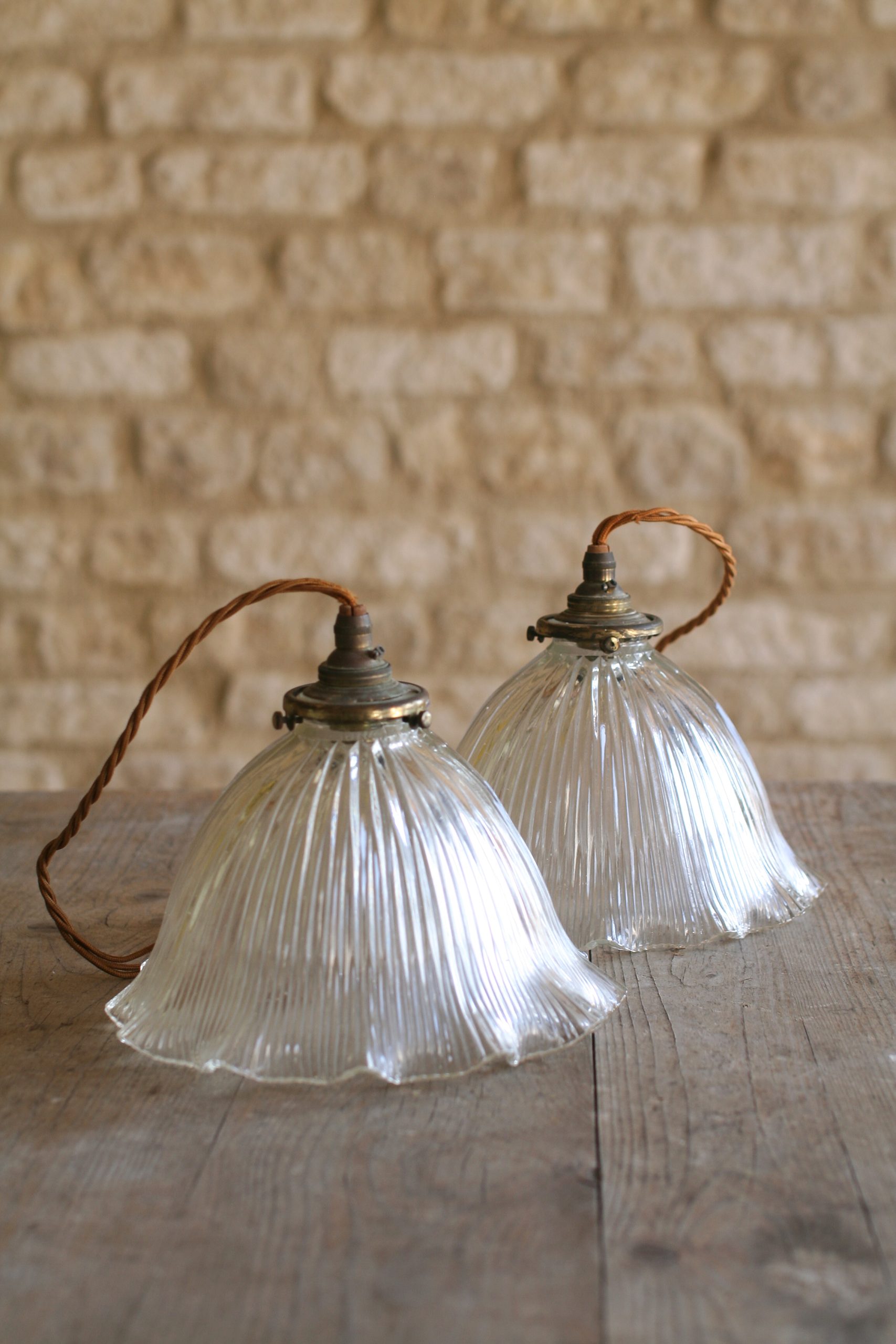
Vintage lighting is an affordable and sustainable choice, with a carbon footprint that is far lower than buying newly made pieces. With its brilliant spectrum of design styles, it adds instant appeal and creates unique and interesting interiors. From original antique chandeliers to vintage wall lights, what makes these pieces so special is not only the quality of the materials and craftsmanship, but the wonderful character created by the gentle passing of time. Consider converting and repurposing pieces to create one of a kind lamp bases, and dress with handmade or reclaimed shades to create a distinctive look. Unique and beautiful lighting can also act as a focal point, anchoring a space and creating impact. When chosen well, these pieces can travel with you through a lifetime of houses.
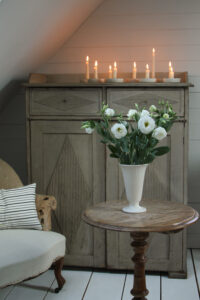
Candlelight is a simple and inexpensive way to add ambience and create a calm and relaxing feeling in your home. From scented candles or tapers, to a scattering of tea lights, twinkling candlelight creates cosiness and adds an extra glow to all areas of the home across the seasons.
Lighting sets the mood of a home and is instrumental in creating atmosphere and visibility. It is a vital element that takes time and consideration to get right so it is always worth investing time in thoughtful planning. As with all areas of home decorating, be patient and prepared to wait for the right pieces. Mix heights, shapes, styles, and periods but always avoid trends, staying true to your own style and values. Allowing a home to evolve over time is what gives it personality, depth, and charm.
You can also find a small curation of lighting in our online store, each piece carefully sourced one piece at a time and thoughtfully restored to bring immersive moments of comfort and calm to your home. For further lighting inspiration browse our Pinterestgallery.
Light is the first essential. Light stimulates, nourishes, preserves.
– Wilkie Collins –
Share this entry:
Arranging Flowers & Foliage
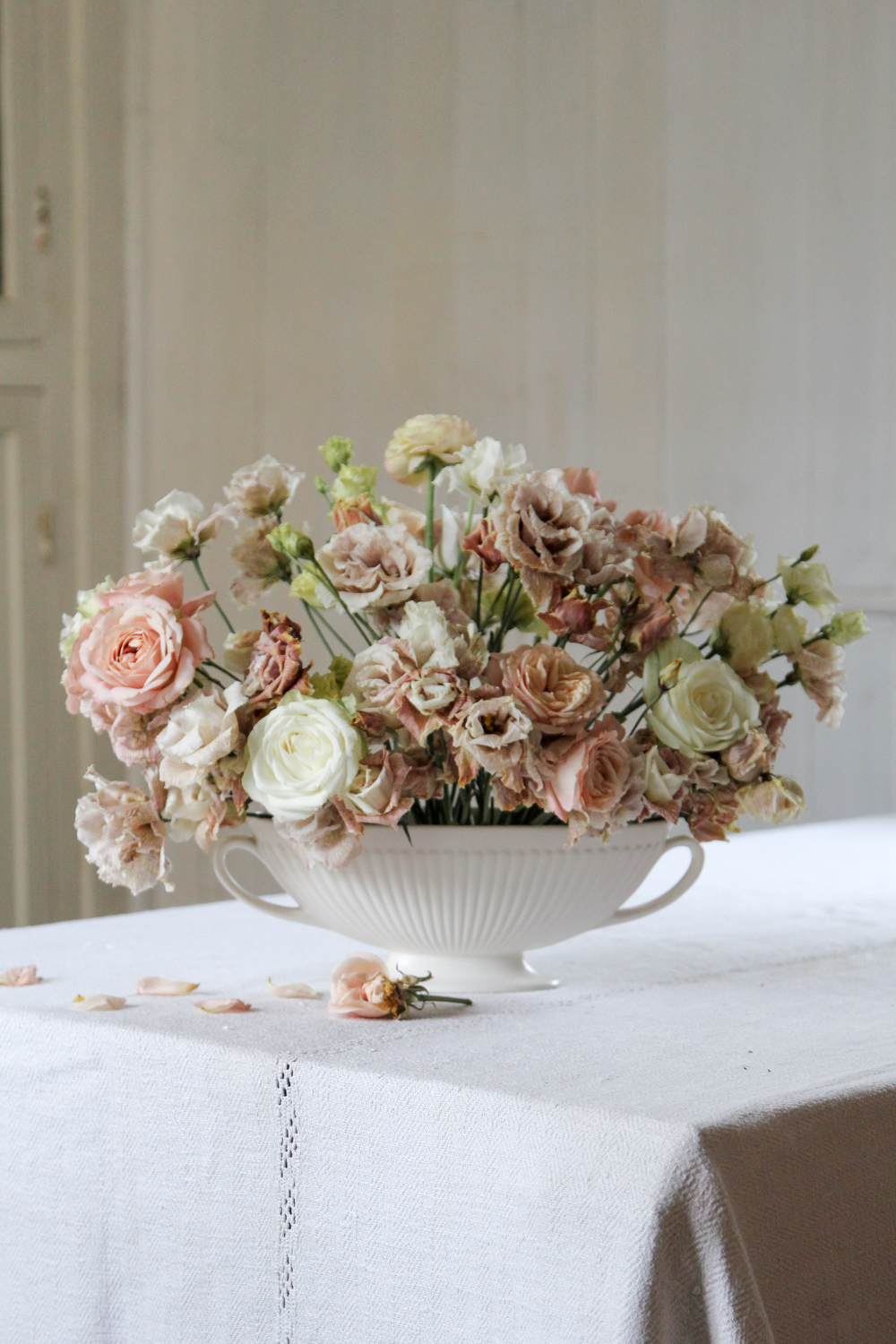
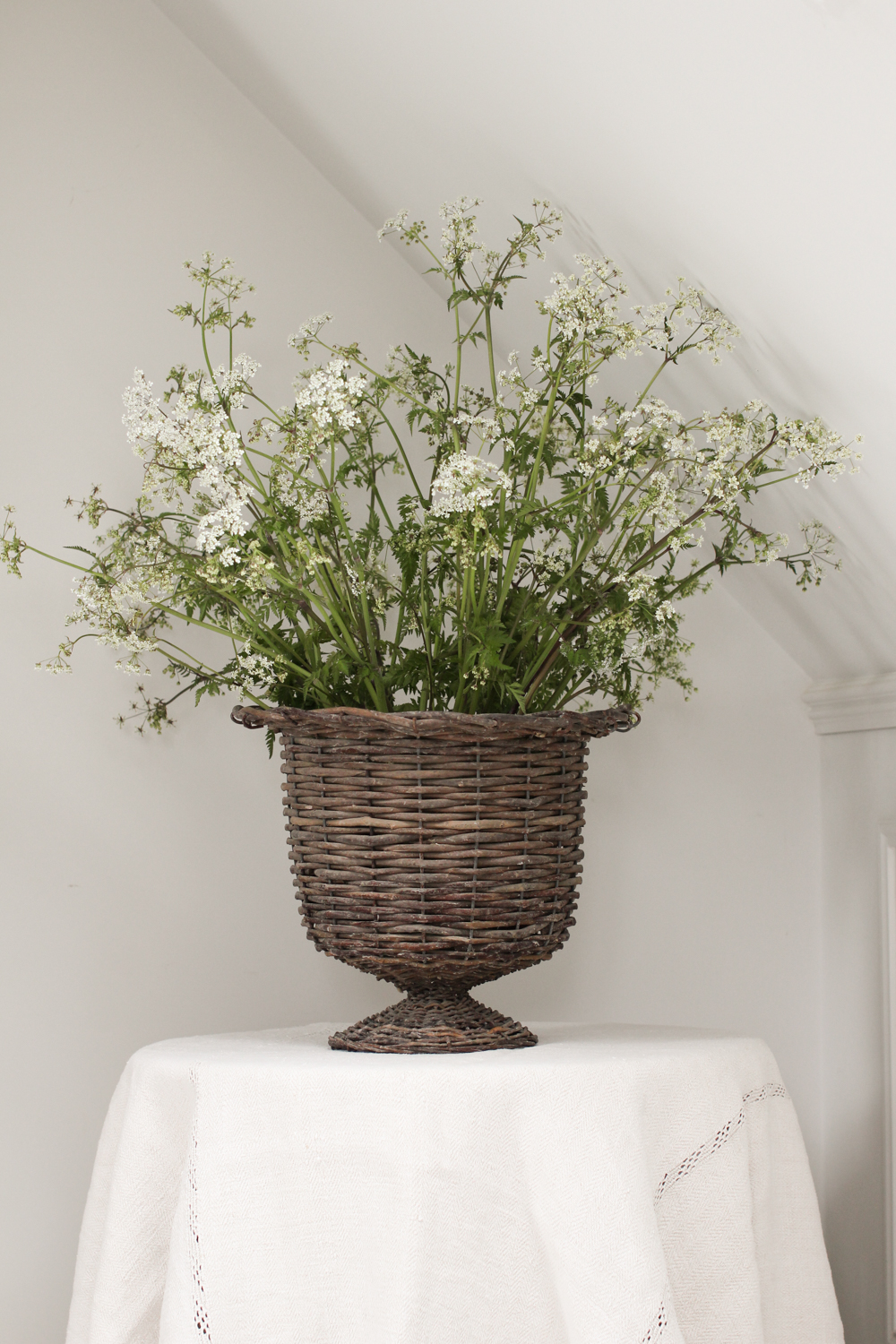
Bringing flowers and foliage into the home enhances the look and feel of our environment and softens the boundaries between inside and out. Whether large or small, fresh or dried, these natural elements offer a rich multi-sensory experience that can be enjoyed in every room. Arrangements need not be elaborate, often it is the simplest compositions that feel the most special – bringing warmth, colour and texture to any corner. Discover a sense of calm and joy in the creative process and reconnect with the beauty of nature and the gentle rhythms of the changing seasons in your home spaces.
Ideas for arranging and displaying flowers & foliage at home:
G a t h e r
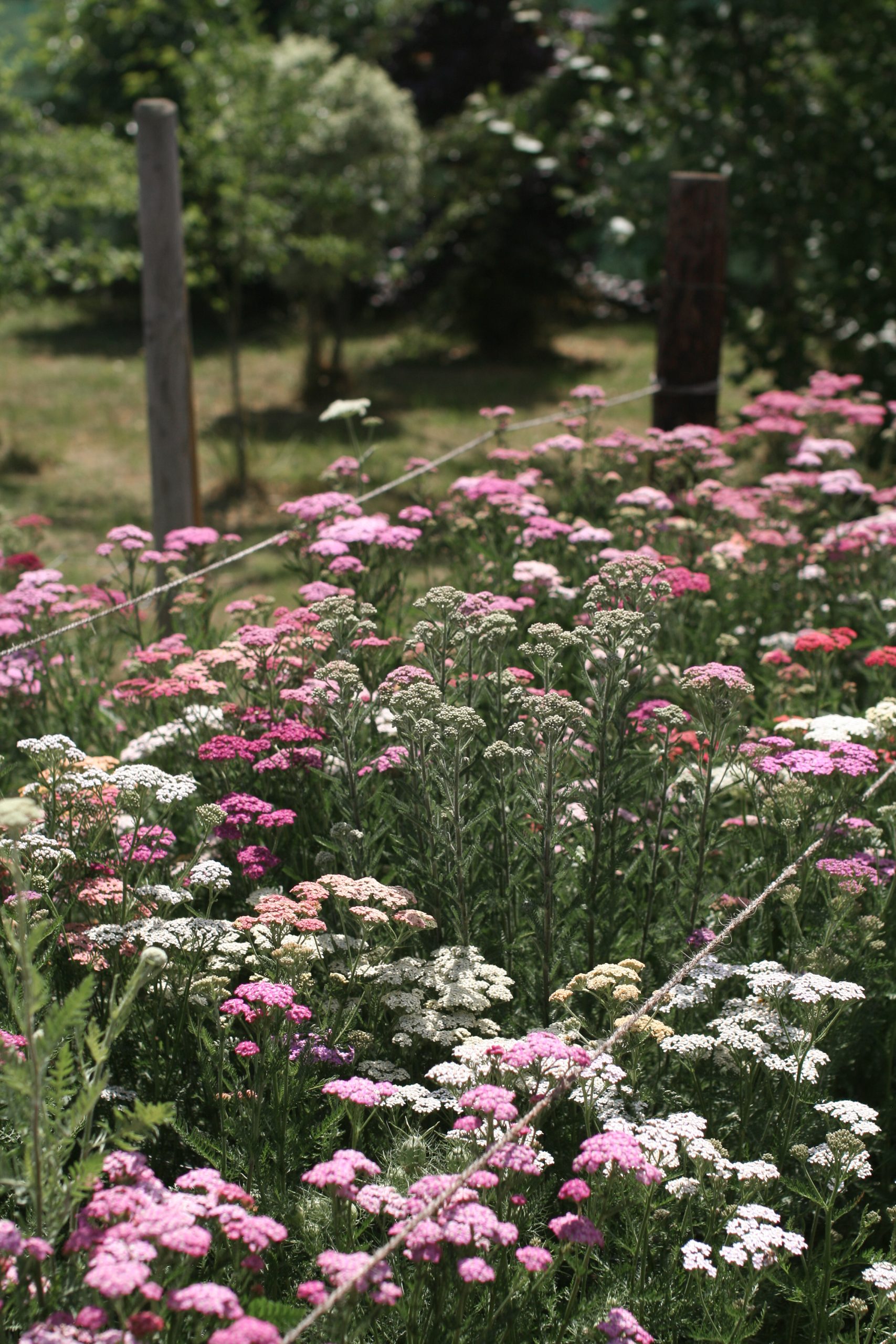
There is an abundance in the natural world, from what we grow intentionally to what grows naturally. Flowers and foliage can be gathered from our surroundings or sourced from local flower markets, florists or shops. Whilst it is a treat to buy flowers when budget allows, foraging offers a rich alternative throughout the seasons. Keep a pair of secateurs in your glove box and stay curious—observe what’s growing along country lanes, woodland paths, and even roadsides. Remember to forage responsibly, taking only a little, and never too much from any one plant.
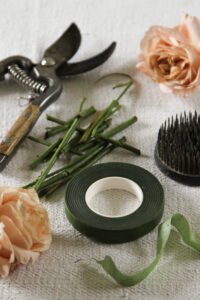
Wildflowers, grasses, branches, and even overlooked weeds can all become beautiful elements in your arrangements. With just a few essentials like secateurs, floral tape, chicken wire, and flower frogs—alongside a collection of vessels, you will be well-equipped to experiment and refine your compositions. There is beauty to be found in simplicity, and great joy in discovering what nature offers, season by season.
P r e p a r e
Once you have gathered branches and blooms, take time to prepare each stem with care. Trim the ends at an angle – this increases the surface area and improves water absorption. Remove any leaves or side branches that would sit below the waterline in your vase, as submerged foliage can break down and promote bacteria, shortening the life of an arrangement. Where possible keep arrangements away from direct sunlight, radiators, or anything that gets too warm.
Embrace the organic nature of your materials—nothing in nature grows perfectly straight or symmetrical. Vary the stem lengths to create a more natural rhythm of colour, shape, and texture. Fill your container halfway with clean, lukewarm water, which offers better oxygen flow than cold. Refresh the water every few days and give stems a snip each time to allow them to drink up more water and keep the arrangement looking its best, for longer. For delicate flowers and foliage, a quick mist can keep them looking crisp and hydrated.
A r r a n g e
A beautiful arrangement often owes as much to restraint as it does to abundance. Consider the varieties of stems that you include and how they will work together. Whilst a mix of florals and foliage can look striking, so too can a single variety or colour palette, which can feel simple and abundant all at once.
It is also important to think about proportion in your arrangement. Allowing for more plant than vessel enables flowers to sit naturally in a vase. Experiment with varying heights and shapes of flowers and greenery to capture the essence of their beauty and achieve your desired composition.
Branches, whether fresh or dried have a wonderful sculptural quality and can form a simple yet impacting arrangement. Choose branches that have natural curves and movement rather than straight, upright stems. In order to highlight interesting shapes, less is always more when it comes to arranging branches, and there is beauty in the quiet moments, in the negative space.
When arranging, the vessel is just as important as the stems themselves. Consider the scale, shape and style of your container, as these elements will influence the overall silhouette and feeling of your display. Different vessels guide how flowers and foliage will sit within them, some encouraging a relaxed, loose arrangement, others lending a more structured, formal look.
Think about where your arrangement will live in your home, and let that inform your choice. Vases, bowls, jugs, and even baskets can all become beautiful floral vessels. Start with what you have—many household items can be adapted. If a container isn’t watertight, simply place a jam jar or glass inside to hold the water discreetly. Always ensure containers are clean, as lingering bacteria can quickly shorten the life of your flowers.
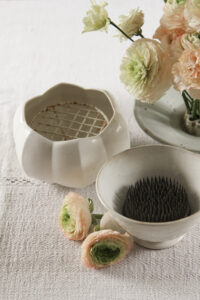
Sturdy flower frogs or chicken wire secured with floral tape can be used to support stems, especially when arranging in a shallow vessel. Flower frogs have been a functional and sustainable tool for centuries, dating back to the 14th century. Designed to give floral structures shape and stability, they sit at the bottom of a bowl or vase, offering holes or upright metal pins to hold stems in place. Available in a variety of styles, sizes, and materials, flower frogs can be adapted to suit different types of blooms and foliage. Whether you are creating a dense, textural composition or a more airy, minimal display, they help anchor your arrangement while allowing each stem to shine.
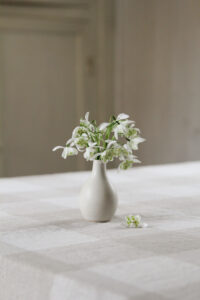
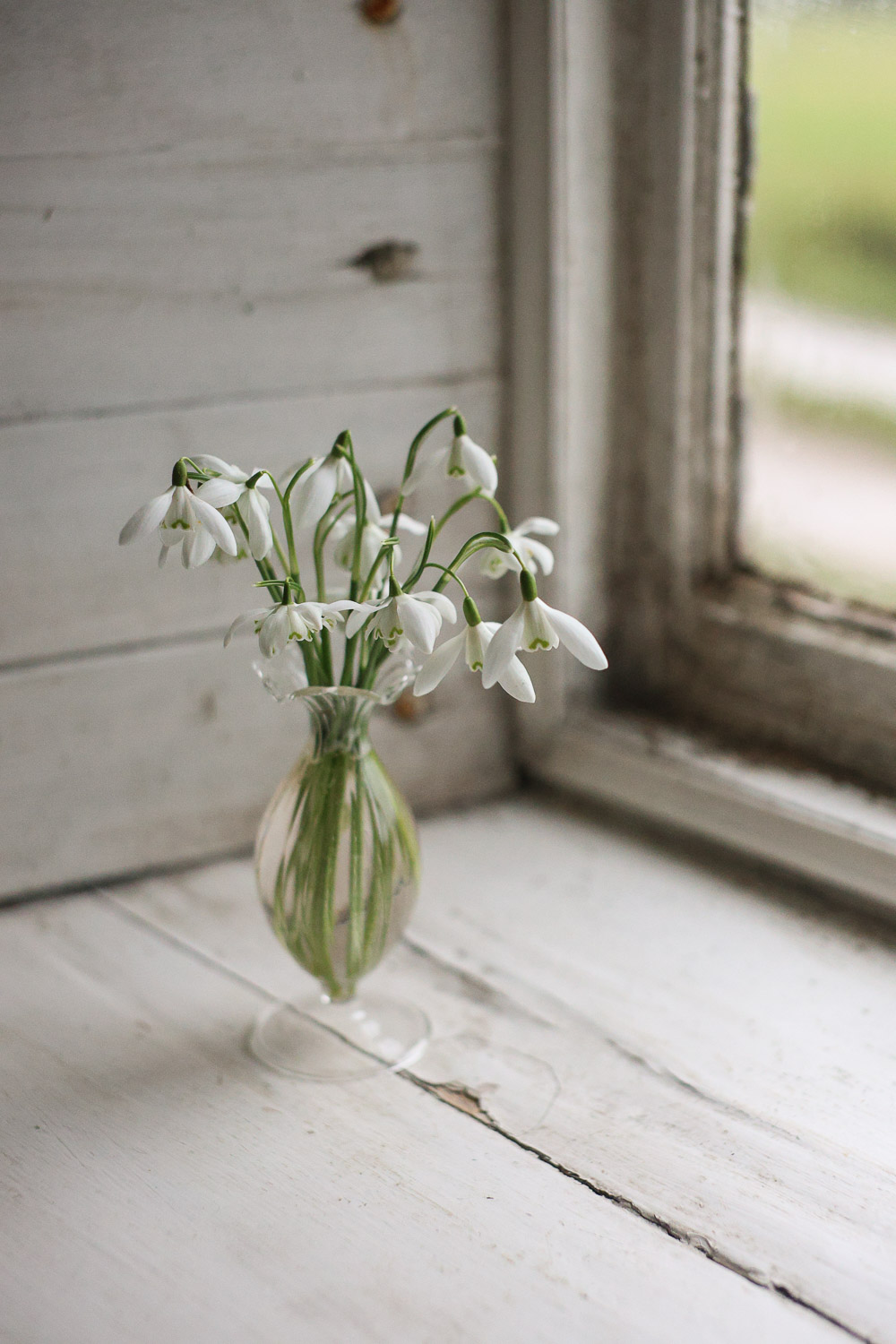
For small arrangements, bud vases are effortless to assemble and endlessly versatile. They offer a simple yet elegant way to bring beauty into any space and can be placed across the home whether on a table, mantel or window sill. Despite their size, bud vases have the power to transform a setting, whether grouped together for impact or placed individually for a quiet, thoughtful touch. They are also a wonderful way to make use of off-cuts, single stems, or smaller blooms that may not fit into larger arrangements. For visual contrast and interest, use a variety of sizes and with just a little consideration, even the most modest display can feel refined and full of character.
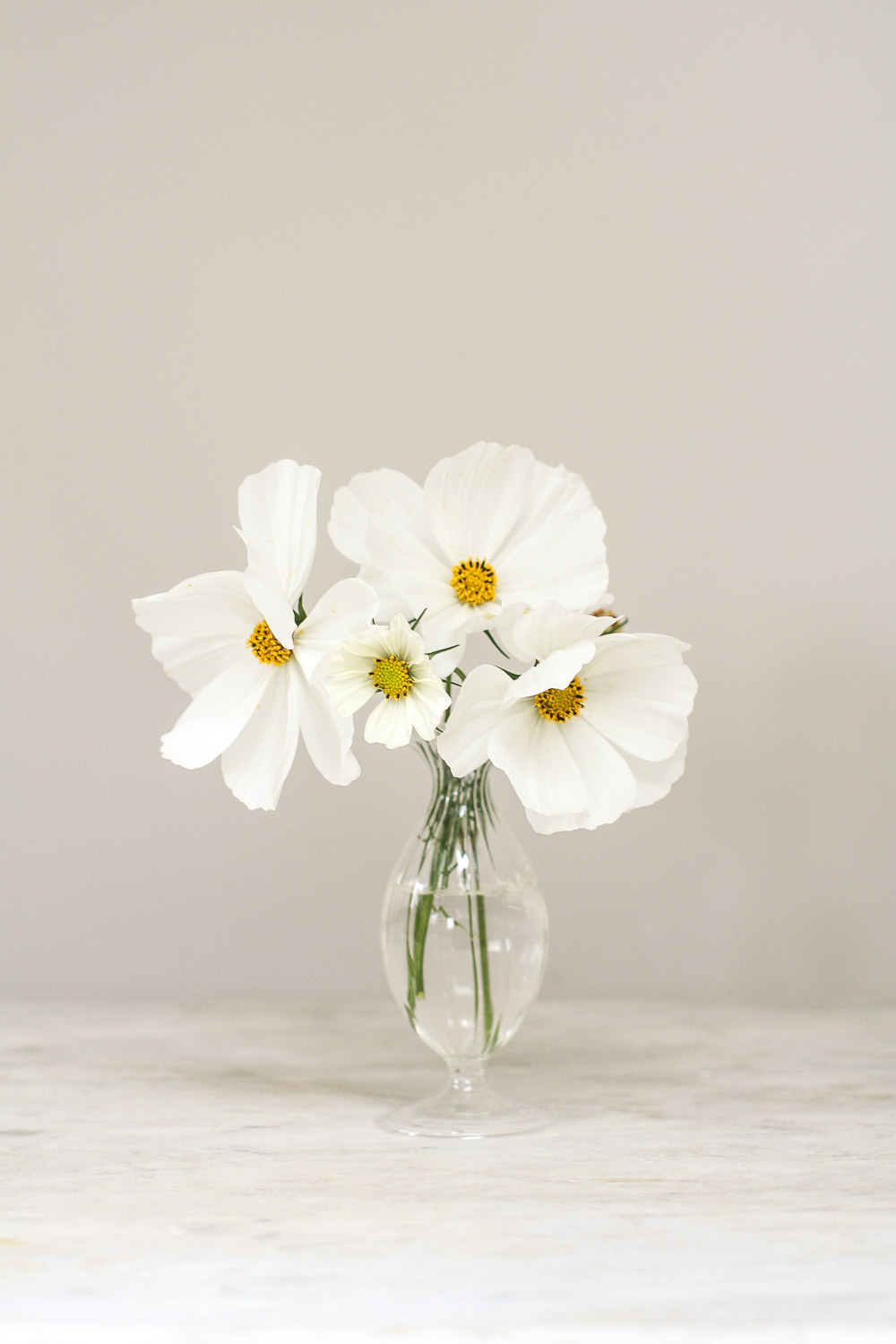
There is an infinite variety of flowers and foliage that can uplift the home – bringing scent, texture and colour to everyday spaces and creating beautiful focal points. From a single stem in a simple glass vessel, to an abundant bouquet of sculptural branches gathered from the garden, each arrangement holds its own beauty.
We hope this post may encourage you to look to the natural world for inspiration and capture the beauty of nature in your home throughout the year. For further inspiration, visit our journal, or browse our Pinterest gallery. You can also find a curation of beautiful and unique vessels for simple, natural arrangements in our online store.
Whenever your are creating beauty around you, you are restoring your own soul.
– Alice Walker –
Share this entry:
Creating a Calm Home
Calm is a rare commodity in the modern world amidst the constant barrage of images and voices emerging with the omnipresence of technology. The place we call home is the backdrop to our everyday lives where we can retreat from the fast paced, ever-changing world, recharge and find comfort. There are few places that have as strong an impact on our wellbeing as our homes. Creating spaces that instil a sense of calm can keep us and those around us grounded and transform how we feel and function everyday. There are many different approaches to creating a calm home but when our vision comes from how we want our space to make us feel, rather than just how it should look, we are most likely to achieve success.
Ideas for creating a calm home:
SIMPLIFY & ORGANISE
One of the key foundations to creating a calm and comforting home is to begin by defining our spaces, looking at what we already have and starting to intentionally edit, simplify and refine. Our external environment affects our inner environment and maintaining a sense of order is vital to creating a feeling of calm. Reducing visual noise by paring down an interior allows the intrinsic beauty of light, texture and shape to form the decoration and make it easier to relax and feel at ease. Creating one quiet and organised corner and building on from there is a good place to start. Resetting the house at the end of each day can induce clarity of thought and make a big difference to how our space feels and functions the following day.
Recycling, donating or selling what we no longer need in our home, and implementing simple systems, storage and routines to organise and manage what we wish to keep is key. This is an iterative process and one which may need to happen regularly in order to maintain a feeling of calm. Making more conscious and informed choices about what we bring into all areas of our home is also important. Each object should serve a purpose, whether for its beauty and visual interest or functionality, or indeed both.
Reducing what we have in our homes introduces negative space into our interiors which can help to enhance a feeling of serenity and calm. Every corner does not need to be filled in order to be beautiful. Rooms benefit from space to breathe, allowing the eye and mind to rest. Harmony lies in the balance between pieces in each room and the negative spaces around them. Being intentional about how we plan and furnish our home environment can really help with the feel, functionality and flow, and is key to creating a home that feels calm and peaceful.
NATURAL & NEUTRAL
The colours we select also have the power to enhance the feeling of our home interiors. Whilst vibrant, colourful spaces can be stimulating and dramatic, soft, muted and neutral tones are gently uplifting and can instead create a feeling of calm and inner peace. Simple, neutral colours have been used in interiors for as long as we have been decorating, they complement one other and envelop our surroundings with a sense of calm. While colour trends come and go, their enduring appeal continues to stand the test of time. Neutrals provide a versatile foundation for layering texture, pattern and other colours upon and allow for decorative schemes within our homes to evolve over time.
Similarly, the materials we choose for our home can also have a calming effect. Layering natural materials into a room instantly bestows warmth and comfort due to their soft, earthy organic tones and textures. Natural materials are versatile and wonderfully soothing and add texture and visual interest to our spaces. From wooden flooring or furniture to natural woven textiles, the more materials resemble what we encounter in nature, the more calming and comforting their effect can be. Natural materials are also hard wearing, get better with age and have a timeless quality.
Layering in natural elements such as plants and objects found in nature also bestows a sense of calm and balance in our home and foster a connection with the outside. Bunches of flowers, foliage or sculptural branches are wonderful ways to freshen our spaces, boost serenity and bring joy to our interiors. House plants are also visually interesting and can also benefit our emotional and physical wellbeing. The intrinsic beauty of natural details cannot be imitated by artificial means. They are often rich in personal association and evoke memories of time and place that go far beyond material value.
SENSORY
Spaces which take our senses into account can also help to create calm at home, since what we see, hear and touch have an enormous impact on how we feel and think. A sensory home means considering and responding to all of our senses, immersing ourselves with elements that help to quieten the noise of daily life and stimulate our ability to re-center and focus our thoughts.
Optimising natural light and fresh air are essential to creating harmonious spaces and experiences at home. Opening doors and windows softens the boundaries between inside and out and can improve our mood, ignite our senses and increase productivity. Making the most of outside views can also be important in helping us feel inspired and grounded. Boosting natural light wherever possible and being conscious of reducing the blue light from devices in our lives can immediately elevate our mood.
Ambiance can be created through lighting, candles or diffusers which all add to a calming atmosphere. Minimising the number of ceiling lights, instead opting for wall lights, table and floor lamps creates a warm and inviting ambience. A calming scent is one of the quickest ways to bring nature into our home and promote comfort and relaxation. Plant essential oils, if sourced responsibly, are a healthy and sustainable way to gently fragrance the air and stimulate a positive sensory response. Using notes from nature can also help to promote sleep and relaxation.
Sound is another powerful tool in creating calm and restful spaces. Choosing music intentionally is a wonderful way to soothe the soul, set the pace and mood in our home and evoke contentment. Music brings a sense of comfort, routine and ritual whilst keeping you in the present moment. Ambient music is designed to relax the mind and allow it to roam while providing enough stimulation to register as inspiration.
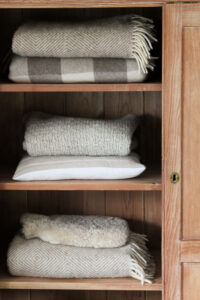
Touch is also an important part of the sensory experience and engenders feelings of comfort and contentment. Textiles are a perfect way to introduce soft, tactile textures to a space. From upholstered furniture, to curtains, cushions, blankets and throws, textiles can be layered in to any area of the home.
Well worn and imperfect vintage pieces that have beautiful lived-in textures and character, often feels more warm and inviting than perfectly curated homes. Vintage pieces help to create a relaxed atmosphere where we can feel comfortable and at ease. Mixing authentic, timeless pieces from different eras and styles creates a dialogue of contrast and harmony. Similarly, incorporating a few personal and meaningful touches such as family photographs, art, books or pottery can also help to evoke happy memories and create a homely feel.
As the frenetic pace of modern living increases, the importance of creating a calm environment to retreat to where we can nuture mind, body and soul is paramount. Simplicity and thoughtfulness are key when it comes to creating a calm home. Simplifying our spaces, incorporating natural materials, daily routines, rituals and sensory experiences can contribute to the peace we feel in our homes and help us find balance in everyday life.
Taking time, honouring craftsmanship and listening to our own intuition over the noise of the trend cycle cannot be over stated. Having less but investing in quality and beauty is always the best, most authentic approach. When it looks and feels serene around us, we naturally feel calmer and more relaxed. A home which instils a sense of calm will comfort, inspire and nurture us everyday and provide a beautiful and restorative backdrop to everyday life.
We hope this journal story delivers a sense of peace and inspires you to create calm and comforting spaces in your home. For more inspiration, peruse our thoughtfully curated Pinterest gallery.
Space and light and order. These are the things men need just as they need bread or a place to sleep.
Le Corbusier | 1887 – 1965
Share this entry:
The Comfort of Candlelight
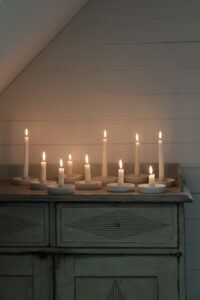
The centuries old tradition of lighting candles is imbued with beauty and reassurance and brings much warmth and calm to the home. Candles are often associated with autumn and winter, but we love to burn them all year round, immersing ourselves in the comforting illumination in every corner of the home. Carving small daily moments to slow down and embrace the ritual of lighting a candle can be grounding and meaningful amidst the busyness of everyday life.
Candles are one of the easiest and most affordable ways to make a home feel special whether for a gathering or just for everyday. There are endless styles, sizes and colours of both candles and holders available to suit any interior or occasion. Combining a mix of candles such as tapers, votives, pillar and tea lights can help to introduce ambient lighting and create a warm and welcoming feel throughout the home. Even the simplest jam jar or glass when paired with a tea-light can add a gentle luminosity to a space. Natural scented candles also add atmosphere to the home environment and can impact on how we feel. Scents can be changed with the seasons to suit different times of the year.
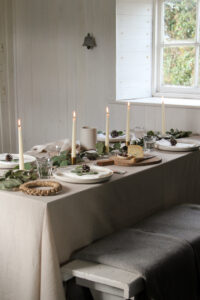
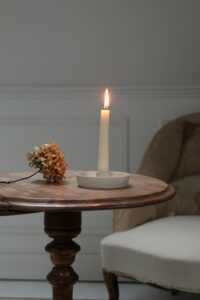
Every room in the home can benefit from a little candlelight. It is intrinsic to any tablescape and there is nothing more calming and atmospheric than enjoying a meal together around the gentle flicker of candles. Whilst traditional ivory and beeswax candles bring a natural touch to a table, coloured varieties can add small accents of colour.
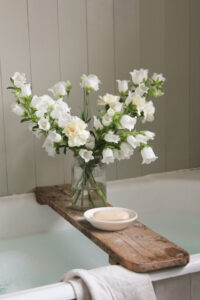
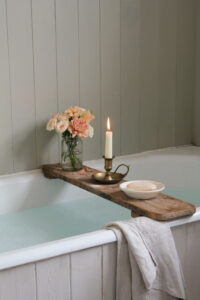
Similarly candlelight is a wonderful addition to bathing spaces.The bathroom is a sanctuary within our home where we can slow down and ease tension. Taking time to create calming rituals such as lighting a candle can help to create a sense of structure and restore our equilibrium.
In the bedroom a gentle candle flame will give off a peaceful aura, and in the living room candles set on a mantelpiece or coffee table will add atmosphere to the space.
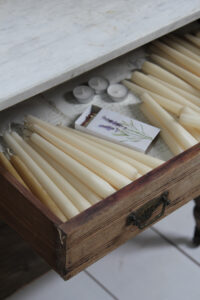
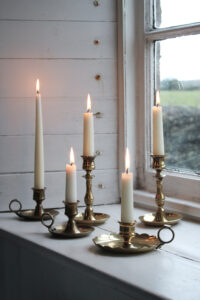
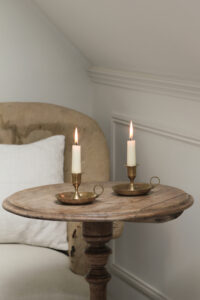
The soft glow of candlelight adds a sense of ease and calm to any space. Lighting a candle is an invitation to take a moment to slow down and set the tone within our home. Visit our store to discover our favourite vintage and hand crafted candle holders and taper candles to bestow a soft glow in your home across the seasons.
Share this entry:
The Enduring Appeal of Baskets
Basket weaving is a time-honoured tradition that spans cultures and centuries. One of the world’s oldest crafts, predating even ceramics and textiles, basketry has long served a practical purpose, with people hand weaving grasses, rushes, vines and branches to create vessels for carrying and storing goods. The enduring appeal of baskets lies in their natural strength, beauty, and sustainability. Made from biodegradable fibres that are readily available and remarkably resilient, baskets continue to stand the test of time.
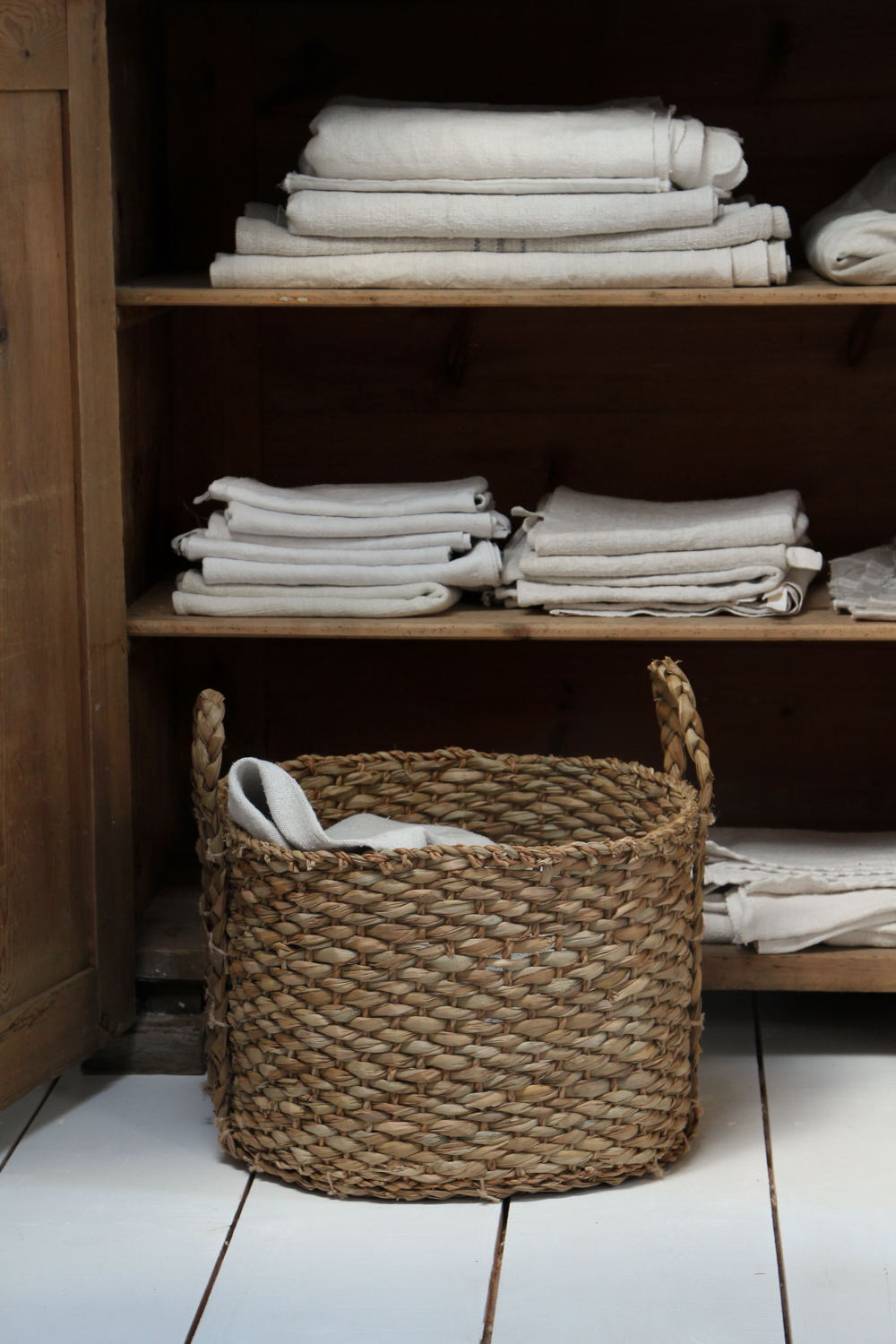
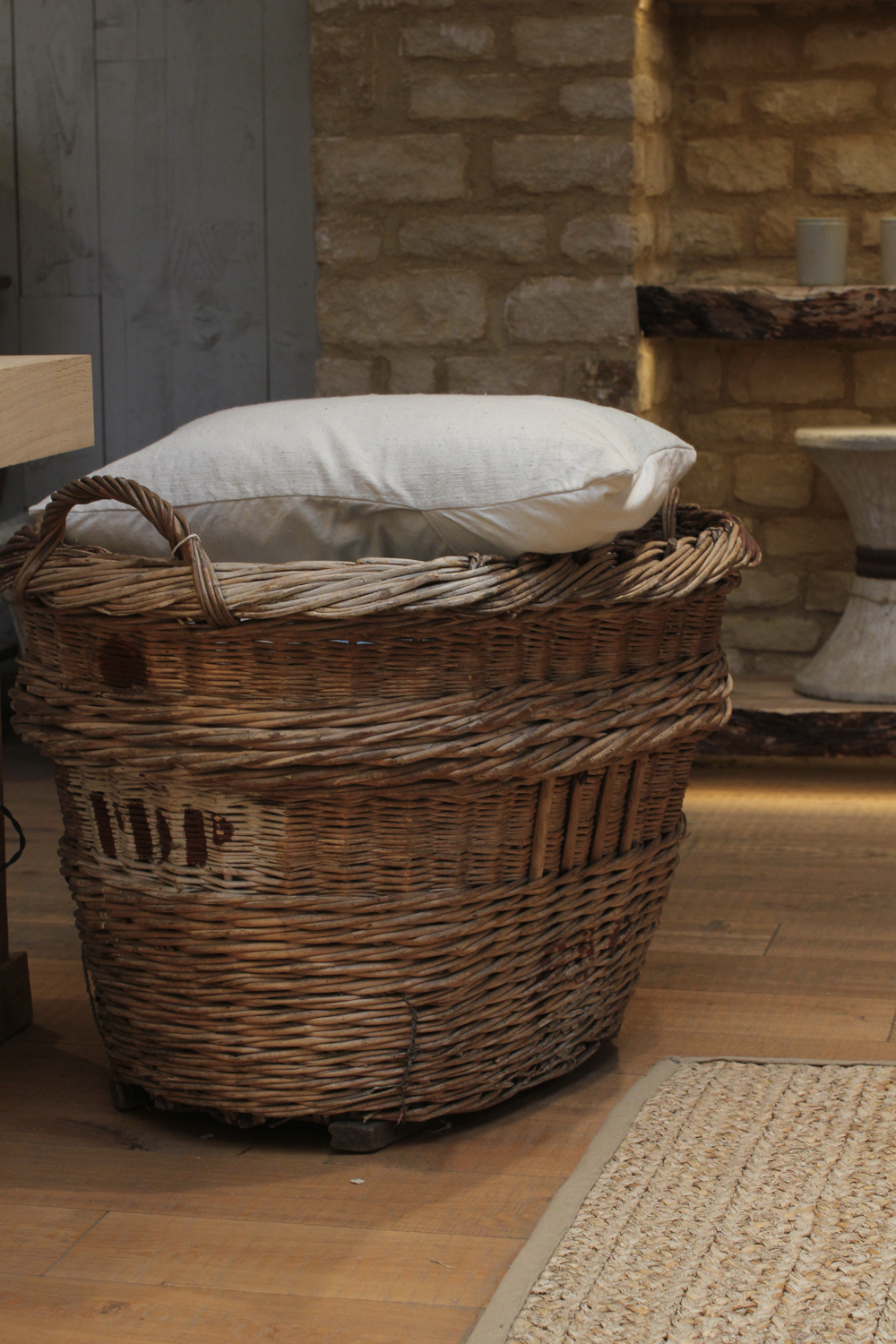
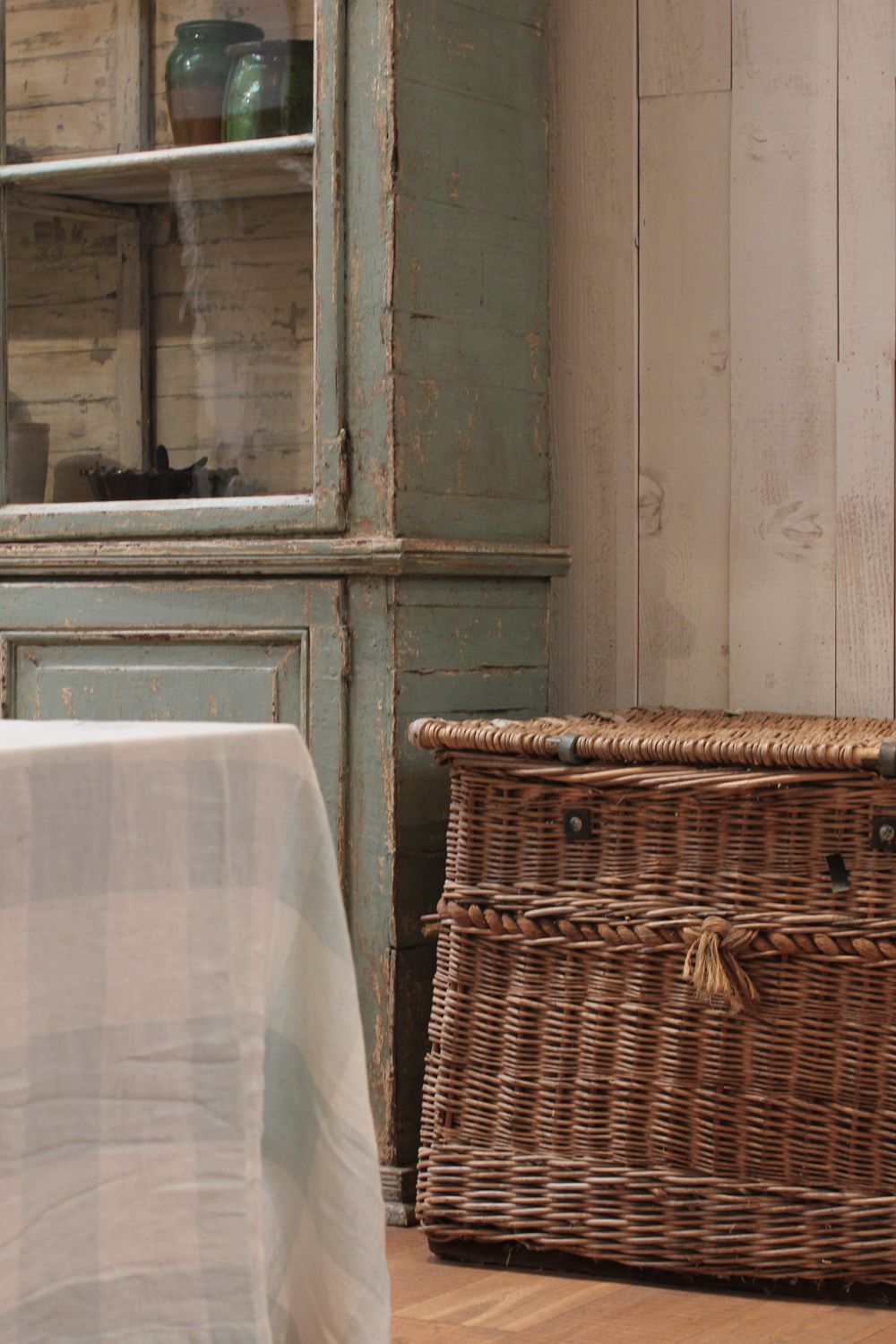
Beyond their function, baskets bring an organic elegance and tactile warmth to interior spaces. With their neutral tones and intricate weaves, they complement any home, from traditional to contemporary, minimalist to eclectic. Whether vintage or newly made, a well-placed basket blends seamlessly into any room, adding both charm and utility.
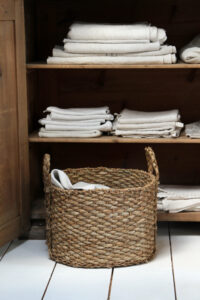
Baskets are endlessly adaptable. They tuck neatly under benches or beds, stack stylishly in cupboards, or stand alone as decorative features. Available in a variety of shapes and sizes, they help organise, store, and display everyday essentials while simplifying daily life.
Using Baskets Around the Home
Hallway
Often the most overlooked space in the home, the hallway sets the tone for what lies beyond. Baskets can help bring order to this busy area by keeping keys, shoes, and bags neatly contained while adding a handcrafted, welcoming touch.
Living Room
A space to unwind and gather, the living room benefits from the calm order that baskets provide. Use them to store everything from books and magazines to children’s toys and throws. Baskets are also ideal for holding firewood and kindling, offering practical storage with rustic appeal.
Kitchen and Dining
As one of the most well-used areas in the home, organisation is allowing a kitchen to remain clean, functional and presentable. Baskets offer a beautiful alternative to plastic or metal containers, perfect for holding fruit, pantry items, linens or utensils. Their woven texture softens the many hard surfaces of the kitchen, bringing warmth and a lived-in feel.
Study
An organised work environment fosters better focus and workflow. Whatever the size of the space, baskets provide useful storage for all types of objects needed close at hand such as books, paperwork and small electronics and can be stored on a desk, open shelving or on the floor.
Bathroom
The bathroom benefits greatly from the natural materials and textures that baskets offer. Use larger styles for laundry and towels, while smaller baskets are perfect for toiletries or spare toilet rolls. Their handmade quality adds a softer, more relaxed atmosphere for our daily rituals to what is often a sterile space.
Bedroom
In bedrooms, baskets provide a perfect blend of form and function. They can hold spare cushions, throws, books or bedtime essentials, and fit effortlessly into cupboards, wardrobes or shelving—enhancing the room’s style while helping keep it organised.
Outside Spaces
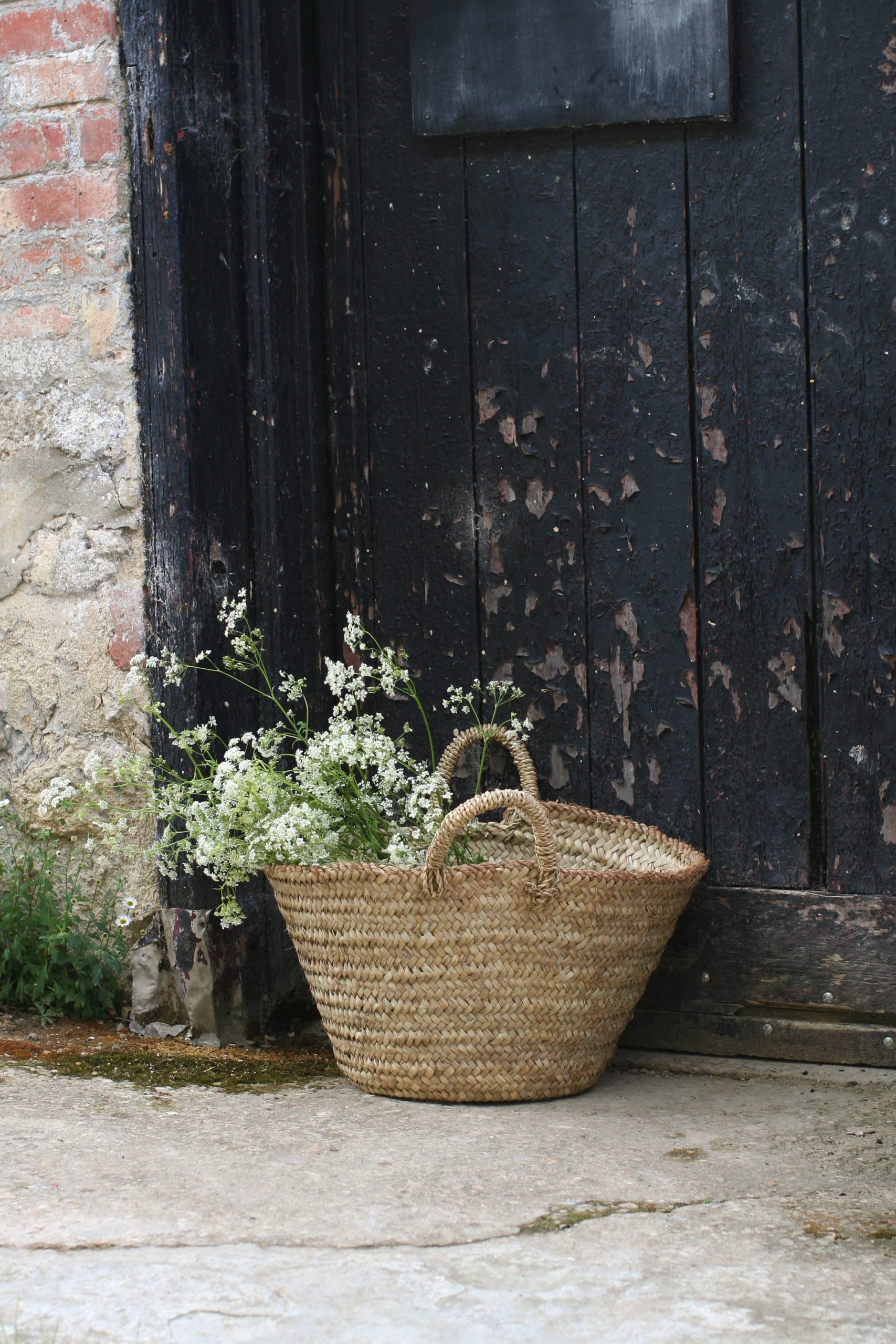
Baskets are also useful outside of the home. Whether foraging for wildflowers, harvesting from the garden, or packing a picnic, a sturdy basket brings natural charm and practical ease to any outdoor activity. With their woven texture, baskets also make attractive planters for greenery.
Basketry is an enduring and sustainable craft which has always been a brilliant way of imparting texture and natural colour to a space. As useful as they are beautiful, baskets contribute a sense of harmony to a home and give our interiors a more human touch.
As lovers of natural materials and craft, baskets will always have a place in our home and store. Investing in a set of storage baskets is not just a practical storage solution, but a decorative one too. Discover our full collection online and bring the beauty of basketry into your home.
Share this entry:
A Seasonal Refresh at Home
There is an innate shift that comes with the onset of each new season, bringing with it a natural invitation to refresh our homes. A seasonal reset doesn’t require a complete overhaul or unnecessary spending. Often, it is the simplest changes that create the greatest impact. By adding layers as the cooler months approach, or stripping back as the days grow lighter, we can allow our interiors to move in harmony with the world outside.
Our homes are not static spaces; they are living environments that shape how we feel and function every day. When we take time to care for them intentionally, we create surroundings that support clarity, calm and wellbeing. A seasonal refresh is less about perfection and more about realignment, bringing our homes back into balance with the months ahead.
Ideas for a seasonal refresh at home:
Plan with purpose
Start by making a simple list, focusing on one room at a time. Breaking tasks into manageable steps prevents overwhelm and makes the process feel achievable and rewarding.
Create a ritual around it
Put on a favourite playlist, podcast or audiobook. Turning your refresh into a small ritual transforms it from a task into something enjoyable and restorative.
Simplify and create systems
Work methodically through each space. Be intentional with every item, clearing clutter, refining what remains, and creating simple storage systems that make everyday living easier.
Rethink what you already own
Before buying anything new, look at your home with fresh eyes. Rearranging furniture, or simply repurposing decorative pieces, can dramatically shift the feel of a room. A beautiful home doesn’t require a large budget, just creativity and perspective.
Introduce Natural Elements
Bring the outside in with seasonal flowers, gathered branches, or houseplants. Natural textures and organic forms instantly soften a space and reflect the beauty of the changing season.
Adjust the atmosphere
Small details can completely alter a room’s mood. Layer in books, ceramics, soft lighting or candles to create warmth and depth. As the seasons change, so too can the ambience of your home.
Be mindful with new additions
If you do choose to introduce something new, prioritise quality over quantity. Invest in pieces that are timeless, functional and thoughtfully made, items that will continue to serve and inspire for years to come.
Maintain with intention
A seasonal refresh is also an opportunity to reset habits. Be selective and intentional about what enters your home going forward. Curate your spaces consciously, ensuring each item has purpose or meaning.
With every new season comes the opportunity to begin again. By making small, intentional changes, we can create homes that feel aligned with both nature and our values and evolving needs.
A home that is cared for thoughtfully becomes more than a backdrop to daily life, it becomes a place that restores, nurtures and supports us through every seasonal shift.
Share this entry:
Autumn at Home
As the air cools and the light begins to soften, autumn changes the feeling of home.
It is a season that calls us indoors to embrace slower rhythms and quieter evenings after the fullness of summer.
Perhaps this is why autumn feels so closely connected to home. We notice it in the small seasonal rituals that bring warmth and comfort to everyday life.
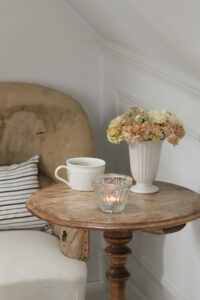
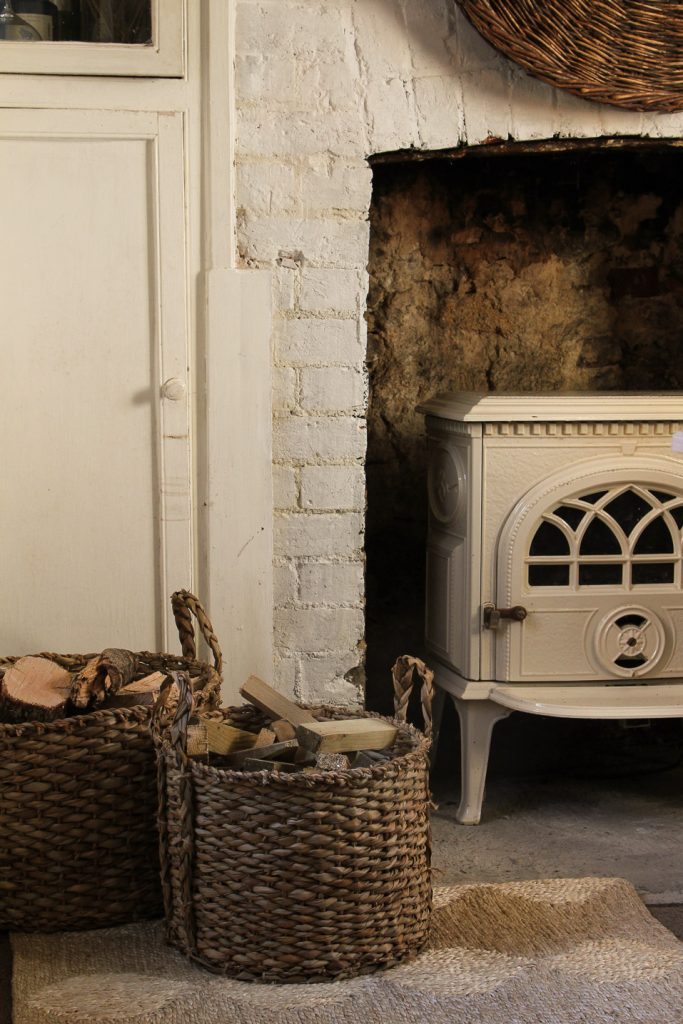
Late garden flowers in a favourite vase, soft layers of cushions and blankets, a basket of wood beside the fire and the gentle glow of candlelight as darkness falls.
Together, these simple details shape the feeling of home as autumn unfolds.
Autumn naturally draws us towards the kitchen and around the table.
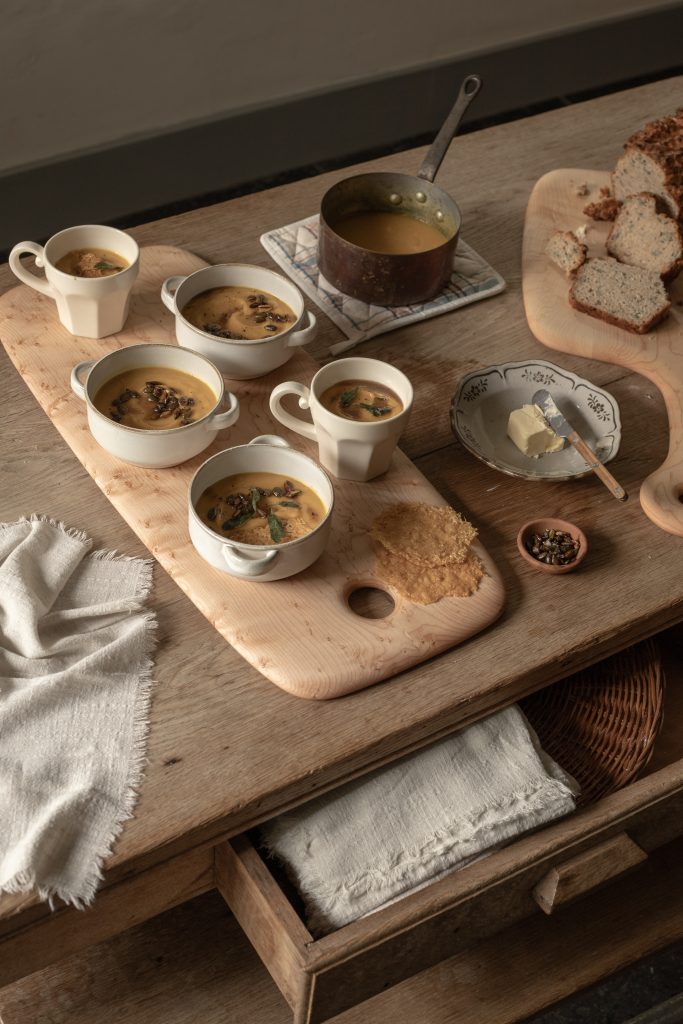
Cooking becomes more generous; soups simmer gently on the stove, fruit crumbles emerge warm from the oven and favourite recipes quietly return.
Often, it is these ordinary moments that become our lasting memories of home.
Share this entry:
The Value of Antiques
Home is a reflection of our individual experiences and personal tastes and each room tells a story through the pieces within it. The items we choose to surround ourselves with are profoundly intimate. Every piece we collect tells a story and lives on in our homes in deeply personal ways.
There are many merits to furnishing our homes with vintage and antique objects such as the significant environmental benefits over buying new. Whilst the intersection of aesthetics and function creates interiors that are considered and beautiful, now more than ever good design and curation must also take sustainability into account. Choosing pieces that have already proved their longevity through the quality of craftsmanship, design and aesthetic appeal contributes to reducing raw materials, waste and and energy.
Incorporating antiques not only makes for a more conscious living environment, but also adds uniqueness to a home. In a world of mass production and ubiquitous, low quality goods, vintage and antique furnishings have a timeless and enduring appeal that infuses spaces with a sense of individuality. Old pieces stand out against the flow of passing trends and have a beautiful patina acquired slowly over time which cannot be replicated by new goods.
Vintage and antique accessories weave history into the aesthetic of the interior, and give a richer narrative to the story of the home. Few things bring spaces to life more than the perfect vintage piece and there is something special about knowing that objects are one of a kind. From beautifully aged furniture to textural artwork or pottery, old pieces are distinctive and lend a feeling of comfort to each space they are placed in.
Antique and vintage furniture and accessories also add to the charm of our living spaces, making them feel lived-in, adding character, depth and warmth. Choosing such pieces encourages a slow approach to furnishing our homes as vintage products take time and patience to source. This creates more considered interiors which feel as if they have evolved over time, rather than being finished quickly with purchases made all at once.
Looking to the past is key to sourcing pieces for our homes that stand the test of time. From furniture, ceramics and textiles to lighting and art, vintage and antique objects provide a sustainable way to add authenticity to a space. They are critical for a home, not just for the personal joy they bring, but for how they pull a room together and make it truly unique. Old pieces work well within any aesthetic because they are inherently timeless. To embrace antiques at home you do not need to be an expert, it is simply about an appreciation for each piece and recognition for how it can enhance the everyday.
If you are looking to add some antique touches to your home, visit our online store or studio to view our curation. We offer unique collections of simple, beautiful one-of-a-kind pieces that will endure in to coming years and deepen your connection to home. To be notified first when the store is updated, please subscribe to our mailing list. We also offer bespoke sourcing and styling so do get in touch.
Share this entry:
Creating A Natural Home
Of all the spaces we inhabit, home is the most significant. It is where we spend the greatest amount of time, and where small, considered changes can have the most meaningful impact. As awareness grows around the planet’s finite resources, many of us are seeking a simpler way of living, one that feels more connected to nature and more mindful of the world around us.
Nature has long been revered for its ability to nurture, protect, and restore. Its endlessly fascinating forms have inspired artists and creatives for centuries, and now science is reinforcing what we have always intuitively known: that connection to the natural world supports our wellbeing. Nature offers continual inspiration throughout the seasons, guiding not only how our homes look, but how they feel to live in.
A natural home plays a vital role in our daily lives. It influences how we feel, how we function, and how sustainably we live. Universally, we are drawn to natural environments, finding comfort and beauty in their gentle rhythms, textures, and colours, qualities we increasingly seek within our interiors.
Living with Nature in Mind
One of the greatest influences on natural living is biophilic design, a philosophy centred on creating spaces that feel deeply connected to the outdoors. Studies show that interiors which reference nature can enhance focus, promote calm, and encourage creativity. Biophilia speaks to our innate affinity with the natural world and the important role it plays in our wellbeing, health, and productivity. This approach touches every aspect of the home, providing a framework for creating interiors that feel balanced, nourishing, and alive.
Light, Colour, and Movement
As we spend more time indoors, creating spaces that actively strengthen our connection to nature becomes increasingly important. Making the most of views and natural light through thoughtful furniture placement or lighter window dressings can subtly transform how a space feels. Simply opening curtains wide and allowing fresh air and the sounds of nature to flow through the home can have a powerful effect on both mind and body. Fresh air supports our immune system, improves mood, and reinforces a sense of ease and clarity within our living spaces.
Nature also offers endless inspiration when it comes to colour. Its palettes span every shade, with each season introducing a new harmony of tones. A neutral base provides a grounding foundation for a natural home, allowing layered accents of colour, texture, and pattern to be introduced through furnishings, art, books, and collected objects.
Bringing Nature Inside
One of the simplest ways to create a natural home is by inviting elements of the outdoors inside. Plants, flowers, and foliage — whether fresh or dried — bring colour, texture, and vitality, transforming not only how a space looks, but how it feels to live in.
Nature’s sculptural details, from branches and seed heads to shells and pinecones, are artworks in their own right. Displayed thoughtfully in bowls, vases, or on shelves, they create moments of connection to the natural world. Research continues to highlight the relationship between plants and wellbeing, including their role in improving air quality, reinforcing the importance of living with greenery and natural materials.
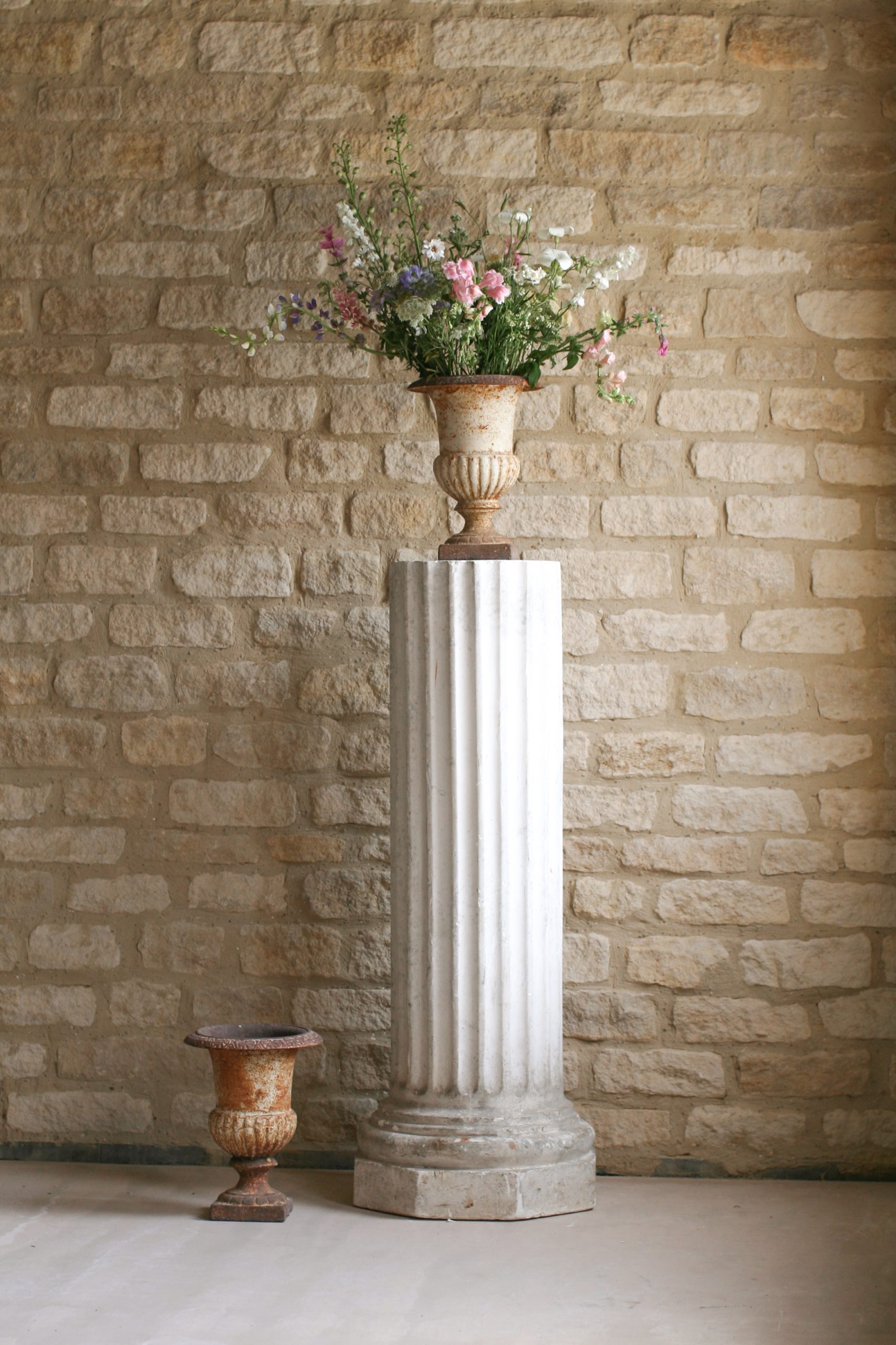
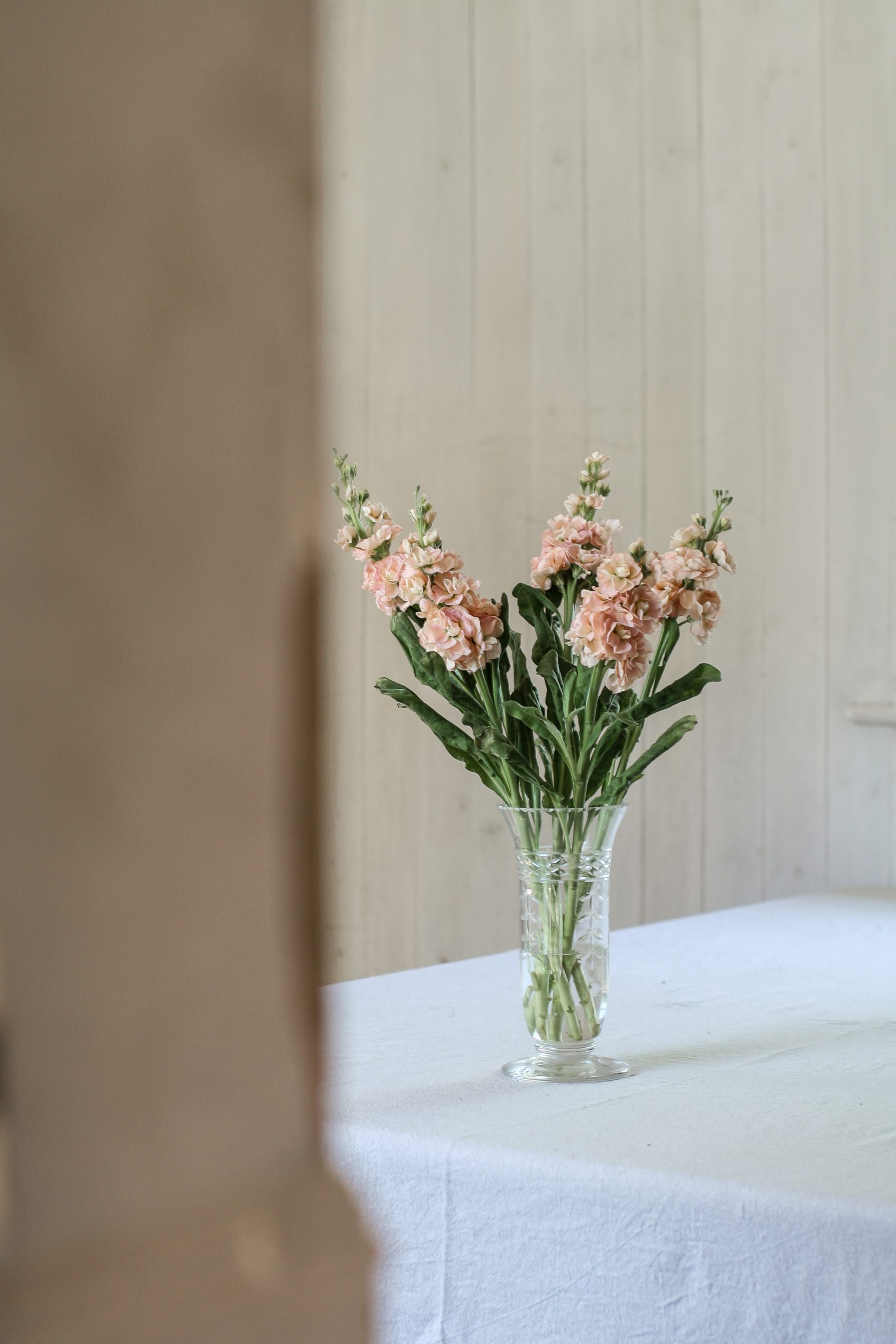
Fresh flowers, whether homegrown, foraged, or simply a single stem in a favourite vase, lend beauty and joy throughout the home. Larger arrangements can add impact, while potted plants bring colour and life to interiors year-round. Dried flowers and sculptural branches offer a longer-lasting alternative, introducing movement, texture, and a sense of the changing seasons.
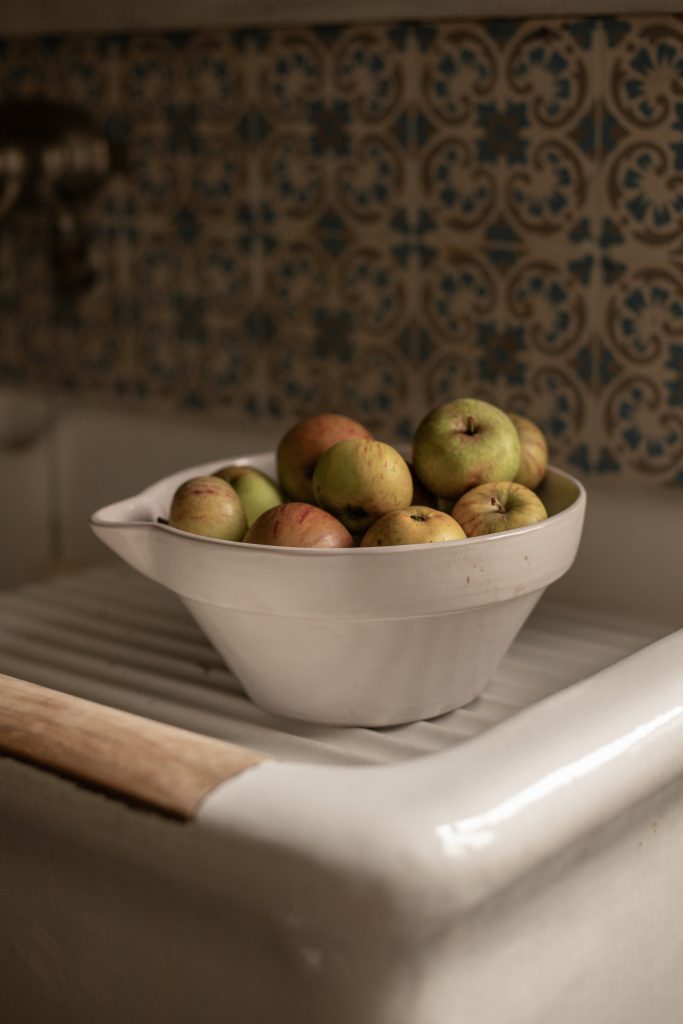
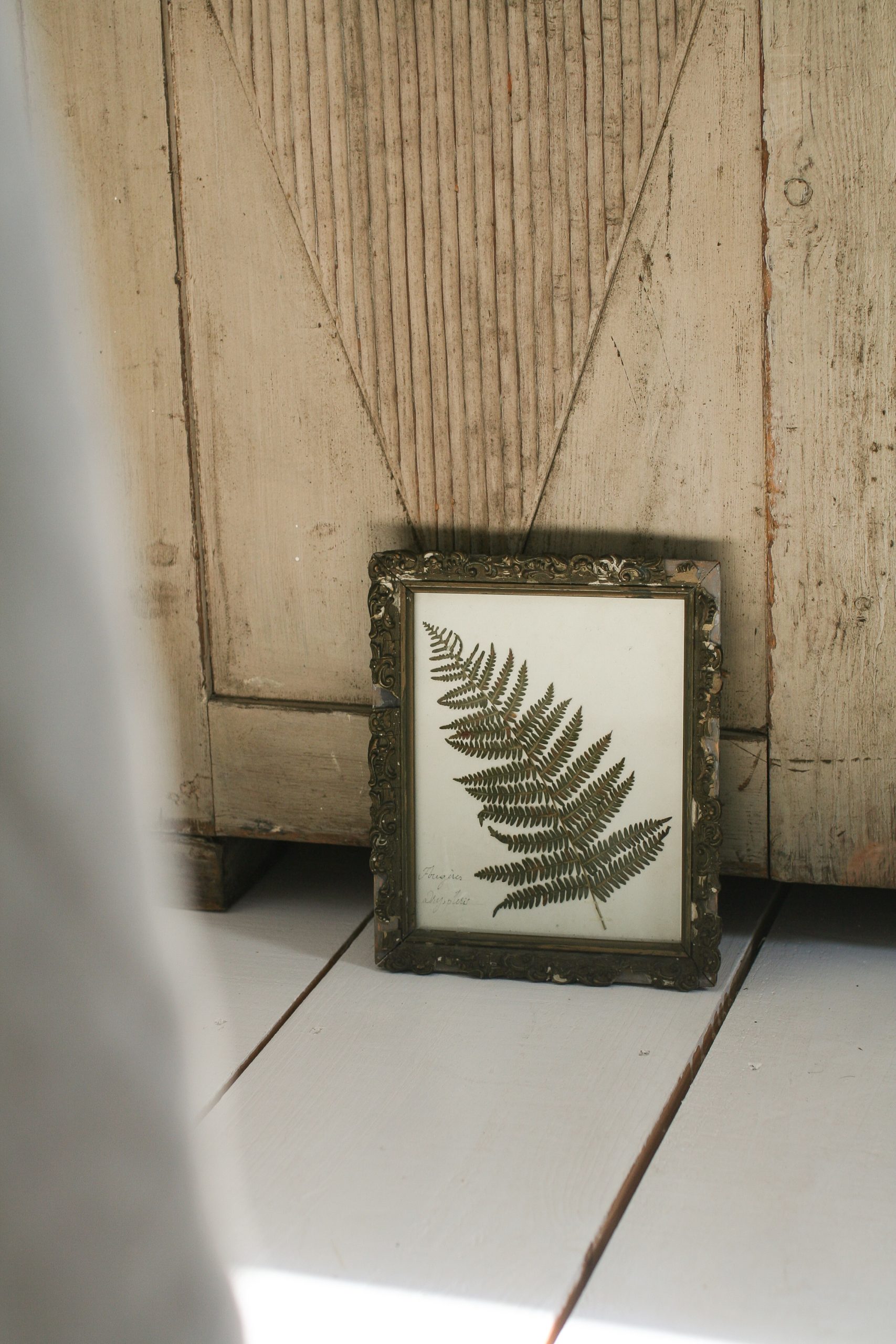
Bowls of fruit, vegetables, or pots of herbs placed on tables and worktops add colour and life in a simple, functional way. Pressed plants and botanicals framed individually or as a collection, celebrate the beauty of nature and create permanence from its fleeting cycles.
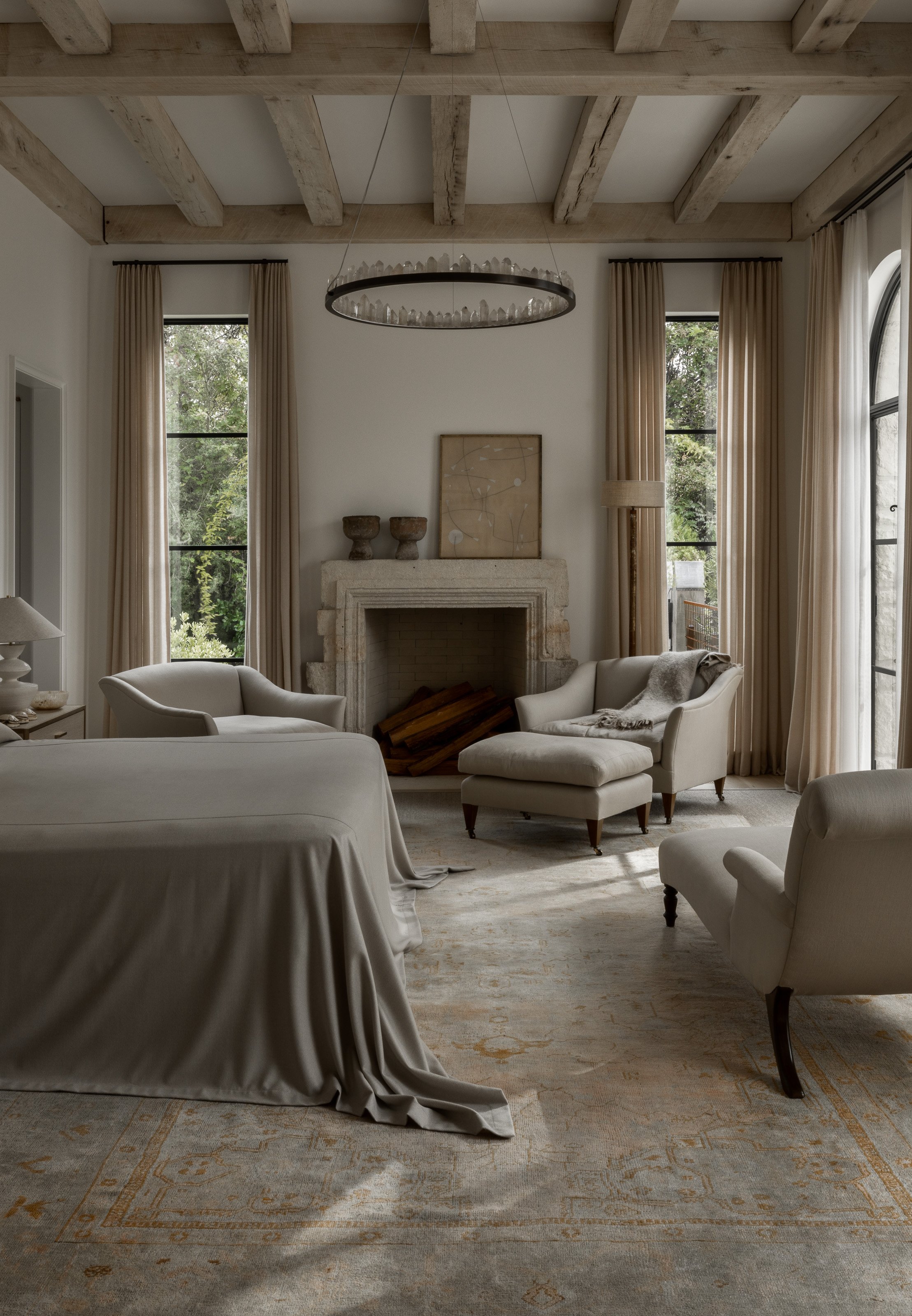
(Image via Sarah Solis Design Studio)
Natural Materials and Textures
Natural materials have a rich history and have been used to craft and furnish homes for centuries. They foster environments that feel warm, authentic, and timeless, enhancing both traditional and contemporary spaces. Layered thoughtfully, natural materials infuse rooms with organic texture and colour, contributing to a calm and grounded atmosphere.
Wood Few materials rival the warmth, versatility, and character of wood. From floors and ceilings to furniture and decorative objects, wood brings grounding tranquillity and complements both traditional and contemporary spaces.
Linen Derived from flax fibres, linen is timeless, breathable, and inherently earth-friendly. Used for cushions, throws, curtains, bedding, and table linen, it softens beautifully over time and can last for decades when cared for.
Wool Naturally durable, warm, and breathable, wool is ideal for rugs, carpets, throws, and upholstery. Biodegradable and recyclable, it brings comfort while softening harder elements within a space.
Stone From marble worktops to stone floors and fireplaces, stone adds texture, sophistication, and longevity. Mixing different stones allows their unique colours and surfaces to shine.
Jute, Sisal & Seagrass These plant fibres create grounding rugs, baskets, and accessories. Their subtle texture and natural tones provide a timeless foundation and relaxed, earthy feel.
Palm, Rattan & Bamboo Woven materials add tactility, soul, and a human touch. From baskets and lampshades to stools and chairs, they soften interiors and hint at traditional craft. Vintage pieces add depth and character.
Clay & Terracotta Ancient, versatile, and timeless, clay appears in everything from tiles and walls to pottery and decorative objects. Its earthy tones bring warmth and a strong connection to the natural world.
A Home That Evolves
A home is never static, like nature itself, it grows and changes with the people who live within it. Natural materials, while sometimes requiring greater initial investment, reward us with longevity, versatility, and sustainability. They age beautifully, can often be repurposed, and create spaces that feel calm, grounded, and enduring.
There is much to learn from nature when designing our homes. Effortlessly beautiful and endlessly informative, it encourages patience, balance, and thoughtfulness. Homes layered with old and new pieces, rich in texture and personal meaning, will always feel more natural than perfectly curated spaces.
Creating a natural home is ultimately about considering not only how a space looks, but how it feels. Like the most beautiful things in nature, it is a process that rewards time, care, and intention. For moments when we can’t be outside, a natural home offers a place to restore, reconnect, and live more gently.
We hope this journal entry encourages you to look to the natural world for inspiration and create a natural home as a beautiful backdrop to everyday life.
“People must feel that the natural world is important and valuable and beautiful and wonderful and an amazement and a pleasure.” — David Attenborough
We use cookies to optimise our website and our service.
Functional
Always active
The technical storage or access is strictly necessary for the legitimate purpose of enabling the use of a specific service explicitly requested by the subscriber or user, or for the sole purpose of carrying out the transmission of a communication over an electronic communications network.
Preferences
The technical storage or access is necessary for the legitimate purpose of storing preferences that are not requested by the subscriber or user.
Statistics
The technical storage or access that is used exclusively for statistical purposes.The technical storage or access that is used exclusively for anonymous statistical purposes. Without a subpoena, voluntary compliance on the part of your Internet Service Provider, or additional records from a third party, information stored or retrieved for this purpose alone cannot usually be used to identify you.
Marketing
The technical storage or access is required to create user profiles to send advertising, or to track the user on a website or across several websites for similar marketing purposes.